


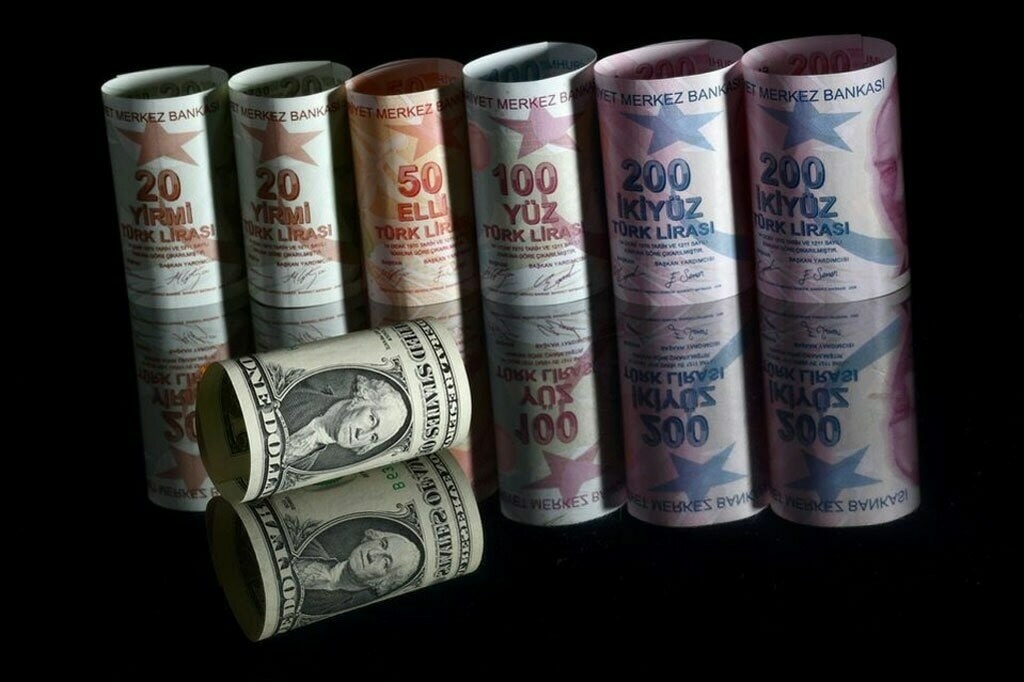

ISTANBUL: Turkey's lira gained in early trade on Monday, reversing some of last week's losses as government efforts to combat surging inflation were put to the test in the wake of a currency crisis brought on by its unorthodox rate cuts.
The lira firmed as far as 13.72 against the dollar and was 0.7% stronger at 13.83 at 0820 GMT, after having weakened 5.3% in the first week of the year.
The currency slumped 44% in 2021, suffering its worst year since President Tayyip Erdogan's AK Party came to power in 2002. The economy's woes were compounded by a leap in annual inflation to 36.1% in December.
Turkish lira dips, business group chief questions policy
Finance Minister Nureddin Nebati said last week the government would prioritise the fight against inflation but would follow its own course in doing so, having abandoned "orthodox policies".
The government introduced a lira deposit-protection scheme last month to encourage savers to convert forex deposits and support the lira after it hit a record low of 18.4.
But analysts remained sceptical that Ankara's policies would succeed given that its unorthodox interest rate cuts and political pressure on the central bank remain the core problems.
"The problem is the inconsistency of monetary policy and lack of independence of the central bank," Commerzbank said in a note, describing the FX-insured deposits as ill-conceived and doing little to stem the lira crisis.
"With the real interest rate now at -20%, the sorry state of affairs is likely to repeat soon again."
Under pressure from Erdogan - aiming to boost growth through higher production and exports - the central bank lowered its policy rate by 500 basis points to 14% since September.
However, despite the easing, the Treasury's benchmark 10-year bond yield hit a record peak of 24.87% last week before ending on Friday at 24.55%.
According to a Brown Brothers Harriman note: "Until a monetary policy anchor is established, we believe the government's efforts to avoid a crisis are doomed to failure."
On the political front, opinion polls show ebbing support for Erdogan and his AK Party. Analysts say presidential and parliamentary elections, set for June 2023, could come earlier as he looks to capitalise on any upswing in support which he hopes his policies will bring.
Atilla Yesilada from Istanbul Analytics said in a note he expected Erdogan to announce early elections in June, with a 65% probability.
There was a 25% probability of a September-October election and a 10% probability of it happening as scheduled next year, he said.

























Comments
Comments are closed for this article.