



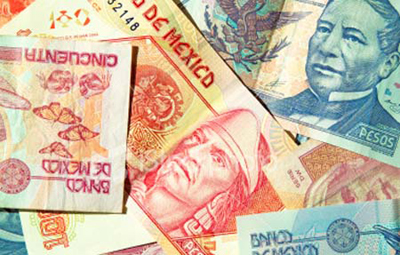
 SAO PAULO: Latin American currencies gained on Tuesday as a Moody's warning on US credit ratings weighed on the dollar globally, adding to bets the greenback will further underperform higher-yielding currencies as central banks deploy additional stimulus measures.
The Brazilian real erased part of its gains to trade at 2.0177, however, after traders said the central bank was considering selling reverse currency swap contracts to stop the currency from strengthening past the level of 2 per dollar.
The central bank later confirmed it was conducting a survey to assess market demand for the swaps, which are equivalent to a purchase of dollars in futures markets.
"The real has been responding to expectations of further stimulus measures," said Jankiel Santos, chief economist at BES Investimento in Sao Paulo. "But as it nears the level of 2 per dollar we all expect the central bank to intervene. This is not a psychological level, it's an effective barrier imposed by the central bank."
Since early June, the Brazilian government has managed to keep the real within a tight range of 2.0-2.1 per dollar -- a level it deems ideal to support the country's exporters without stoking inflation.
But the real has gained more than 1 percent during the past three sessions, nearing the level of 2 per dollar, as expectations grew that the US Federal Reserve would unveil a third round of its bond-buying program on Thursday, boosting dollar inflows to emerging economies.
Such expectations, combined with hopes that a German constitutional court will approve the euro zone's new bailout fund on Wednesday, drove higher the Mexican peso and the Chilean peso by 0.6 percent and 0.2 percent, respectively.
In a sign that the so-called currency wars were again heating up, Chile's Finance Minister Felipe Larrain said in London that emerging economies are worried about the impact of possible Fed stimulus on their exchange rates, whose strength undermines the competitiveness of exporters.
The dollar was also falling against major currencies after Moody's Investors Service warned the United States may lose its Aaa credit rating if next-year's budget negotiations do not result in a long-term reduction of the country's debt ratios.
"If the American parties don't come to an agreement on how to handle the so-called fiscal cliff before January, it will hit US activity very hard and that will be a big problem for Latam currencies," said Tom Levinson, foreign exchange strategist at ING Bank in London.

























Comments
Comments are closed for this article.