



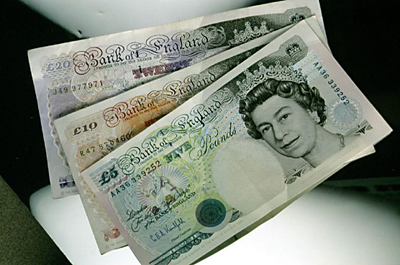
 LONDON: Sterling was steady on Wednesday, with investors wary of initiating fresh positions while awaiting the minutes of the Bank of England's latest monetary policy meeting and data on the UK labour market.
Traders said if the BoE minutes due for release at 0830 GMT show policymakers are not veering towards rate cuts in the near term, it could give the British pound a slight boost.
Last week BoE Governor Mervyn King suggested a rate cut might be counterproductive. Nonetheless, investors want to see whether the committee discussed the possibility of a cut after the July minutes flagged this option.
"The minutes could come in on the hawkish side should it reflect that members are even less keen on a cut in the bank rate," said Kiran Kowshik, currency strategist at BNP Paribas.
He added that a strong reading for the UK labour market, also at 0830 GMT, could also bolster the pound.
The pound was at $1.5665, barely changed from the previous day, but well below a two-week high of $1.5730 struck on Tuesday when inflation surprised on the upside. Traders cited stop-loss buy orders above $1.5730.
The pound held its ground despite a firm dollar. The dollar was helped by robust U.S retail sales data for July. The upbeat numbers lowered chances of another round of quantitative easing by the Federal Reserve and pushed the greenback to a one-month high against the yen.
The euro was slightly higher against the pound at 78.74 pence with offers reported above 78.80. Traders cited support for the euro at the 21-day moving average of 78.52 pence.
Analysts said any bounce in the pound could be fleeting as the UK economy is still in the midst of a deepening recession and in need of further stimulus from the BoE.
Figures last month showed the UK economy shrank 0.7 percent in the second quarter, marking its third consecutive quarter of contraction, and surveys since then have pointed to a poor start to the second half of the year.
The BoE is likely to pump in more funds through it asset purchase programme later this year, a factor that is likely to weigh on the pound. The quantitative easing programme is seen as negative for the pound as it involves the central bank flooding the market with the currency.

























Comments
Comments are closed for this article.