


Energy shock keeps inflation elevated
Inflation remains high, driven by energy and food prices, with a potential interest rate hike looming. It's expected to stay elevated until early 2027.
- Persistent double-digit inflation drivers.
- Potential central bank policy rate hike.
- Inflation outlook through early 2027.

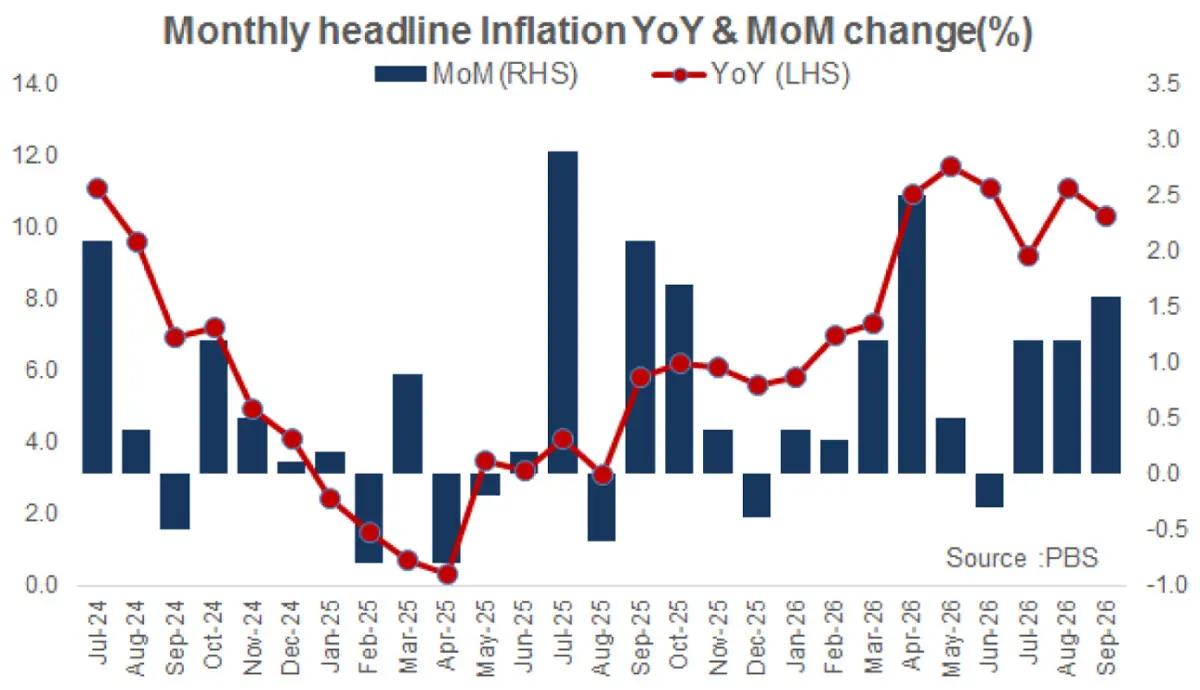
The double-digit inflation spree continues, as inflation remained above 10 percent in five out of the last six months due to the low-base effect, a sharp rise in energy prices, and elevated wheat and other food prices. The reading stood at 10.3 percent in September, compared to 11.1 percent in the previous month and 5.8 percent in the same month last year.
The 3MFY27 CPI average stood at 10.2 percent, and headline inflation is likely to remain elevated until March 2027. It may hover around 9-12 percent before the favourable base effect kicks in. The upside risk comes from high oil prices, and if they sustain at current levels, or move higher, inflation may rise further. Thus, given interest rate hikes in a few developed economies, an increase in the policy rate cannot be ruled out in October.
The MoM increase in Sep-26 stood at 1.3 percent. It has remained above 1 percent for the third consecutive month and in five out of the last seven months. That is surely shifting the inflation outlook upwards. The increase is mainly concentrated in transportation and utility indices, owing to higher energy prices. Their indirect impact on food prices is also taking a toll.
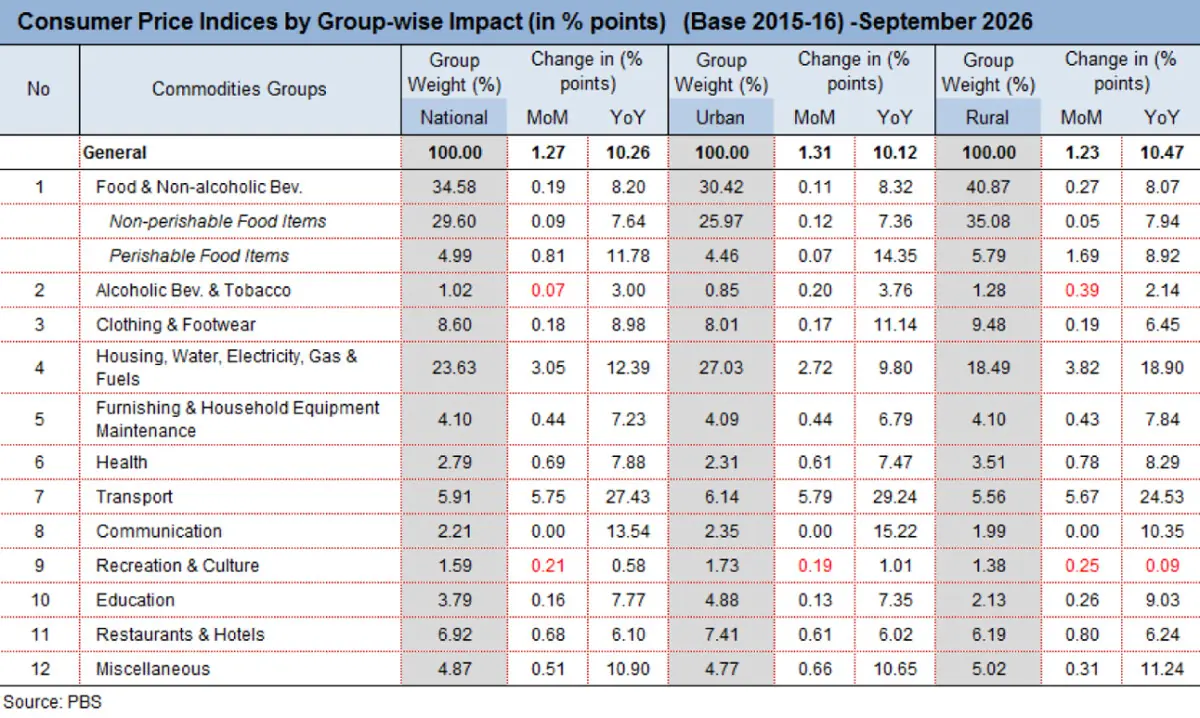
In September, however, the MoM increase in food prices eased to 0.2 percent, compared to an average increase of 2.5 percent in the previous two months. Wheat prices are still moving up, but the pace of increase is slowing, while prices of some other food items, including both perishable and non-perishable items, also declined.
However, upward pressure may continue, as the transportation index rose 5.8 percent MoM, while the yearly increase stood at 27.4 percent. Motor fuel prices in urban areas increased 10.8 percent MoM, while the yearly increase stood at 37.7 percent.
There was an even higher increase in electricity charges, due to the higher FCA of Rs2.1/kWh, which rose 15.3 percent, followed by a 5.4 percent increase in liquid hydrocarbons. This pushed the housing and utilities index up by 3.1 percent MoM and 12.4 percent YoY in September. All these are adding to consumers’ agony.
Interestingly, the MoM increase in core inflation eased to 0.2 percent in September, and it remained above 1 percent in only two of the last seven months of the war. Core inflation remains sticky, hovering around 8-9 percent in the last six months, compared to 6-7 percent in the previous six months.
There has been an increase in core inflation. However, its relatively smaller rise suggests that the second-round impact of higher energy prices has remained contained. This is perhaps due to the massive solarisation in the agriculture, household, and industrial segments. It also suggests that there has so far been less pressure on wages to increase.
However, that trend may change if oil and petroleum prices remain persistently high in the coming months. Global seasonal demand for energy, especially gas, is rising ahead of winter, while the war is nowhere close to being over. This is keeping energy prices elevated and increasing the risk that inflation remains above the SBP’s medium-term target of 5-7 percent.
Thus, it is imperative to keep inflation expectations anchored through proactive monetary and exchange-rate policies. External pressure remains subdued, but inflationary pressure is creeping up. That is why, if oil prices do not fall by a few percentage points over the next three weeks, the SBP may opt for a 50bps increase at the October 26 monetary policy review.

























Comments