


Greenland’s power shift: new Arctic twist reshaping the world
Great powers now compete for strategic control over territories like Greenland through security roles and resource access, not annexation, offering lessons for nations like Pakistan with critical geography.
- US securing "permanent control" over Greenland's security.
- Greenland's strategic importance and critical mineral resources.
- Implications for US alliances, China, and Russia.
- Lessons for nations with strategic geography.
- Pakistan's strategy for economic resilience and negotiation.
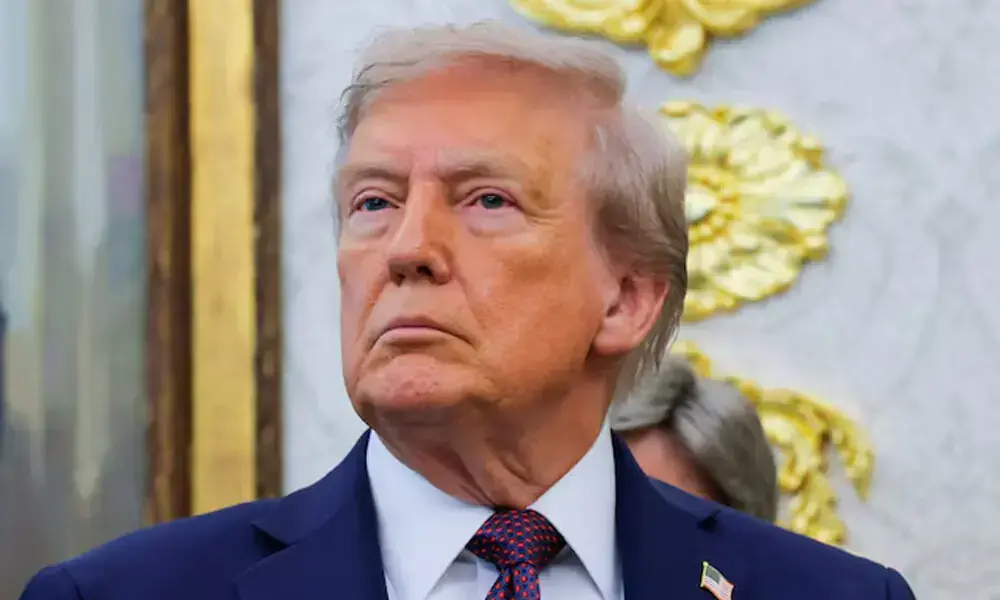

On 18th September 2026, Donald Trump announced that Washington had achieved “permanent control” over Greenland’s security. He previously threatened to take the territory “one way or the other,” but now the tone has changed from annexation to cooperation. This shift in rhetoric is more significant than the unpublicized details, as it indicates how major powers now prefer to compete: not by redrawing borders, but by claiming the roles and functions that borders traditionally safeguarded.
Denmark underscores its sovereignty over Greenland, and the agreement still requires ratification by both the Danish and Greenlandic legislatures. It remains uncertain to what extent the new arrangement diverges from the 1951 treaty, which already sanctioned a significant American military presence. Nonetheless, the specifics indicate a broader scope than that of the Cold War-era accord.
President Trump asserts that no adversary of the United States will be permitted to establish a base or undertake sensitive investments in Greenland without prior explicit written approval from the United States. Moreover, his administration intends to swiftly augment the military presence on the island.
The strategic importance of Greenland is clear. It controls key North Atlantic routes that Russian submarines use to access open waters and lies beneath the shortest air and missile paths between Russia and North America. Its melting coastline is creating new shipping lanes that didn’t exist a generation ago.
Additionally, Greenland’s geology contains rare earths and critical minerals vital for batteries, defence, and wind energy, especially since China currently leads in processing these materials. For Washington, the island functions as a radar station, a maritime gateway, and a source of minerals.
From Beijing’s perspective, this deal seals a chapter that China’s Arctic outreach has spent years trying to open. China’s approach has never been about force but rather about patience, gradually gaining access through investments in mining, airport, and port projects, establishing research stations, and promoting the idea of a Polar Silk Road. This strategy hinges on engaging small jurisdictions one investment at a time.
However, the American veto on sensitive investments blocks this approach in Greenland and sets a precedent that might influence other Western-aligned regions to follow suit.
Moscow experiences this differently: its Arctic coast and military presence remain unrivaled, and Nuuk’s arrangements do not change that. Yet, an increased and permanent American presence raises costs for any plans involving the Greenland-Iceland-Britain route and complicates naval strategies that rely on that passage.
It would be inaccurate to label this as a defeat for Chinese and Russian strategies. Rather, it is a carefully targeted move in an ongoing contest, with costs that its supporters tend to downplay. The primary concern is the harm to the alliance that the deal aims to bolster.
Trump’s previous threats signalled that any effort to take the territory might lead to NATO’s disintegration. An agreement made under that threat, and reportedly negotiated partly outside NATO’s formal structure, might lead European capitals to see the United States as viewing allies as assets rather than partners to consult. Each European decision to distance itself from Washington benefits Moscow and Beijing strategically.
The second concern is consent. Small territories may be easy targets for external powers, but they tend to resist agreements they perceive as imposed. If Greenlanders view the deal as handing over their future to Washington rather than a partnership that offers investment, jobs, and security, they will provide rivals with grievances to exploit. Long-lasting agreements require Nuuk’s sincere support, not just Copenhagen’s signature.
The third point is straightforward arithmetic. Preventing Beijing and Moscow from establishing a presence in Greenland doesn’t affect their influence in the Indo-Pacific, Central Asia, or the Gulf. In fact, adopting a more assertive American stance in the Arctic could bring Beijing and Moscow closer together, which is exactly what Washington has aimed to prevent.
The lesson for countries in the Global South is sobering: the rules of great-power competition are evolving around strategic geography. Any nation located at a chokepoint, on a trade route, or with a critical resource will likely be targeted or courted by rival blocs. Pakistan, with its Arabian Sea coastline, proximity to the Strait of Hormuz, and position along the CPEC route, exemplifies this reality.
The best approach is not to pick a side or pretend neutrality is without cost. Instead, it’s crucial to strengthen economic resilience, diversify trade and energy sources, and negotiate while bargaining power remains strong.
Greenland serves as a preliminary example of the ongoing rivalry between America and its adversaries. It highlights how such contests will unfold: discreetly, through controlling basing rights, vetoing investments, and managing supply chains in strategically valuable locations. The major powers have recognized this pattern, and middle powers should consider adopting similar strategies.
Pakistan’s way forward
Build economic resilience before leverage is needed. Reduce the structural vulnerabilities that make Pakistan a price-taker in these negotiations: a narrow tax base, thin fiscal buffers, and chronic dependence on the IMF. A country negotiating from fiscal weakness gets worse terms than one negotiating from strength.
Diversify export markets and energy sources so no single relationship (Gulf oil, Chinese investment, US market access) becomes a point of coercion.
View CPEC and access to the Gulf/Hormuz as strategic assets rather than liabilities. Pakistan ought to actively incorporate its strategic location, including port access at Gwadar, an Arabian Sea presence, and proximity to Hormuz shipping, into its negotiations with China, Gulf states, and the US, rather than assuming these are already secured commitments.
The underscored importance of local support is essential for the sustainability of externally negotiated agreements. The authentic backing of Greenlanders surpasses the significance of Copenhagen’s signature. Likewise, in Pakistan, approval from provincial and local authorities is imperative; accords pertaining to Gwadar, Balochistan, or coastal security necessitate genuine local endorsement. Absent this, there is a risk that such agreements may generate long-term grievances susceptible to exploitation by opponents, a pattern already observed in security concerns related to CPEC.
Negotiate now, while bargaining strength still exists. Engage in negotiations when leverage remains intact. Pakistan’s influence derives from assets such as Gwadar, access to the Arabian Sea, and the China-Pakistan Economic Corridor (CPEC), which are contingent upon available alternatives that have not yet been exhausted.
Avoid the alliance-cost trap in reverse: Pakistan should watch for the dynamic in its own relationships with China on CPEC financing terms, with the US on counter-terrorism/trade cooperation, with Gulf states on energy and remittances, and resist arrangements that reduce it to an asset on someone else’s strategic map rather than a negotiating partner with its own interests.
Pakistan’s geography is an asset that is actively being priced by external powers right now, not a passive fact. The strategy is to shore up fiscal/economic resilience to negotiate from strength. Price chokepoint access explicitly rather than giving it away piecemeal. Secure genuine domestic/provincial consent for any security-adjacent arrangements, and move on diversification before external powers foreclose the alternatives.
Copyright Business Recorder, 2026
The author is a Professor at the Pakistan Institute of Development Economics (PIDE). She can be reached at Email: [email protected]

























Comments