


BR100 Decreased By (-0.91%)
BR30 Decreased By (-1.47%)
KSE100 Decreased By (-0.78%)
KSE30 Decreased By (-0.75%)
AGHA 6.70 Increased By ▲ 0.02 (0.3%)
BECO 4.37 No Change ▼ 0.00 (0%)
BML 56.00 Decreased By ▼ -1.32 (-2.3%)
BOP 30.09 Decreased By ▼ -0.26 (-0.86%)
CNERGY 12.95 Decreased By ▼ -0.17 (-1.3%)
CSIL 5.33 Decreased By ▼ -0.08 (-1.48%)
FCCL 51.50 Decreased By ▼ -1.29 (-2.44%)
FFL 14.47 Decreased By ▼ -0.25 (-1.7%)
FNEL 1.22 Increased By ▲ 0.10 (8.93%)
KEL 6.03 Decreased By ▼ -0.06 (-0.99%)
KOSM 5.84 Increased By ▲ 0.11 (1.92%)
LOTCHEM 26.20 Decreased By ▼ -0.26 (-0.98%)
MLCF 91.00 Decreased By ▼ -2.16 (-2.32%)
NBP 164.00 Decreased By ▼ -0.66 (-0.4%)
NCPL 53.00 Decreased By ▼ -2.66 (-4.78%)
NPL 59.40 Decreased By ▼ -1.76 (-2.88%)
OGDC 313.67 Decreased By ▼ -3.06 (-0.97%)
PACE 9.72 Decreased By ▼ -0.15 (-1.52%)
PAEL 35.27 Decreased By ▼ -0.36 (-1.01%)
PIBTL 14.71 Increased By ▲ 0.03 (0.2%)
PPL 221.18 Decreased By ▼ -5.73 (-2.53%)
PRL 90.91 Decreased By ▼ -2.11 (-2.27%)
PTC 58.53 Decreased By ▼ -1.73 (-2.87%)
SSGC 23.30 Decreased By ▼ -0.51 (-2.14%)
TBL 8.78 Increased By ▲ 0.03 (0.34%)
TELE 7.60 Decreased By ▼ -0.20 (-2.56%)
TPL 22.03 Decreased By ▼ -0.32 (-1.43%)
TPLP 12.60 Decreased By ▼ -0.37 (-2.85%)
TREET 21.77 Decreased By ▼ -0.39 (-1.76%)
TRG 55.91 Decreased By ▼ -0.65 (-1.15%)
Opinion Print edition: 2026-09-17

Beyond the breastfeeding campaign

Published Updated

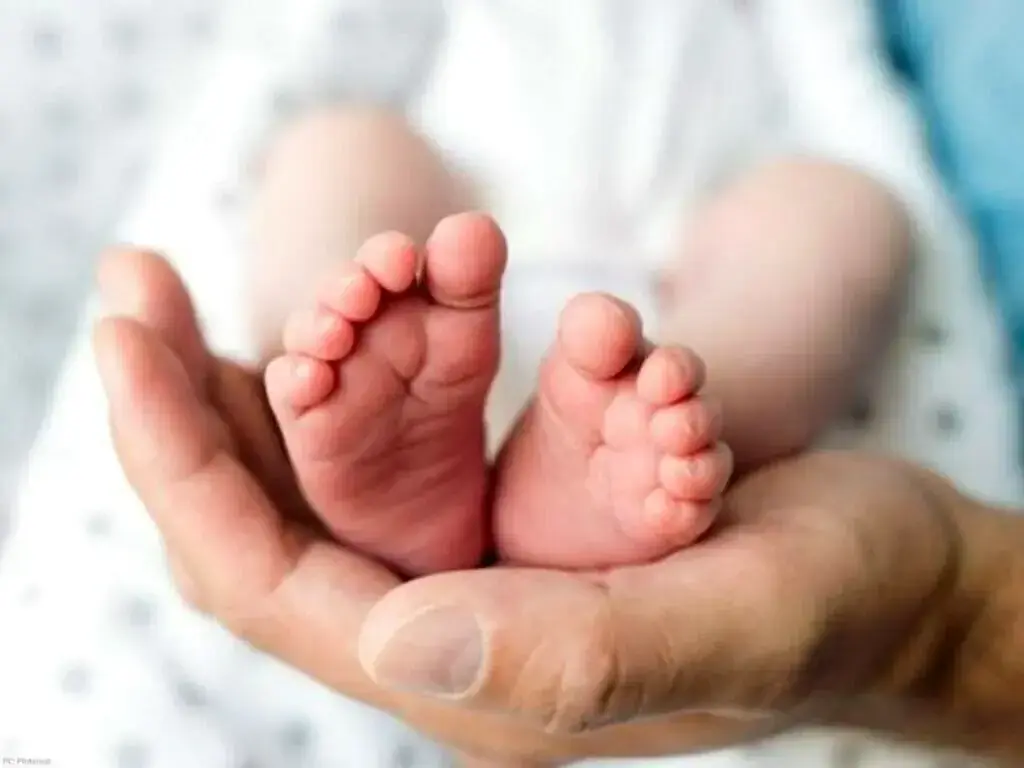
The figures on breastfeeding in Pakistan shared at a recent media awareness and sensitisation workshop organised by the Sindh Institute of Child Health and Neonatology in collaboration with UNICEF are troubling. Only about 20 percent of new-borns are breastfed within the first hour of life, while exclusive breastfeeding among infants under six months is roughly 48 percent.

These figures should prompt a serious conversation as to why following a practice that is natural, inexpensive and vital to child health remains so difficult for many mothers. Much of the problem appears to lie not with mothers themselves, but with the support systems around them.

Breastfeeding is too often treated as an individual maternal responsibility, while the social and institutional conditions that shape a mother’s ability to breastfeed receive far less attention. A woman who has just given birth may need counselling, encouragement from her family, quality maternity care and sufficient time to establish breastfeeding. Working women, meanwhile, need adequate maternity protections as well as safe and suitable facilities for expressing and storing breast milk. Without such support, public exhortations to “breastfeed” are barely more than unrealistic advice, with serious health consequences.

Nida Mohsen (Islamabad)

Copyright Business Recorder, 2026

Comments

200 characters remaining




















