


Mounting SNGPL receivables: Power Division asked to provide payment plan
The Petroleum Division demands a payment plan from the Power Division for SNGPL's significant gas and RLNG receivables, with the ECC approving a ring-fenced payment framework to tackle circular debt.
- SNGPL's mounting receivables and the gas-sector circular debt.
- Dispute over indigenous gas pricing for RLNG-based power plants.
- ECC's approval of a ring-fenced payment framework for gas supplies.
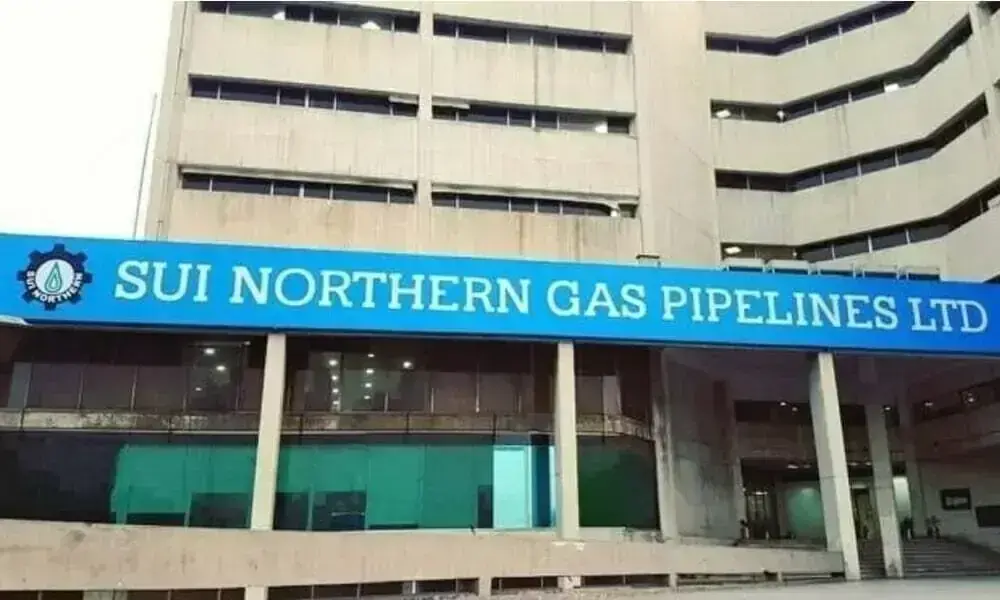

ISLAMABAD: The Petroleum Division (PD) has sought a workable payment plan from the Power Division for outstanding indigenous gas and RLNG dues, with timelines, to address the mounting receivables of Sui Northern Gas Pipelines Limited (SNGPL), sources close to the Petroleum Minister told Business Recorder.
The Power Division was required to share the payment plan with the Petroleum Division by June 30, 2026, subject to reconciliation of the amounts outstanding.
SNGPL is engaged in the transportation, distribution and sale of natural gas under an integrated licence issued by the Oil and Gas Regulatory Authority (OGRA).
OGRA determines SNGPL’s annual revenue requirement in accordance with the licence conditions, Natural Gas Tariff Rules, 2002 and Sections 8(1) and 8(2) of the OGRA Ordinance, 2002.
READ MORE: SNGPL says receivables hit alarming level of Rs114.287bn
The federal government had previously revised category-wise consumer gas sale prices twice a year, taking into account the revenue requirement determined by OGRA.
The OGRA Ordinance, 2002 was amended in March 2021 through the insertion of Section 43B, under which monthly pricing for the sale of RLNG is subject to policy guidelines issued by the federal government from time to time.
The accounting and treatment of RLNG sales is ring-fenced and is not supposed to affect indigenous gas pricing or consumers, except where RLNG is diverted to domestic consumers, for which recovery is required through biannual indigenous gas consumer pricing.
Accordingly, all RLNG consumers, including new domestic consumers, power plants, industry, CNG stations, commercial and cement plants, are charged the monthly RLNG price notified by OGRA based on federal government policy guidelines.
According to sources, following the expiry of Gas Supply Agreements (GSAs) of old power plants on the SNGPL system, including Saif Power, Sapphire Electric, Orient Power, Halmore Power, Fauji Kabirwala, Rousch Power, Kot Addu Power and GTPS Faisalabad, RLNG was allocated to these plants and they subsequently entered into agreements with SNGPL for its supply.
Nandipur was also allocated 100 MMCFD of RLNG in December 2015 and has operated on RLNG since then.
Four RLNG-based government power plants—Balloki, Haveli Bahadur Shah, Bhikki and Punjab Thermal—have GSAs with SNGPL for supply of RLNG at the notified price during commercial operations. NEPRA also determines their generation tariffs based on RLNG/HSD fuels and subsequently determines Fuel Charge Adjustments (FCAs) and Quarterly Tariff Adjustments (QTAs).
The Power Division had conveyed an RLNG demand in August 2025, which was incorporated into a demand and supply study undertaken by Wood Mackenzie. However, following finalisation of the LNG ADP-2026 with QatarEnergy, the Power Division revised its RLNG demand in December 2025.
The revised demand was 300 MMCFD for March, 400 MMCFD for April, 450 MMCFD for May, 500 MMCFD for June, 450 MMCFD for August, 350 MMCFD for September, 350 MMCFD for October, 150 MMCFD for November and 280 MMCFD for December.
The Petroleum Division further noted that following the Gulf/Persian Gulf crisis at the end of February 2026, QatarEnergy declared force majeure on LNG cargo supplies.
During the period of RLNG unavailability, the National Coordination and Management Council (NCMC) decided to supply indigenous gas to RLNG-based power plants during April, May and June 2026, subject to availability and normal resumption of RLNG supplies.
To meet the gas requirements of the power sector, SNGPL diverted 48 MMCFD of gas from CNG consumers in Khyber Pakhtunkhwa, where the applicable tariff was Rs3,750/MMBtu.
According to OGRA’s Review of Estimated Revenue Requirements (RERR) determination for SNGPL for FY2025-26, the prescribed average price for the company was Rs1,853/MMBtu to meet its annual revenue requirement. This is subject to actualisation through the Final Revenue Requirements (FRR) after the close of the financial year.
OGRA’s determined RLNG sale price was $12.4913/MMBtu, equivalent to Rs3,498/MMBtu, for March 2026 and $15.6237/MMBtu, equivalent to Rs4,375/MMBtu, for May 2026.
The Petroleum Division noted that during NCMC meetings, the Power Division pointed out that if indigenous gas supplied to RLNG-based power plants during April-June 2026 was charged at the notified RLNG tariff, the power plants would have to seek upward revision of FCA by Rs0.50 to Rs1 per kWh for the respective months, resulting in an increase in electricity tariffs for consumers.
The Power Division, referring to a meeting chaired by the Prime Minister, conveyed that it had been agreed that indigenous gas supplied by SNGPL to RLNG-based power plants would be charged at Rs2,000/MMBtu instead of the notified RLNG tariff.
The matter was subsequently discussed at an NCMC meeting held on May 18, 2026.
The Petroleum Division pointed out that charging indigenous gas at Rs2,000/MMBtu instead of the applicable RLNG price would result in a revenue loss that could otherwise have been used to reduce the gas-sector circular debt, which stood at around Rs1.8 trillion in principal as of December 2025.
The division also highlighted outstanding receivables of Pakistan State Oil (PSO) amounting to Rs301 billion against RLNG sales to SNGPL.
According to the Petroleum Division, diversion of indigenous gas from CNG consumers during April, May and June 2026 had revenue implications for SNGPL, while charging power plants at the proposed Rs2,000/MMBtu tariff would generate insufficient revenue to offset the loss arising from the diversion.
Against this backdrop, the Petroleum Division proposed the following measures for consideration by the Economic Coordination Committee (ECC) of the Cabinet:
First, indigenous gas supplied by SNGPL to RLNG-based power plants in lieu of RLNG during April, May and June 2026 would be charged at Rs2,000/MMBtu. To prevent further accumulation of power-sector receivables, a framework for ring-fenced payments through an escrow account based on a weekly billing cycle would be implemented.
Second, RLNG supplied to power plants from April 2026 onwards would be charged at the OGRA-determined and notified RLNG price based on the actual cost of imported LNG. PLL and PSO were to confirm that full payments for FY2025-26 RLNG supplies, including recovery of spot purchases, had been received. In case of any outstanding amount, the Power Division, including K-Electric, was to ensure full payment by June 30, 2026.
Third, during any period of unavailability of contract or spot cargoes with Pakistan LNG Limited (PLL), OGRA would determine and notify the monthly RLNG sale price for PLL’s RLNG supplies to K-Electric, taking into account PLL’s RLNG purchases from SNGPL under the relevant agreement and other parameters already conveyed through policy guidelines.
Fourth, in view of the backlog of receivables from the Power Division on account of indigenous gas and RLNG supplies, the Power Division was required to provide the Petroleum Division with a workable payment plan, including timelines, by June 30, 2026, subject to reconciliation of the amounts.
Sources said the Power Division subsequently conveyed that the payment mechanism was a contractual matter and should be dealt with in accordance with the respective Gas Supply Agreements (GSAs).
Regarding the backlog of payments, the Power Division conveyed that the Central Power Purchasing Agency-Guaranteed (CPPA-G) would clear outstanding energy payments to power plants subject to availability of funds, while the power plants would make payments to SNGPL in accordance with their respective GSAs.
The ECC approved the Petroleum Division’s proposals, including the framework for ring-fenced payments through an escrow account based on a weekly billing cycle.
Copyright Business Recorder, 2026

























Comments