


Pakistan has not failed; it has entered era of national reforms: minister
- Says 'our youth are not cockroaches; they are Iqbal’s Shaheens'
Federal Minister Ahsan Iqbal asserts Pakistan is in an era of reforms, not systemic failure, highlighting national unity, youth empowerment, and the URAAN Pakistan initiative for economic transformation and growth.
- Pakistan's era of national reforms and modernization.
- The URAAN Pakistan framework for economic transformation.
- Empowering youth through technology and future-oriented education.
- Overcoming economic challenges and achieving stability.
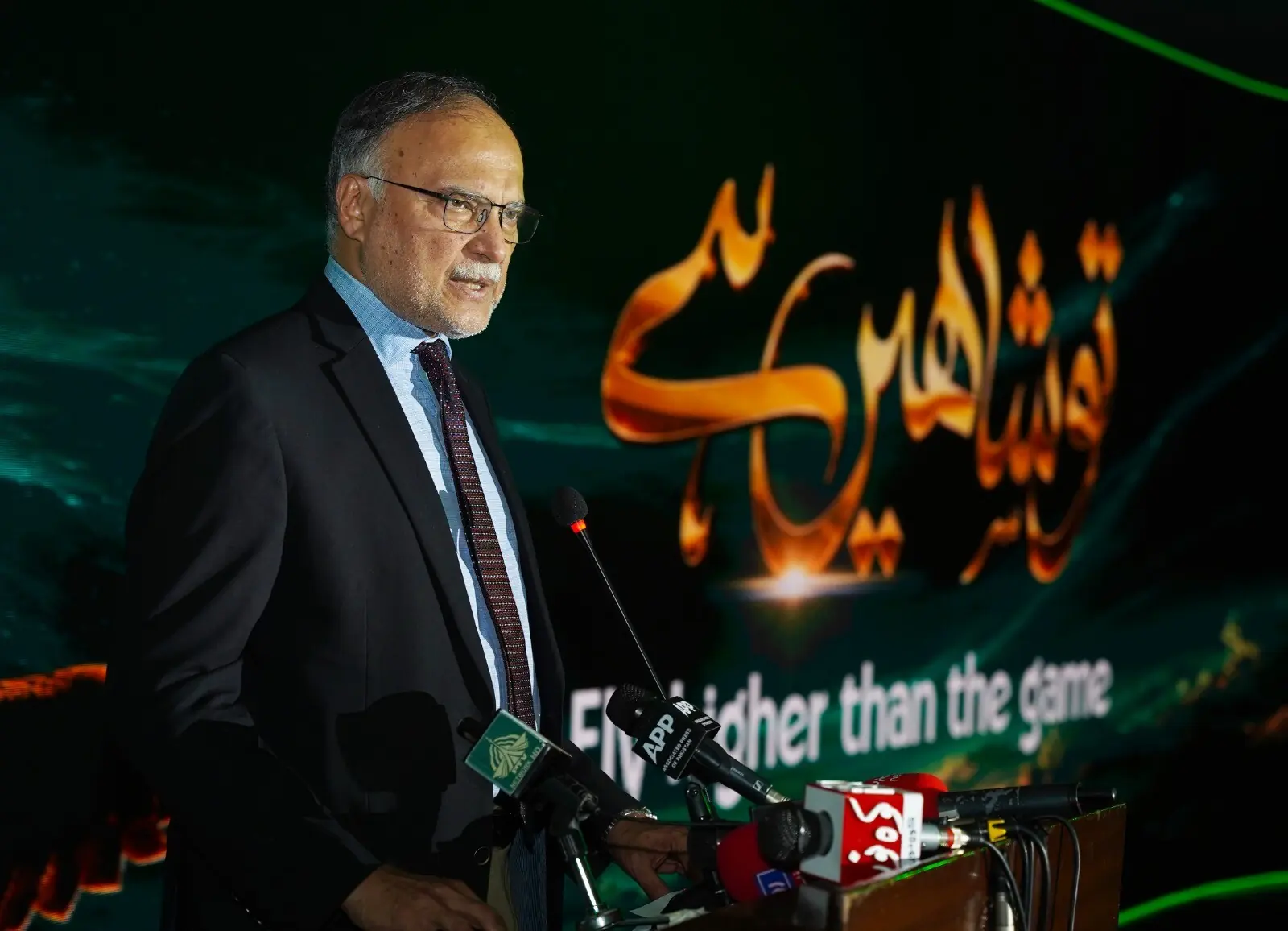

Federal Minister for Planning, Development and Special Initiatives Ahsan Iqbal on Monday rejected the perception that Pakistan’s national system had failed, saying the country had entered an era of reforms aimed at modernising institutions, governance and national priorities, according to a statement.
“This is not the age of systemic failure; it is the age of national reform,” Iqbal said while addressing the launch ceremony of a national anthem commemorating Pakistan’s 79th Independence Day and the 150th birth anniversary of Quaid-e-Azam Muhammad Ali Jinnah.
He said Pakistan stood at the threshold of a “new dawn” defined by hope, determination, national unity and renewed prospects for development.
The minister stressed that the challenges facing a country of more than 250 million people could not be addressed by elected representatives alone, calling for the collective participation of youth, experts, the private sector, civil society and state institutions.
“Sustainable national development requires continuity of reforms, national consensus and shared responsibility,” he said.
Iqbal described Pakistan’s youth as the country’s greatest strength and hope, rejecting negative perceptions about their potential.
“Our youth are not cockroaches; they are Iqbal’s Shaheens,” he remarked, urging young Pakistanis to embrace confidence, ambition and excellence in shaping the country’s future.
The remarks come says after Interior Minister Mohsin Naqvi, while addressing the 1st Economic Summit 2026 in Islamabad on Thursday, said Pakistan’s governance system had “collapsed” and called for the creation of new administrative units to bring decision-making and public services closer to the people.
Naqvi had urged political parties to develop a national consensus on structural reforms, arguing that short-term measures could not address the country’s governance challenges.
The minister said the government was investing in modern technologies, artificial intelligence, digital skills and future-oriented education through various programmes and training initiatives.
“The youth are not merely Pakistan’s future; they are Pakistan’s present,” he said.
Referring to the country’s economic situation, Iqbal recalled that many had predicted in 2022 that Pakistan would default and its system would collapse.
He said Pakistan had overcome those challenges through national resolve, government policies and public support, returning to a path of economic stability and growth.
He added that overseas Pakistanis were increasingly acknowledging the country’s economic recovery and positive trajectory, describing the progress as a result of collective national efforts.
The minister also highlighted URAAN Pakistan, describing it as the government’s comprehensive framework for transforming the national economy and aligning it with the requirements of the 21st-century global economy.
He said the initiative aimed to lay the foundation for a $1 trillion economy by increasing exports, accelerating technological advancement, achieving energy self-reliance, promoting the digital economy, strengthening human capital and skills, improving education and healthcare, ensuring effective population management and advancing sustainable development.
Iqbal said the ideological foundations of Pakistan were laid by Allama Muhammad Iqbal and Quaid-e-Azam Muhammad Ali Jinnah.
He said Allama Iqbal’s philosophy of Khudi emphasised self-confidence, knowledge, character and purposeful action, while Quaid-e-Azam translated that vision into the creation of a free, sovereign, modern and progressive state.
Highlighting the significance of 2026, he said the 150th birth anniversary of Quaid-e-Azam provided the nation with an opportunity to renew its commitment to the aspirations of the country’s founding fathers.
Speaking about the newly launched national anthem, Iqbal said it was more than a musical composition or a source of entertainment, describing it as a symbol of national awakening, inspiration and collective purpose.
He said the anthem connected Allama Iqbal’s message of selfhood, courage and nation-building with the energy of Pakistan’s youth, while communicating Quaid-e-Azam’s vision of a strong, self-reliant and prosperous country to the younger generation.
The minister said Iqbal had not merely encouraged people to dream but had taught them to turn their dreams into reality through knowledge, character, hard work and perseverance.
He urged young Pakistanis to believe in their abilities, rise above limitations and play an active role in national development.
Concluding his address, Iqbal said Pakistan’s real strength lay in the determination, talent, knowledge and resilience of its youth.
He maintained that sustainable development, national prosperity and security could only be achieved through collective consciousness, national unity and commitment to reforms.
He reaffirmed that URAAN Pakistan was not the agenda of any single political party or government but a national mission aimed at transforming Pakistan into a stron
g, self-reliant, prosperous and dignified state.

























Comments