


KSE-100 surges 4% as SBP keeps policy rate unchanged
- Benchmark index settles at 178,262.33
The Pakistan Stock Exchange's KSE-100 Index surged nearly 4,500 points as buying returned, driven by easing geopolitical tensions and falling global oil prices after a week of declines.
- Pakistan Stock Exchange's significant rebound.
- Easing Middle East geopolitical tensions.
- Global oil price decline and inflation relief.
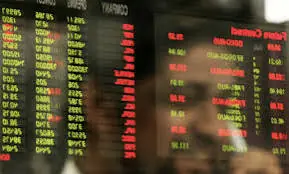

After days of selling pressure, buying returned at the Pakistan Stock Exchange (PSX) on Monday, with the benchmark KSE-100 Index extending gains throughout the trading session, settling up by 4.2%.
After a volatile start that briefly pushed the index below the 175,500 level, buying interest quickly returned, lifting the benchmark above 176,000 by mid-morning.
The market then traded largely on an upward trajectory, with gains accelerating in the afternoon as investors stepped up purchases across key sectors, pushing the index to an intraday high of 178,588.33.
At close, the benchmark index settled at 178,262.33, up 7,241.13 points or 4.23%.
“The primary reason is that oil prices declined by around 4-5%,” Sana Tawfik, Head of Research at Airf Habib Limited (AHL), told Business Recorder.
“Secondly, institutional investors and other market participants are actively buying. Thirdly, the market expects the State Bank of Pakistan (SBP) to leave the policy rate unchanged in today’s monetary policy announcement.
Finally, the ongoing corporate earnings season is also supporting sentiment,” she added.
In line with market expectations, the Monetary Policy Committee (MPC) of the central bank decided to keep the policy rate unchanged at 11.5%.
During the previous week, the PSX remained under pressure amid escalating geopolitical tensions in the Middle East, particularly the Houthis’ announcement of a blockade in the Red Sea, which dampened investor confidence and sent international Brent crude oil prices above US$100 per barrel for the first time in nearly two months, triggering broad-based selling across the market.
The benchmark KSE-100 Index declined by 2.7% on a week-on-week basis, losing 4,781.60 points to close at 171,021.20 points.
Share markets gave a guarded response on Monday as a pause in fighting in the Gulf dragged oil prices lower, easing inflation risks and boosting bonds ahead of a packed week of central bank meetings and earnings reports.
Iran said on Sunday it would halt its own attacks as long as the United States did the same, with the U.S. military reportedly concerned about dwindling supplies of ammunition.
Yet, Yemen’s Iran-aligned Houthis had still attacked Saudi oil installations along the Red Sea coast, threatening another waterway vital to the global oil trade.
The lull in fighting over the Strait of Hormuz saw Brent crude slide 5.2% to $91.73 a barrel, while U.S. crude dropped 5.4% to $84.45.
The pullback in oil provided some relief from inflation fears and led markets to slightly pare the probability of rate hikes from the Federal Reserve.
Equities took comfort in the drop in oil and yields, sending S&P 500 futures up 0.7%, while Nasdaq futures jumped 1.1%.
In Europe, EUROSTOXX 50 futures gained 0.4%, while DAX futures rose 0.6% and FTSE futures went flat.
Japan’s Nikkei edged up 0.1%, while South Korea’s chip-heavy index eased 1.1%. MSCI’s broadest index of Asia-Pacific shares outside Japan held steady.
Chinese blue chips firmed 0.4% as the chipmaker surged 470% in its Shanghai trading debut after raising $8.6 billion in Asia’s biggest initial public offering this year.















Comments