


Selling intensifies at PSX as Middle East tensions escalate
- Benchmark index was hovering at 169,885.48
Pakistan Stock Exchange's KSE-100 Index plunged over 1,800 points due to escalating Middle East tensions, impacting investor sentiment and global markets.
- Escalating Middle East tensions and surging global oil prices.
- Rising inflation fears and central banks' hawkish stance.
- Widespread sell-off across Asian and Pakistan stock markets.
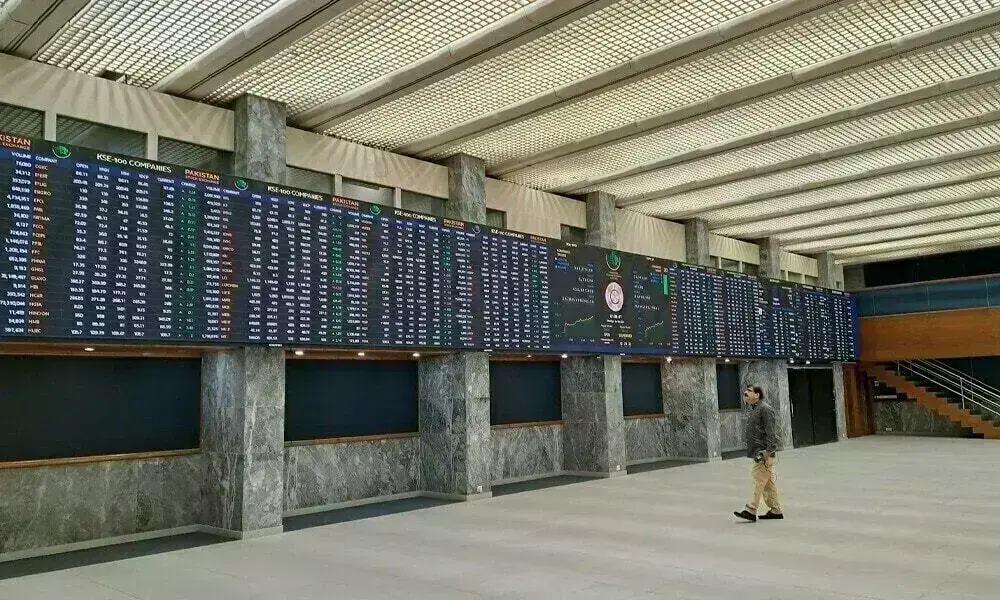

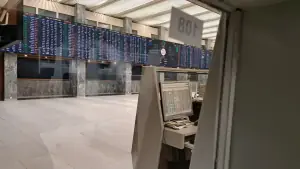
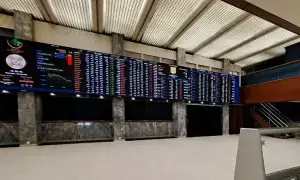
Selling pressure persisted at the Pakistan Stock Exchange (PSX) as escalating tensions in the Middle East took their toll on investor sentiments, with the benchmark KSE-100 Index shedding over 1,800 points during the opening minutes of trading on Friday.
At 9:48am, the benchmark index was hovering at 169,885.48, down by 1,853.96 points or 1.08%.
Selling was observed in key sectors, including automobile assemblers, cement, commercial banks, oil and gas exploration companies, OMCs and power generation. Index-heavy stocks, including HUBCO, ARL, MARI, OGDC, PPL, HBL, MCB, MEBL and NBP, traded in the red.
On Thursday, PSX remained firmly under bearish pressure with the Index plunging as intensifying geopolitical tensions between the United States and Iran, coupled with a sharp rally in international crude oil prices, triggered widespread risk aversion and heavy selling across key sectors.
Reflecting the broad-based sell-off, the KSE-100 Index shed 2,690.48 points, or 1.54%, to settle at 171,739.45 points.
Globally, Asian shares fell on Friday as oil prices stormed back above $100 a barrel amid an intensifying conflict in the Gulf, rattling bond markets and reviving fears of a fresh inflation shock.
Brent crude held at $100.85 a barrel, after surging 7% overnight to a two-month high of $102 as attacks by Iran-aligned Houthis on Saudi tankers in the Red Sea choked off a second crucial Middle East artery for global oil supplies, alongside Iran’s near-closure of the Strait of Hormuz.
Two weeks since the effective collapse of an interim truce meant to end the war, the US military launched air strikes on Iran into Friday morning while Tehran fired at neighbouring Arab countries that host U.S. bases. With the conflict showing little signs of abating, Brent has soared nearly 40% this month alone.
News that the U.S. administration will impose higher tariffs on goods from 60 trading partners also did not help the inflation picture, with 30-year Treasury yields nearing their highest levels since 2007 and benchmark European borrowing costs climbing to highs last seen in 2011.
Markets bet central banks will have to turn more hawkish, with a one-in-three chance of a rate hike from the Federal Reserve as soon as next week — a sea change from merely a week ago — while a move in September is more than fully priced in.
The European Central Bank left rates unchanged overnight but a September rate hike is about 70% priced in.
In Asia, MSCI’s broadest index of Asia-Pacific shares outside Japan fell 1% and Japan’s Nikkei slid 2.9%. South Korea’s KOSPI dropped 3.7%.
This is an intraday update












Comments