


Indian corporates leap into arbitrage plays, reviving pain point for rupee
- The rupee fell to 95.4725 per US dollar on Monday
The Indian rupee is under pressure as local companies exploit arbitrage opportunities between onshore and non-deliverable forward markets, contributing to its recent decline despite RBI intervention.
- Arbitrage opportunities between onshore and NDF markets.
- Corporate exploitation of currency price differentials.
- RBI's efforts to curb arbitrage trading activity.
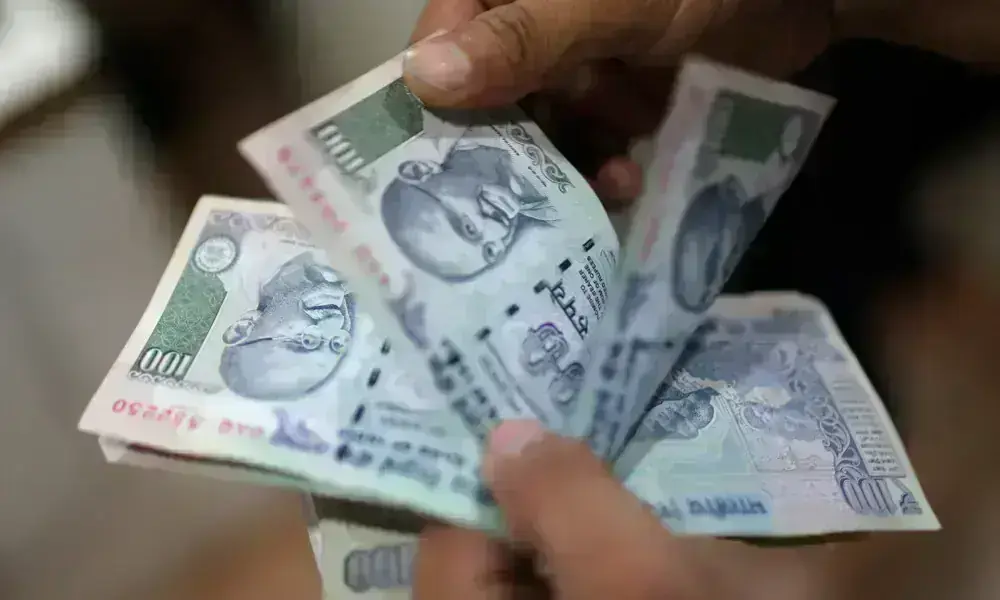

MUMBAI: A familiar drag on the Indian currency has resurfaced with local companies exploiting the arbitrage opportunities between the onshore foreign exchange market and non-deliverable forwards, spurring additional dollar demand that ispressuring the currency, four bankers said.
The rupee fell to 95.4725 per U.S. dollar on Monday, after sliding 0.86% through last Friday, its worst weekly performance in nearly two months.
The currency’s drop beyond the 95-per-dollar mark came despite Brent crude prices holding at pre Iran-war levels of about $70 a barrel and intervention by the Reserve Bank of India supporting the currency.
While a broad dollar rally and routine importer demand for dollars have contributed to the rupee’s weakness, the currency’s decline has been fuelled further by the return of arbitrage opportunities between the NDF and the onshore market, bankers said.
Corporate clients with both import and export exposures and the underlying trade documentation required to execute such transactions have been actively exploiting the price differential, the bankers said.
“Clients are jumping on the arbitrage opportunity. It’s free money,” said an FX salesperson at a foreign bank, requesting anonymity along with other bankers Reuters spoke to for the story, since they are not authorised to speak to the media. The salesperson said his desk had executed around 10 such transactions in recent days.
The impact of these arbitrage flows was most evident on Thursday and, to a lesser extent, on Friday, when the one-month dollar/rupee contract in the NDF market traded 4 to 6 paisa above the equivalent onshore rate. The spread remained largely intact on Monday.
The arbitrage flows contributed to the rupee weakening last Thursday despite pre-market RBI intervention that initially lifted the currency. Such intervention has typically been sufficient to disrupt one-way bearish positioning against the rupee. On Thursday, however, the support proved short-lived.
Limited trade sizes
To limit the pressure from arbitrage trading activity, the central bank in late March limited the net open position banks could hold on the rupee in onshore markets to $100 million.
To stay within this cap, banks undertake countervailing trades in the interbank market, offsetting client-related onshore exposures, bankers said.
The requirement to execute back-to-back transactions limits the size of arbitrage trades banks can facilitate, the bankers said. Additionally, such transactions consume limits that corporates have with banks, keeping position sizes relatively modest, according to the FX salesperson cited previously.
Both of these have led to the size of such arbitrage trades remaining well below the size of positions that banks had built up before the central bank’s restrictions came into effect.
That effectively limits the size of arbitrage trades banks can facilitate and narrows the spreads that corporates are able to capture, they said.
Banks initially were “extremely cautious” about facilitating NDF-related transactions for clients, said a treasury official at a foreign bank.
“Now, as long as clients can provide the necessary underlying documentation, banks are a lot more comfortable.”


























Comments