



Pakistan’s problem is not only that the state owns too much. It is also that too many productive assets remain trapped in dynastic control, protected ownership structures and closed corporate networks. The economy needs a deeper equity market in which businesses are valued continuously, ownership can be contested, capital can move, managers can be judged by performance, and firms are not treated as family estates. Without this, assets remain locked in old hands, capital remains immobile, professional management remains subordinate, and businesses are not forced to discover their real market value.
The debate must therefore shift from ownership as possession to ownership as discipline. Who owns the firm matters, but so does who manages it, who values it, who monitors it, who can challenge it, and whether poor performance has consequences. A firm that is never exposed to market valuation, never faces a takeover threat, never has active institutional shareholders and never allows professional managers independence is not a modern corporation. It is a closed household enterprise, even if it is large, old and politically connected.
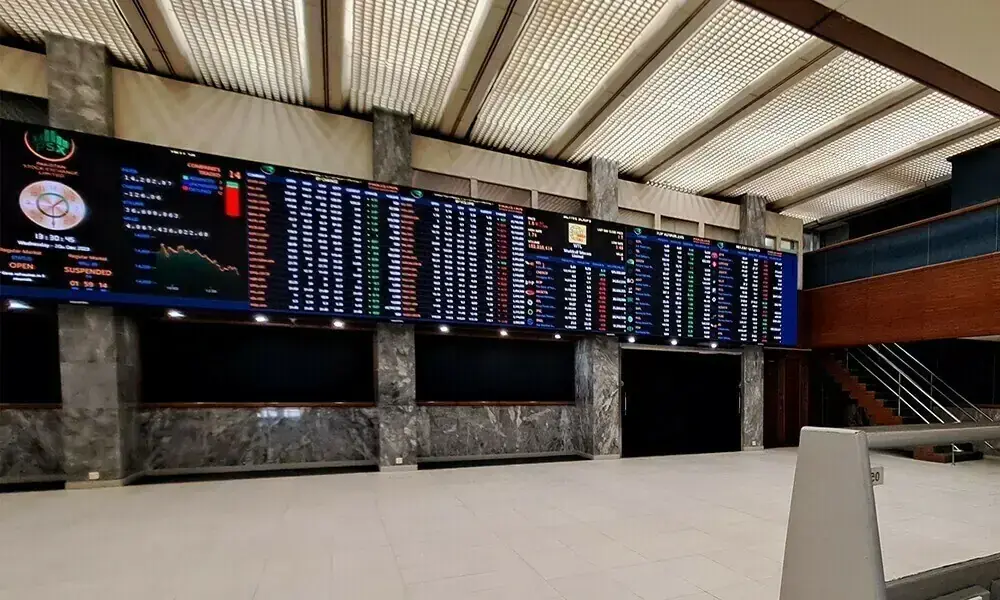
This is where equity markets matter. A serious stock market is not merely a place for speculation. It is a mechanism for price discovery, governance, capital allocation and corporate discipline. It tells owners what their business is worth. It tells managers whether investors believe their strategy. It allows savers, pension funds, mutual funds, insurance companies and ordinary citizens to participate in ownership. It allows capital to move from weak firms to strong firms. It allows underperforming assets to be challenged, reorganized and taken over. It gives the economy a way to recycle capital instead of leaving it trapped under hereditary control.
Pakistan has not used the equity market this way. Too much of our corporate sector remains controlled by families and groups that treat companies as extensions of their private empires. Boards are often loyal to controlling shareholders rather than to the company. Professional managers have limited independence. Minority shareholders have little voice. Related-party transactions move value across group companies. Succession is determined by family, not performance. Banks, regulators and ministries are negotiated with. Competition is avoided. Capital is defended, not redeployed.
This is not the capitalism that produces innovation, scale and productivity. It is a system of protected control. Families can be entrepreneurial, and many great firms begin as family firms. But when family control is combined with weak disclosure, state patronage, captive markets, regulatory protection and no takeover threat, it becomes a barrier to growth. It blocks professional management. It discourages innovation. It prevents capital mobility. It turns companies into inheritance vehicles rather than productivity engines.
The United States developed a different model. Its large corporations increasingly separated ownership from management. Professional managers emerged as a powerful class. Capital markets mobilized dispersed ownership. Institutional investors monitored performance. Boards could hire and fire executives. Share prices reflected expectations. Mergers and takeovers could challenge inefficient control. Managers were incentivized through stock and performance pay. They were not merely servants of dynastic owners. They became professionals with authority, accountability and often ownership stakes.
This model was not perfect. It produced managerial excess, financial engineering and market failures of its own. But it was transformative because it allowed firms to grow beyond family limits. It allowed capital to move. It allowed professional talent to manage complex organizations. It allowed ownership to be contested. It created a system in which resources were not permanently trapped inside family empires. That is the lesson Pakistan needs.
The key institution here is the market for corporate control. If a firm is badly managed, underinvested, overleveraged or controlled by an extracting owner, investors should be able to accumulate shares, challenge the board, replace management, merge the company, restructure it or take it over. This is not a hostile act against business. It is how capitalism disciplines business. Ownership should not be a permanent title. It should be earned through performance.
Without takeover possibilities, lazy capital survives. Poor management survives. Family control survives even when value is destroyed. Firms remain under owners who may have inherited assets but lack the ability or willingness to expand them. Banks keep lending to old names. Regulators keep negotiating with old groups. The market never discovers whether a better owner or better management team could use the same assets more productively.
Pakistan needs to make control contestable. This requires deeper listings, larger free floats, stronger minority shareholder rights, active institutional investors, transparent beneficial ownership, easier takeover rules and strict control of related-party transactions. A company with a tiny public float and one dominant family is not really exposed to the market. It is only quoted on the exchange. A genuine listed company must have enough shares in circulation for investors to build positions, vote, challenge and influence direction.
Institutional investors must also become more active. Pension funds, mutual funds and insurance companies should not be passive holders. They should vote. They should question strategy. They should demand disclosure. They should oppose tunnelling. They should support better boards. They should reward performance and punish extraction. Without active institutional ownership, the equity market becomes a trading platform rather than a governance mechanism.
Professional managers must also be brought into ownership. Managers should not merely be hired servants of controlling families. They should have authority, accountability and skin in the game. Stock options, performance shares and employee ownership can help align management with long-term value creation. But this only works if boards are independent and performance is real. Otherwise, managerial ownership becomes another insider privilege.
The purpose of equity markets is to keep capital alive. Capital should not sit forever under the same family simply because that family acquired it decades ago. Capital must be able to move toward better use. If one owner cannot invest, innovate or manage, another should be able to try. If one management team fails, another should be able to replace it. If one business group uses a company for related-party extraction, shareholders should be able to resist. If a firm’s assets are worth more under new management, the market should reveal it.
This is also essential for growth. Pakistan cannot build a dynamic economy through debt, subsidies and protected incumbents. Growth requires equity. It requires risk capital. It requires firms that can raise money from the market rather than from political banks. It requires investors who are willing to fund expansion because they trust disclosure and governance. It requires companies whose value is determined by future earnings, not by connections. It requires a managerial class that can scale firms beyond family capacity.
The old model has reached its limit. Dynastic control may preserve wealth, but it does not create enough new investment, innovation or jobs. It makes the economy narrow. It keeps young managers outside ownership. It keeps savers outside productive assets. It keeps capital markets shallow. It encourages groups to seek protection rather than performance. It leaves Pakistan with big names but small capitalism.
Pakistan needs equity-market capitalism. Resources should be contested in the stock market, product markets, management markets and takeover markets. Firms should not remain permanently under one family because control was acquired once. Managers should not be servants of dynasties. They should be professionals with authority, accountability and ownership incentives. Investors should not be spectators. They should be owners with rights.
The real choice is not public ownership versus private ownership. It is closed control versus open contestability. Pakistan needs businesses whose value is discovered in the market, whose capital can move, whose managers are professional, whose owners can be challenged, and whose boards answer to shareholders rather than households. That is how capital becomes productive. That is how firms grow. That is how an economy moves from privilege to performance.
Copyright Business Recorder, 2026
The writer served as the Deputy Chairman of the Planning Commission. X: @nadeemhaque; YouTube: @SiaLytics and Substack: Aid, Policy and Growth

PUBLIC SECTOR EXPERIENCE: He has served as Member Energy of the Planning Commission of Pakistan & has also been an advisor at: Ministry of Finance Ministry of Petroleum Ministry of Water & Power
PRIVATE SECTOR EXPERIENCE: He has held senior management positions with various energy sector entities and has worked with the World Bank, USAID and DFID since 1988. Mr. Shahid Sattar joined All Pakistan Textile Mills Association in 2017 and holds the office of Executive Director and Secretary General of APTMA.
He has many international publications and has been regularly writing articles in Pakistani newspapers on the industry and economic issues which can be viewed in Articles & Blogs Section of this website.

















Comments