



Pakistan does need privatization. But privatization is not reform merely because ownership moves from the public sector to the private sector. The real question is whether the sale creates competitive markets, wider ownership, professional management, investment, consumer welfare and hard budget discipline. If it does not, privatization becomes plunder with paperwork.
International experience is clear. Privatization works when it is part of market creation. It fails when it merely transfers public assets to insiders. Russia is the strongest warning. After the collapse of the Soviet Union, vouchers were distributed and enterprises were sold in the name of rapid transition to capitalism. Later, the loans-for-shares programme transferred valuable natural resource and industrial assets to politically connected bankers and businessmen. Instead of competitive capitalism, Russia got oligarchic capitalism. The old nomenklatura, enterprise managers, banks and political insiders captured the commanding heights of the economy. Public monopoly did not become competitive private enterprise. It became private control over public rents.
The word nomenklatura matters. It refers to the old Soviet system of politically approved elites who occupied key positions in the party, state and enterprise structure. When privatization came, these insiders had information, networks, control over enterprises, political access and influence over rules. Ordinary citizens formally received vouchers, but lacked information, liquidity and institutional protection. Managers and insiders consolidated control. The result was not popular capitalism. It was insider capitalism. Assets moved, but power did not democratize.
This is the danger Pakistan must understand. We do not have a Soviet nomenklatura, but we do have an entrenched political economy: bureaucrats, political families, protected industrial houses, subsidized borrowers, IPP beneficiaries, regulatory insiders, real estate networks and business groups that have long lived off state-created privilege. If privatization hands public assets to this same narrow circle, Pakistan will not create markets. It will create its own version of nomenklatura capitalism: old privilege under new ownership.
Other experiences reinforce the point. Czech voucher privatization created broad paper ownership, but weak governance allowed investment funds, managers and insiders to consolidate control. The form was democratic; the substance became concentrated. Poland moved more carefully, paying greater attention to restructuring, competition, banking discipline and institution-building. The United Kingdom used stock-market offerings to widen share ownership and create a political constituency for privatization, but even there natural monopolies required strong regulation. Latin America showed the danger of selling utilities and infrastructure with exclusive rights: high sale prices often reflected monopoly rents, later paid for by consumers through tariffs and weak service. China, meanwhile, did not begin by selling everything. It first created market space, allowed entry, encouraged local experimentation and then gradually restructured, listed or corporatized state firms. The lesson across these cases is simple: ownership transfer without competition, governance and regulation is incomplete reform.
For Pakistan, privatization must not be designed as a fiscal auction. The state should not ask only: how much money can we get? It must ask: will this transaction reduce monopoly power, widen ownership, improve governance, attract investment, protect consumers and deepen the capital market? If the answer is ‘no’, the transaction is flawed.
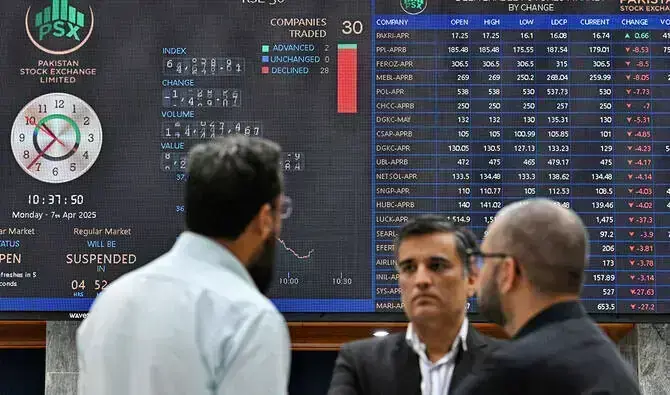
This is where stock-market privatization becomes important. Pakistan should use privatization to broaden ownership and deepen the Pakistan Stock Exchange, not to hand large control blocks to the already advantaged. Every major commercially viable privatized entity should have a meaningful public float. Shares should be offered to citizens, employees, pension funds, mutual funds, insurance companies and overseas Pakistanis. Public listing creates disclosure, price discovery and scrutiny. It gives ordinary savers a stake in national assets. It also allows institutional investors to monitor performance.
But the float must be meaningful. A decorative listing is not reform. If 80 or 90 percent is sold to one group and a small fraction is floated to the public, control remains dynastic or concentrated. The public gets crumbs while insiders get control. Pakistan should require staged public offerings with clear minimum floats, perhaps 25 to 40 percent over time, depending on the sector. The objective should be real market ownership, not symbolic participation.
Even more important, stock-market privatization creates the possibility of takeover. This is central to modern capitalism. If a firm is badly managed, under-invested, over-leveraged or controlled by an extracting owner, investors should be able to accumulate shares, challenge the board, replace management or restructure the company. Capital must be mobile. Control must be contestable. Ownership should not be a permanent title granted by the state to one family or group.
Pakistan’s existing business structure often works in the opposite direction. Once a family or group controls an asset, it treats control as hereditary property. Management becomes subordinate to the owner. Boards are weak. Minority shareholders are ignored. Related-party transactions are common. Regulators are negotiated with. Banks are influenced. Competition is avoided. In such an environment, privatization to existing owners or protected groups is dangerous. It freezes assets inside old networks.
The United States developed differently. Its large corporations were not merely family estates. Capital markets, dispersed ownership, institutional investors, professional managers, boards, analysts and takeover markets created a different form of capitalism. It had many failures, but it allowed scale, mobility of capital and professional management. Managers were not servants of dynasties. They became a class with incentives, accountability and often ownership through stock compensation. That is the direction Pakistan must move toward.
Privatization should therefore be used to build modern corporate capitalism. It should bring companies into the stock market, widen ownership, strengthen disclosure, create professional boards and make control contestable. It should allow workers and managers to own shares, not merely take orders from new family owners. It should enable pension funds and mutual funds to become long-term owners. It should help ordinary citizens participate in asset ownership instead of simply paying higher tariffs after privatization.
This is not an argument against strategic investors. Some firms need technology, capital and management. Airlines, steel, distribution companies, logistics and energy assets may require a controlling investor for a period. But even strategic sales should include listing requirements, dilution timetables, public float obligations, investment commitments, takeover rules and competition review. Strategic sale must not become permanent private fiefdom.
The rule should be simple: never sell monopoly power. Sell firms only after separating monopoly networks from competitive activities. Electricity distribution, gas pipelines, ports, airports and other network assets must be unbundled, regulated and opened to access. Otherwise, Pakistan will repeat the Latin American utility mistake and the Russian insider mistake at the same time: private monopoly plus political capture.
Pakistan’s privatization must be judged by five tests. Does it create competition? Does it widen ownership? Does it improve governance? Does it create market discipline through listing and possible takeover? Does it reduce the ability of old elites to capture rents? If not, it is not reform.
The country does not need another round of elite transfer. It needs market creation. Privatization through the stock market, with meaningful public float, institutional ownership and contestable control, offers a better route than quiet sale to existing privileged groups. Pakistan should not create oligarchs in the name of efficiency. It should create owners, managers, investors and markets.
Copyright Business Recorder, 2026

PUBLIC SECTOR EXPERIENCE: He has served as Member Energy of the Planning Commission of Pakistan & has also been an advisor at: Ministry of Finance Ministry of Petroleum Ministry of Water & Power
PRIVATE SECTOR EXPERIENCE: He has held senior management positions with various energy sector entities and has worked with the World Bank, USAID and DFID since 1988. Mr. Shahid Sattar joined All Pakistan Textile Mills Association in 2017 and holds the office of Executive Director and Secretary General of APTMA.
He has many international publications and has been regularly writing articles in Pakistani newspapers on the industry and economic issues which can be viewed in Articles & Blogs Section of this website.
The writer served as the Deputy Chairman of the Planning Commission. X: @nadeemhaque; YouTube: @SiaLytics and Substack: Aid, Policy and Growth




















Comments