


China warns of risk of 'extreme floods' in desert regions
- While the Taklamakan has experienced similar floods since 2021, they typically occur in August, when temperatures peak
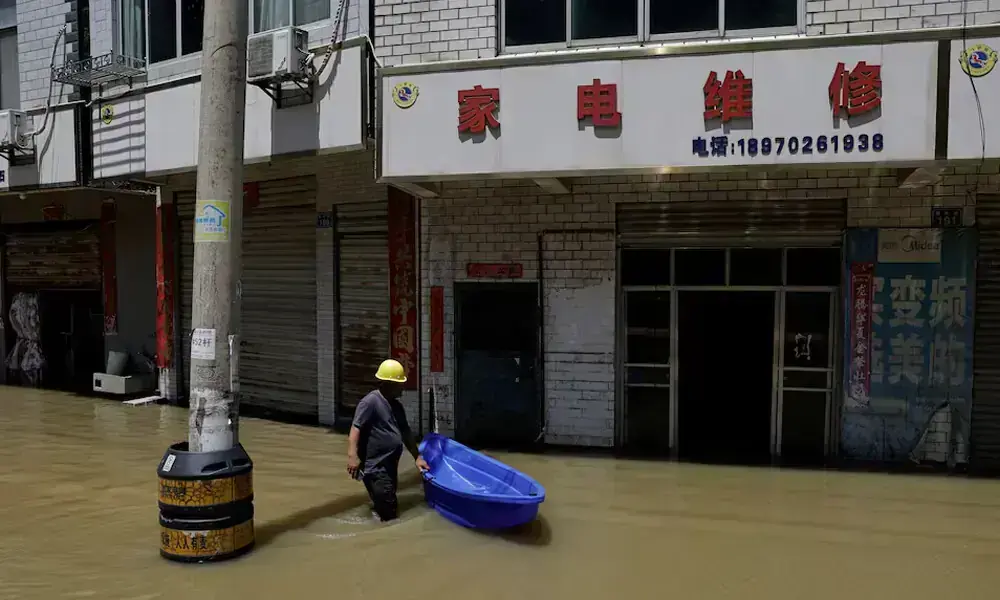

HONG KONG: China warned communities in its northwestern Xinjiang and nearby regions on Friday to prepare for “extreme floods” this summer, driven by abnormally high temperatures, heavy rainfall, and rapid glacier melt.
Xinjiang’s Taklamakan Desert, China’s largest, experienced its first flood of the year in early June, state broadcaster CCTV reported on Friday, showing footage of water filling the typically arid dunes.
While the Taklamakan has experienced similar floods since 2021, they typically occur in August, when temperatures peak.
However, temperatures have surged much earlier this year.
On June 12, Xinjiang was 7.3 degrees hotter than average for this time of year, reaching 38 degrees Celsius (100 degrees Fahrenheit), according to Reuters Climate Monitor. Western and southern Xinjiang have also seen more frequent rainfall recently.
Precipitation in some areas has been double or even triple the historical average for early June, CCTV reported.
Glaciers and snow melting
The combination of intense heat and rainfall has triggered the desert floods.
Large swathes of glaciers and snowpack in the Tianshan and Kunlun mountains have melted, sending runoff rushing into the Tarim River, China’s longest inland waterway.
The influx caused the river to burst its banks, spilling water into low-lying areas of the desert, the broadcaster said.
Four dead, five missing in southwest China floods
While the seasonal floods can temporarily create short-lived oases, experts say they are unlikely to last because the Taklamakan Desert is situated far inland and surrounded by high mountains, so low moisture levels and extreme evaporation will quickly dry out the terrain.
Though the water provides vital irrigation for local forests, officials warned of severe infrastructure risks.
“Extreme floods can destroy roads, railways, and oil and gas facilities, posing a significant disaster risk,” Sun Qianqian, an analyst at the China Meteorological Administration, told CCTV.
“During the flood season, residents and travellers in these regions should monitor official warnings closely, adjust their travel plans, and prioritise safety,” Sun added.


























Comments