



This is apropos a letter to the Editor “Trump’s war of contradictions” carried by the newspaper on Tuesday and yesterday.
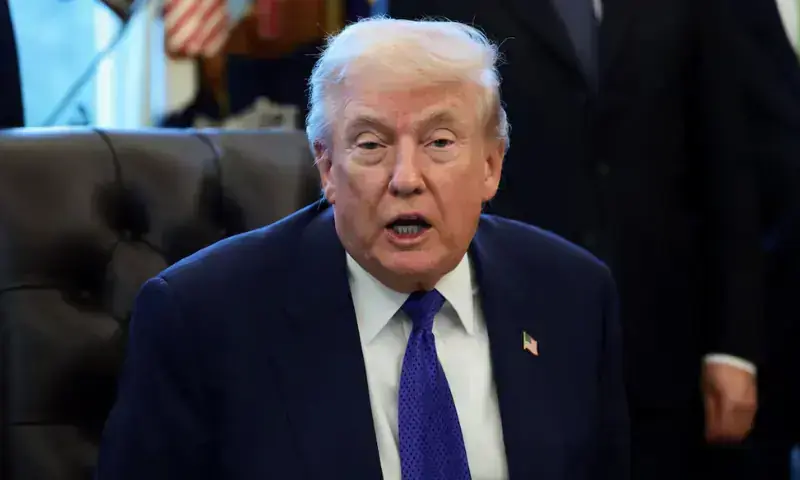
Ritter argues that the deeper problem is that Trump himself is unpredictable. In one of the most controversial portions of his interview, Ritter characterized Trump’s behaviour as reflecting traits associated with narcissistic personality disorder. These remarks represent Ritter’s personal opinion and not a medical diagnosis. Nevertheless, Ritter contends that Trump’s decision-making is heavily influenced by personal considerations, making policy outcomes difficult to forecast through traditional geopolitical analysis. In Ritter’s view, analysts are often attempting to apply rational strategic frameworks to decisions that may be driven by entirely different motivations.
Complicating matters further is the role of Israeli Prime Minister Benjamin Netanyahu. Since Trump’s return to office, Netanyahu has maintained unusually frequent contact with Washington. Several reports suggest that key conversations between the two leaders coincided with major shifts in American policy toward Iran. While close coordination between the United States and Israel is expected, critics argue that negotiations often appear to move forward until regional security concerns or Israeli objections re-enter the discussion. Supporters of Israel counter that military pressure is precisely what forces Iran to negotiate. Regardless of which interpretation proves correct, the repeated sequence of diplomacy, escalation, consultation, and renewed escalation has created an impression that negotiations remain vulnerable to external political pressures.
Copyright Business Recorder, 2026
The writer is a former Press Secretary to the President, An ex-Press Minister at Embassy of Pakistan to France, a former MD, SRBC Macomb, Detroit, Michigan

























Comments