



BENGALURU: Asian currencies gained, and South Korea and Taiwan led emerging Asian equities to all-time highs on Thursday as Donald Trump’s prediction of a swift end to the Iran war boosted sentiment and brought on risk-on plays.
South Korean and Taiwan stocks clinched record closing highs, as easing worries over geopolitics kept the chip rally ablaze and deepened Samsung Electronics into the USD1 trillion territory it crossed last session.
Southeast Asian stocks rose as well, with those in the Philippines gaining 1.1 percent and Indonesia adding 0.8 percent.
US President Donald Trump expected a swift end to the war, as Tehran considered a US peace proposal that sources said would formally end the conflict. Key US demands that Iran suspend its nuclear program and reopen the Strait of Hormuz remained unresolved, however.
Oil prices reversed course on Thursday around 0723 GMT, dropping sharply.
The MSCI’s gauge of emerging Asian stocks rose 1.6 percent, hovering near its all-time high attained earlier in the session.
Equities in Malaysia kept their 0.4 percent gains after the central bank, Bank Negara Malaysia, held its benchmark rate at 2.75 percent as widely expected by all 28 economists surveyed in a Reuters poll, but struck a cautious tone, warning of uncertainty due to the conflict.
“At the margin, we believe BNM sounded modestly more concerned about growth versus inflation suggesting that its near-term bias would be hold rather than normalise the policy rate,” said Lavanya Venkateswaran, senior ASEAN economist at OCBC Bank.
Currencies elsewhere rallied as the prospect of the end to the Middle East war renewed some optimism for assets in the oil importing economies.
“The recovery of the currencies in the region was led by selected FX such as the Korean won which was already benefiting from the AI-related tech rally,” said Fiona Lim, senior FX strategist at Maybank.
“While there is quite a fair bit of optimism on some sort of resolution for the US-Iran conflict, markets are far from being complacent about this scenario.”
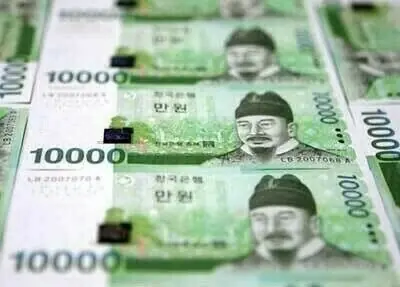
The won rose to 1,449.1 per dollar, strengthening for a fourth straight session. The Taiwan dollar added as much as 0.5 percent to 31.338, its highest level since early March.
The Singapore dollar gained 0.2 percent and is up 1.6 percent this year, outperforming most Asian currencies.
The Philippine peso added 0.5 percent, and the Thai baht gained to 32.12. The two are down 2.6 percent and 2.1 percent this year, respectively, as the higher oil prices pushed inflation in both countries to three-year highs. Prices in South Korea rose to a near two-year high.
The oil bill is beginning to weigh on growth as well. Data on Wednesday showed the Philippine economy grew 2.8 percent in the first quarter, below analysts’ average estimate of 3.5 percent in a Reuters poll.

























Comments