


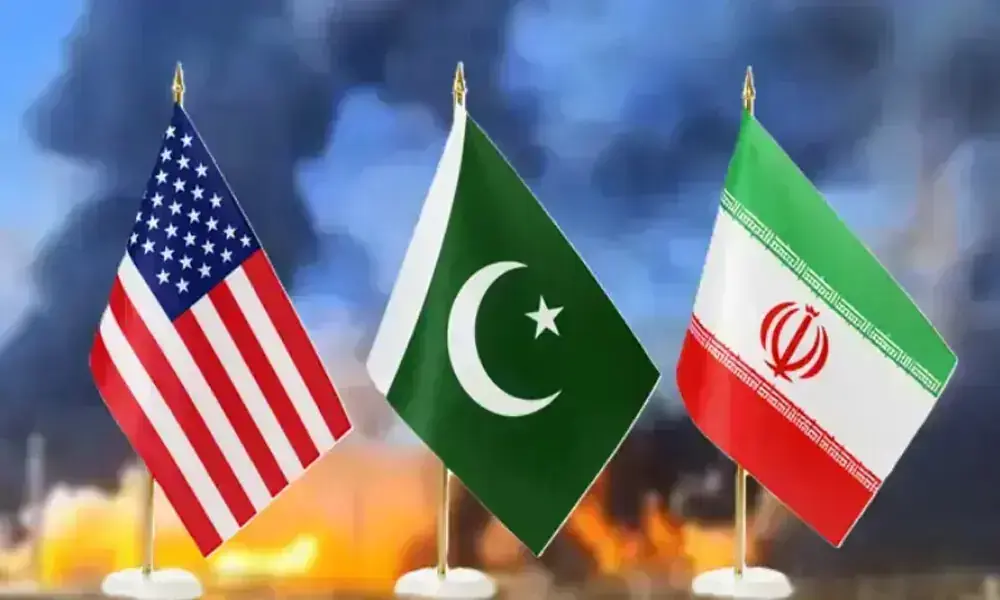

The world stood on the edge of an unimaginable catastrophe on April 7, when US President Donald J. Trump issued a chilling ultimatum—warning that an entire civilisation, rooted in over 5,000 years of history and home to more than 90 million people, could be reduced to ashes within hours. The threat was not merely rhetorical; it carried the weight of military capability that could have ignited a chain reaction of destruction across the Middle East and beyond.
The potential consequences were staggering: regional collapse, global economic paralysis, mass displacement, and a humanitarian disaster of historic proportions.
Yet, at the very brink of this abyss, diplomacy intervened—not from the traditional centers of global power, but from an unexpected quarter. The leadership of Pakistan, spearheaded by Prime Minister Shehbaz Sharif and Field Marshal Asim Munir, emerged as a decisive force that altered the course of events. Through persistent engagement, strategic persuasion, and calibrated diplomacy, they succeeded in securing a two-week ceasefire—an outcome that many had deemed impossible just hours earlier.
Copyright Business Recorder, 2026
The writer is a former Press Secretary to the President, An ex-Press Minister at Embassy of Pakistan to France, a former MD, SRBC Macomb, Detroit, Michigan

























Comments