


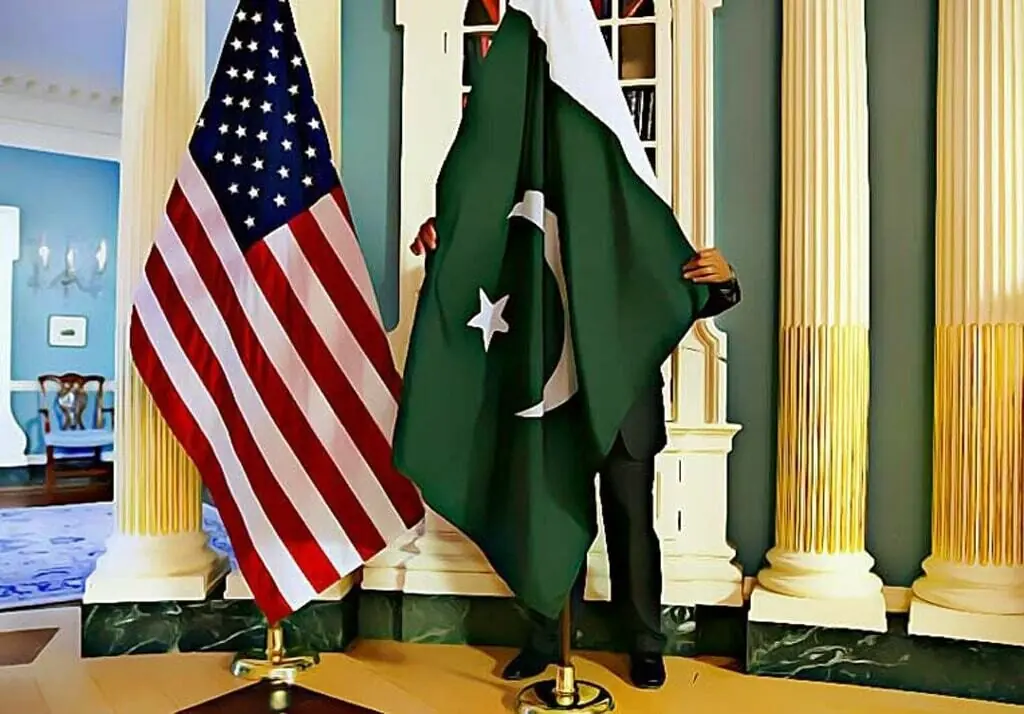

In September 2025, we observed a quiet scene unfolding in Washington that, at the time, felt more symbolic than strategic. Pakistani officials placed small mineral samples on a table before Donald Trump. They were not oil contracts or defense agreements, but fragments of earth pulled from Balochistan and the mountainous belts of Khyber Pakhtunkhwa.
Cerium, neodymium, traces of praseodymium. To most observers, it looked like a developing country trying its hand at resource diplomacy.
In my opinion, even those watching closely could not fully grasp what that moment might eventually represent.
Within weeks, Pakistan signed a USD 500 million agreement with a US firm, widely reported as US Strategic Metals, in partnership with the Frontier Works Organization. The deal covered exploration and extraction of rare earth elements, with early shipments, including antimony, copper concentrates, and rare earth compounds. Around the same time, discussions with European firms, including Mota-Engil, pointed to something more ambitious than raw exports: a gradual integration into emerging industrial supply chains.
The geology behind this shift is not speculative. Balochistan’s Chagai district contains lanthanum and cerium deposits, while the Swat and Dir belts in Khyber Pakhtunkhwa hold neodymium and praseodymium, critical for high-performance magnets used in wind turbines and electric vehicles. Coastal Makran sands carry monazite, another source of rare earth elements. Estimates vary between 100,000 and 500,000 tonnes. While not globally dominant, these reserves are sufficient to position Pakistan as a meaningful secondary supplier in a tightening market.
That market was already under pressure. The United States has been trying to reduce dependence on China, which controls over 90 percent of rare earth processing capacity. For years, analysts warned that mineral supply chains would define the next phase of industrial competition. Yet such warnings remained abstract, until early 2026.
Escalation between the United States and Iran moved beyond rhetoric and into disruption, constraining the Strait of Hormuz. Oil shipments slowed, insurance premiums surged, and prices crossed USD 100 per barrel, with fears of further spikes. Liquefied natural gas flows tightened, and energy insecurity rippled across Asia. Governments scrambled to stabilize supply.
But the visible oil shock masked a deeper realization. Renewable energy systems can be deployed quickly, but without storage, they remain unreliable. Storage depends on batteries. Batteries depend on minerals. In that moment, supply chains, rather than fuel shipments, emerged as the true fault line of energy security.
Suddenly, those overlooked mineral samples looked strategic. Pakistan found itself in a dual role. Economically, it had entered the battery supply chain as a modest but timely supplier. Diplomatically, it began appearing in backchannel engagements as a stabilizing intermediary amid rising tensions. This convergence of resource positioning and diplomatic activity appears less coincidental than calculated.
Skepticism, however, is warranted. Critics within Pakistan question the commercial viability of these reserves and the country’s limited capacity for processing and value addition. Some dismiss the optics of presenting mineral samples abroad as overstated or even performative. These concerns are valid, particularly given the structural challenges facing the sector.
Yet the timing remains difficult to dismiss. Agreements were signed just months before a major supply disruption. Shipments began as global markets tightened. Diplomatic engagement intensified alongside regional instability. Whether by design or circumstance, Pakistan positioned itself at the intersection of two converging dynamics: resource competition and geopolitical volatility.
This alignment matters because the global energy system is undergoing a structural transition. Influence is shifting from those who control oil flows to those who anchor supply chains. Minerals such as lithium, cobalt, and rare earth elements are becoming central to economic and strategic power. In this emerging order, scale matters, but timing and positioning matter just as much.
Pakistan does not yet possess the capacity to dominate this landscape. But it has secured something arguably more important: relevance at a critical moment. By linking resource development with diplomatic engagement, it has begun to carve out a role that extends beyond traditional energy geopolitics.
If sustained, this approach could transform Pakistan from a peripheral player into a strategic node, one that connects minerals, energy transitions, and regional diplomacy. The more pressing question now is not whether this was coincidence or calculation, but whether the strategy can be deepened, institutionalized, and sustained.
Because in a world defined increasingly by supply chains rather than shipping lanes, positioning early may prove to be the most valuable move of all.
Copyright Business Recorder, 2026
The writer is a trade, policy, and climate expert at the Sustainable Development Policy Institute (SDPI)
The writer is a doctoral student in Land Resources and a research associate at the Sustainable Development Policy Institute (SDPI)

























Comments