


Qatar says Gulf states ‘unified’ in calling for war de-escalation
- Gulf countries have faced repeated drone and missile salvos from Iran over the past month in response to US and Israeli strikes that began at the end of February
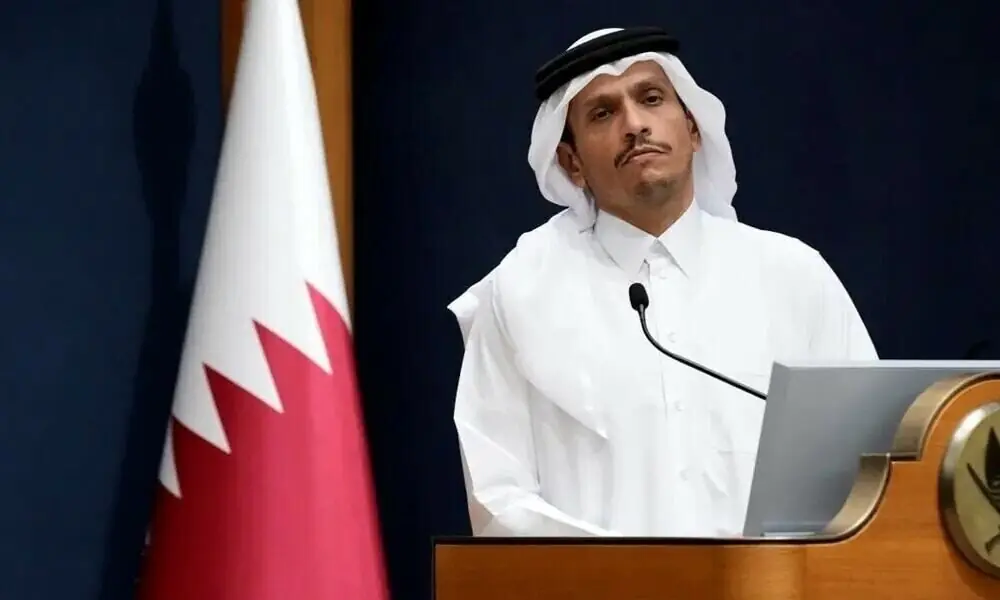

DOHA: The Gulf states are unified in calling for a de-escalation of the Middle East war, Qatar said Tuesday as Tehran launched new strikes against its neighbours.
“Our understanding is that there is a very unified position in the Gulf on calling for the de-escalation and an end to the war,” Qatar’s foreign ministry spokesman Majed al-Ansari told a regular news briefing.
Gulf countries have faced repeated drone and missile salvos from Iran over the past month in response to US and Israeli strikes that began at the end of February.
Iran has targeted hydrocarbon infrastructure in the oil-rich Gulf nations while effectively closing to shipping the strategic Strait of Hormuz, through which one-fifth of global oil usually passes.
READ MORE: Trump urges countries to go to Strait of Hormuz and ‘just take it’
On Monday an Iranian parliamentary committee voted to impose tolls on vessels in the strait and completely ban ships from the United States and Israel.
Ansari said the waterway was “closed due to a military operation”, but added that “the future of the strait is something for all the region and the international partners to decide collectively”.
“We have taken a decision collectively, I think, in the Gulf, to address this as a collective threat,” he said.
Gaps have appeared between the Gulf states in their approaches to dealing with Iran since the war broke out, with the United Arab Emirates taking a more hawkish stance.
The Emirati ambassador to Washington, Yousef Al Otaiba, wrote in a Wall Street Journal opinion piece this week that “a simple ceasefire isn’t enough” to end the war.
“We need a conclusive outcome that addresses Iran’s full range of threats: nuclear capabilities, missiles, drones, terror proxies and blockades of international sea lanes,” he said.
He also said the UAE was ready to join an international initiative to reopen the strait.

























Comments
Comments are closed for this article.