


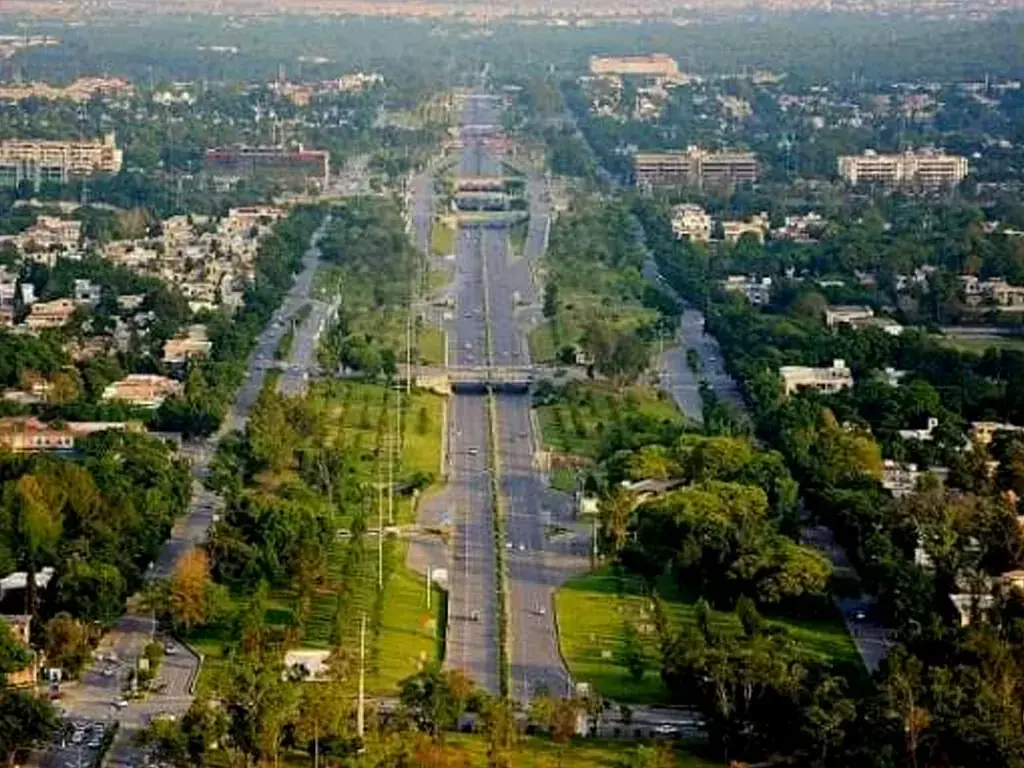

ISLAMABAD: The pollen count has soared to an alarming level in the federal capital, posing grave environmental challenges for the residents, despite government claims of a remarkable decline in respiratory ailments following the large-scale cutting of paper mulberry trees by the Capital Development Authority (CDA) earlier this year.
The data issued by the Pakistan Meteorological Department (PMD) on Wednesday (March 11) regarding pollen count in different sectors of Islamabad revealed that sector H-8 witnessed an alarmingly high number of 22,413 pollen particles per cubic metre (PPCM), followed by 9,064 PPCM in the sector G-6, 8,724 in the sector E-8 and 4,458 PPCM in the sector F-10.
This rise in pollen count implies rapid increase in the respiratory ailments, especially pollen allergy, in Islamabad, caused due to the mushroomed growth of paper mulberry trees.
In this context, the sector H-8 that has highest number of paper mulberry trees has witnessed highest pollen count.
A government source told Business Recorder that pollen count usually sees a rapid rise after the mid of March each year. This year, however, the pollen count has been soaring since 2 March mainly because the CDA failed to complete paper mulberry from the federal capital, with paper mulberry trees only removed partially from some areas of Islamabad which resulted in the mushroomed growth of the unremoved trees, the source said.
This year, the CDA launched a targeted felling drive mainly to remove paper mulberry trees from different areas including Shakarparian and F-9 Park in Islamabad.
In the same month, Climate Change Minister Musadik Malik briefed the Senate’s Standing Committee on Climate Change that pollen allergy cases in the federal capital had been on a decline following the targeted felling.
Of the approximately 80,000 paper mulberry trees identified for removal across Islamabad, 29,115 were removed, with priority given to high-density areas including F-9 Park and Shakarparian, the minister briefed the Senate panel in January.
The CDA, it is learnt, had to stop the targeted felling drive after there was much hue and cry from the environment bodies and relevant stakeholders regarding the removal of trees.
Of the 80,000 paper mulberry trees that were marked for removal, over 51,000 trees are yet to be removed, it is further learnt. Reportedly, the presence of these trees in the federal capital, sector H-8 in particular, is a major cause of pollen allergy in the city.
Copyright Business Recorder, 2026

























Comments
Comments are closed for this article.