


Sindh, federal govt review fuel supply situation amid global oil price surge fears
- Meeting discusses emergency fuel conservation measures, need for responsible energy consumption
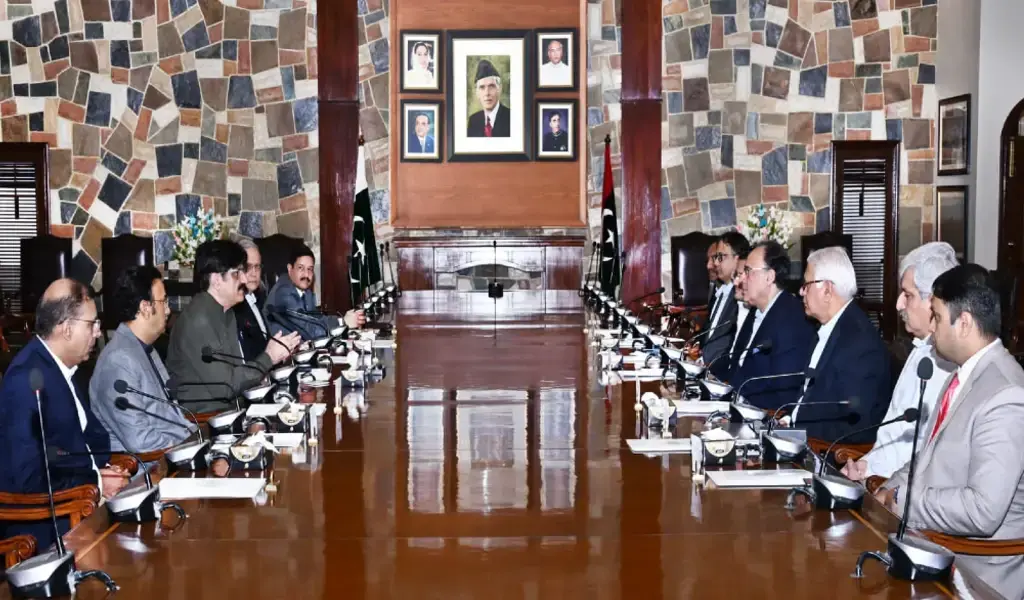

Sindh Chief Minister Syed Murad Ali Shah and federal ministers on Sunday reviewed the country’s fuel supply situation and discussed contingency measures amid fears of rising global oil prices due to escalating tensions in the Middle East.
The meeting at the Chief Minister House was attended by Federal Finance Minister Muhammad Aurangzeb and Petroleum Minister Ali Pervaiz Malik along with senior federal and provincial officials, according to a statement issued by the Sindh CM’s spokesperson.
Sindh Home Minister Zia-ul-Hassan Lanjar, Chief Secretary Asif Haider Shah, Energy Secretary Shehab Ansari and other officials also attended the meeting, while the federal delegation included senior officials from the petroleum division, the Oil and Gas Regulatory Authority (Ogra) and Sui Southern Gas Company.
Officials briefed the meeting that global crude oil prices could rise to as high as $120 per barrel if the Middle East conflict intensifies.
The meeting discussed emergency fuel conservation measures and the need for responsible energy consumption to cope with a potential energy crisis.
Read More: Islamabad: 7 petrol pumps sealed for refusing to supply fuel
Murad Ali Shah said the government’s priority was to keep the national economy running while ensuring prudent energy use with public cooperation.
He added that the proposals discussed in the meeting would be presented before the provincial cabinet for further deliberation.
Finance Minister Aurangzeb said the federal government was closely monitoring global energy markets and preparing alternative plans to manage the financial impact of rising oil prices.
Officials informed the meeting that Pakistan’s monthly oil import bill could increase to around $600 million due to the surge in global prices.
Petroleum Minister Ali Pervaiz Malik emphasised the need for fuel conservation measures so that existing reserves could last longer.
The meeting was told that three petrol shipments were expected to reach Pakistan by Monday.
Participants were also informed of concerns about possible fuel hoarding at petrol pumps, while federal and provincial authorities decided to enhance coordination to prevent hoarding.
The meeting further noted that Pakistan was exploring alternative fuel supplies through diplomatic engagement with Saudi Arabia, Oman and the United Arab Emirates, and was also examining supply routes other than the Strait of Hormuz.
The federal government is also expected to approach the International Monetary Fund (IMF) to seek relief in petroleum levy, the petroleum minister said.
It was decided that close coordination between the federal and provincial governments would continue to address the evolving energy situation.


























Comments
Comments are closed for this article.