


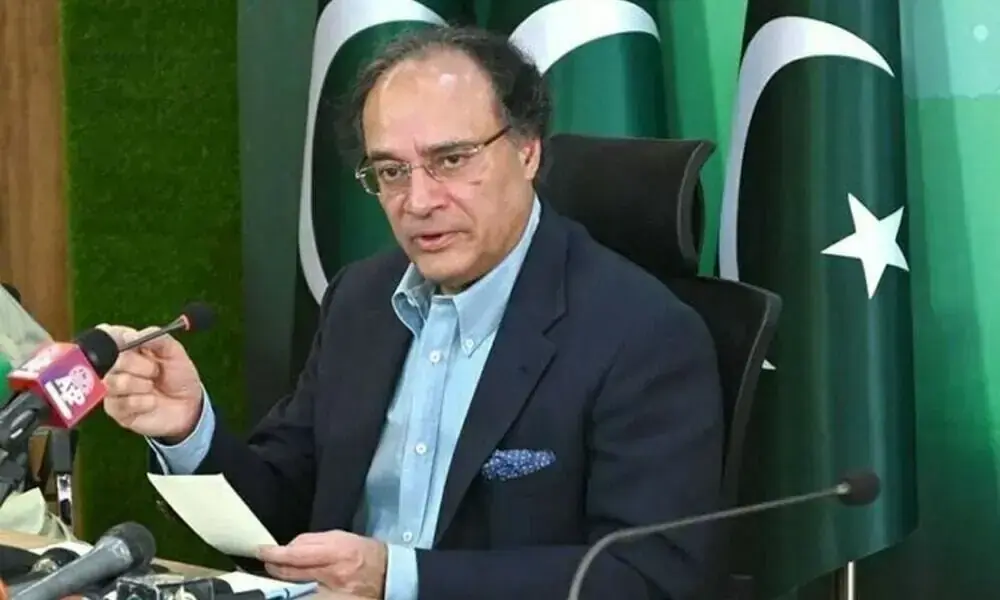
EDITORIAL: The finance minister’s decision to respond to the fallout from the latest State-Owned Enterprises report through a recorded video rather than a press conference has sharpened, rather than resolved, the ambiguity surrounding the government’s reform narrative. When questions arise about numbers that are already in the public domain, the appropriate forum is open scrutiny.
The numbers themselves tell a layered story. On the surface, aggregate losses of SOEs have declined over three consecutive years: from Rs905 billion in 2023 to Rs851 billion in 2024 and Rs832 billion last year. That three-year reduction of Rs74 billion is being presented as evidence that reform and restructuring are working. Yet the same report shows that net fiscal flow to the government fell sharply from Rs458.2 billion to Rs40.7 billion, a drop of 91 percent. It also records that overall net loss for the SOE sector rose from Rs30.6 billion to Rs122.9 billion in the last fiscal year, a 301 percent increase within a single year.
Both sets of figures are drawn from the same report. The tension arises from which metric is emphasised and which is contextualised. Smoothing performance over a three-year horizon can create an impression of gradual improvement. Focusing on the most recent year highlights deterioration. The ambiguity is not manufactured by the media; it is embedded in the presentation of aggregate versus annual data.
READ MORE: SOEs’ losses declined by Rs74bn in three years: Aurangzeb
There is also the question of fiscal recycling. Last year, the government extended Rs2.078 trillion in support to SOEs while inflows amounted to Rs2.119 trillion, producing a net positive inflow of about Rs40 billion. In arithmetic terms, that may appear reassuring. In structural terms, it suggests that enormous fiscal support is being recycled back into the system with marginal net gain. A Rs40 billion net flow on over Rs2 trillion of gross support does not signal robust value creation; it signals a fragile equilibrium heavily dependent on continued state backing.
The deeper concern lies in governance quality. The report itself acknowledges that fewer than 36 percent of SOEs are implementing mandatory external audits. Business plans submitted by these entities are described as largely descriptive and premised on hopeful outcomes rather than analytical projections. A central monitoring unit may exist, but monitoring is only as credible as the standards it enforces. Without widespread audit compliance and data-driven planning, claims of structural reform remain difficult to test.
Against this backdrop, blaming “selective reporting” does little to clarify matters. The media reported figures that the finance ministry itself published. If interpretation is contested, the appropriate response is detailed explanation under questioning. A recorded message, however polished, does not substitute for accountability. This communication strategy is particularly problematic because credibility is central to any SOE reform programme. Privatisation pipelines, rightsizing initiatives and governance overhauls require investor confidence and public trust. There is also a broader economic context. SOEs collectively placed a burden of over Rs2 trillion on the government last year. In an economy already grappling with tight fiscal space and external constraints that scale of exposure cannot be treated as a marginal issue. Incremental improvements in multi-year aggregates do not erase the volatility and governance weaknesses revealed in annual outcomes.
None of this negates the possibility that some reforms are underway. Board restructuring, privatisation steps and closure of non-performing entities are substantive moves. But reform credibility rests on consistent, measurable improvement in financial and operational performance. When annual losses surge and net returns collapse, the explanation must be rigorous and transparent.
The finance minister may well believe that the broader trajectory is positive. If so, the case should be made through detailed engagement, allowing independent analysts to interrogate assumptions and stress-test projections. SOE reform is too important to be reduced to optics management. Arithmetic demands clarity. Accountability demands questions. If the government is confident in its numbers, it should welcome both.
Copyright Business Recorder, 2026


























Comments
Comments are closed for this article.