


Pakistan Standards and Quality Control Authority: IHC rules non-implementation and non-enforcement of SROs constitute violation of Constitution
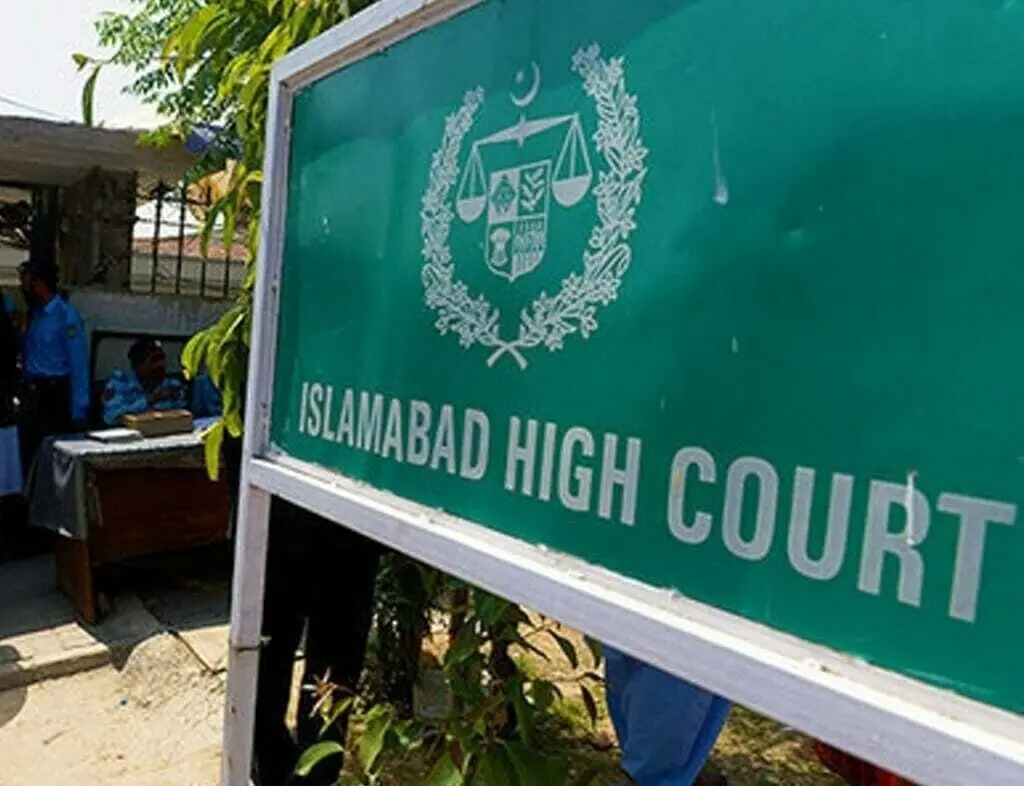

ISLAMABAD: The Islamabad High Court (IHC) declared that non-implementation and non-enforcement of SROs, issued by Pakistan Standards and Quality Control Authority (PSQCA), constitutes a failure to perform a public duty, is arbitrary, unreasonable, and has resulted in the violation of Articles 9, 14, and 38 of the Constitution.
The judgment authored by Justice Muhammad Azam Khan states; “This case is a stark reminder that laws are not written to gather dust in gazette notifications but to be implemented for the protection of the people.”
The Court ruled that S.R.O. 117(KE)/2016 [PS:4877] and S.R.O. 46(KE)/2017 [PS:3128], which mandate the use of food-grade packaging for food items specifically wheat flour, to ensure safety and prevent wastage, were lawfully issued under Section 14 of the Pakistan Standards and Quality Control Authority (PSQCA) Act. It said that the SROs have the force of law. The state’s failure to enforce its own laws for over eight years is the definition of maladministration and arbitrariness. It violates the principle of legality and erodes public trust in the regulatory state.
READ ALSO: Raids on fertiliser factories, shops: LHC for implementing govt’s instructions in true spirit
Chairman Pakistan Polypropylene Woven Sacks has filed petition under Article 199 of the Constitution contending that due to non-enforcement of SROs, the national food supply chain is plagued by the use of two types of highly detrimental packaging i) inferior polypropylene woven sacks, made from recycled plastic waste and adulterated with high levels of calcium carbonate, are porous and prone to bursting, that results in staggering wastage of 3% to 5% of package wheat flour during handling and transport, translating into an annual financial loss of Rs23 billion to 38 billion. ii) Recycled Cement Paper Bags pose a severe, direct threat to public health.
The judgment overruled the objections of Chairman PSQCA and Secretary Ministry of National Food Security & Research (respondents).
The PSQCA (Respondent No.1) contended before the IHC that it is a creature of the PSQCA Act, 1996, with powers strictly circumscribed to the enforcement of standards for 105 items declared mandatory by the federal government. It also contended that wheat flour and fortified flour are not on this list. Therefore, while it can regulate the manufacturers of polypropylene sacks under PS: 3128, it lacks the vires to regulate the end-users (flour mills).
The Ministry of Food (Respondent No.2) in its reply asserted that its role is confined to macro-management of wheat policy, strategic reserves, and inter-provincial coordination. The milling, packaging, and sale of wheat flour are post-harvest, industrial activities falling squarely within provincial jurisdiction under the 18th Amendment.
The judgment noted that highlighting complexities of federal-provincial governance, cannot justify the continued sacrifice of public health and national wealth on the altar of bureaucratic inertia and jurisdictional technicalities.
The IHC directed the PSQCA to launch a nationwide enforcement drive within 30 days of this order. It asked the Authority to exercise its powers under Sections 8, 15, and 22 of the PSQCA Act, 1996, to identify, seize, detain, and initiate penal proceedings against the manufacture, storage, sale, and transport of (a) Polypropylene woven sacks marked or intended for packing food items that do not bear the PS Mark certifying conformity with PS: 3128.(b) any kraft paper sacks being used for packing cement that do not conform to PS: 4877, and critically, any such cement sacks found in the supply chain for packing food items.
The judgment said that the PSQCA shall not limit its action to manufacturers but shall extend it to distributors, godowns, and transporters found dealing in non-compliant sacks. Its jurisdiction is over the article, not the business license of the end-user. Furthermore, the PSQCA shall submit a comprehensive compliance report to this Court within ninety (90) days from the receipt of copy of this judgment, detailing actions taken, quantities seized, penalties imposed, and the geographical scope of its operations.
Ministry of National Food Security was ordered to convene consultations with the provincial food departments, provincial food authorities and relevant federal regulators, within 30 days, for framing and notifying appropriate policy and administrative measures to ensure that wheat flour produced from government-released wheat is packaged in PSQCA-certified sacks conforming to PS:3128. Such measures may include, where considered appropriate under law, the incorporation of compliance conditions in procurement, release or subsidy frameworks. The Ministry shall place before this Court, within ninety (90) days, a report outlining the measures considered and steps taken in this regard.
The Court also directed that both the respondents within 45 days, shall convene a meeting with the representatives of all Provincial Food Authorities and submit to this Court a Joint Act Plan for coordinated, sustained enforcement. This plan shall include mechanisms for information sharing, joint inspection teams where appropriate, and public awareness campaigns.
The IHC Registrar was directed to send the copies 26 of the judgment to the respondent. He was also ordered to provide copies of this judgment to the Chief Secretaries and the Chairpersons of the Provincial Food Authorities of Punjab, Sindh, Khyber Pakhtunkhwa, and Balochistan.
Copyright Business Recorder, 2026





















Comments