


India’s $500 billion US imports intent draws scepticism, risks widening trade deficit
- Bilateral trade was $132 billion in 2024-25, with a roughly $41 billion surplus in India’s favour


NEW DELHI: India’s stated intention to buy $500 billion of U.S. goods over five years under a trade deal is drawing scepticism, with economists warning it could distort commercial procurement and sharply reshape New Delhi’s trade balance.
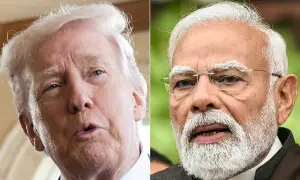
U.S. President Donald Trump last week said he will slash tariffs on Indian goods to 18% from 50%, sparking relief in India. But he asked New Delhi to more than double its annual imports of U.S. goods in return.
Bilateral trade was $132 billion in 2024-25, with a roughly $41 billion surplus in India’s favour.
Trade experts and economists questioned whether $100 billion a year in imports was feasible without an explicit policy push that steers companies towards American suppliers.
India agrees to buy petroleum, defence goods, aircraft from US, official says
“The math doesn’t add up,” said Madhavi Arora, an economist at Emkay Global, calling the target more “aspirational than realistic”.
A joint statement issued by the two nations said India intends to buy $500 billion of U.S. goods - language that stops short of a binding commitment.
But Trump has shown little patience with countries that fall short, including a late-January move to raise tariffs on some South Korean goods back to 25% from 15% after saying Seoul failed to legislate an earlier deal.
India aims to step up procurement of oil, gas, coking coal and aircraft from the U.S., both nations said in the joint statement.
Arora cautioned such targets can imply a government nudge to private airline and corporate sourcing decisions, which may be inefficient.
While India has cited large Boeing orders as part of the plan, some analysts say firms could still favour Airbus if commercial terms are better.
Trump’s tariff cut spells relief in India despite scant details
Indian markets steadied after staging an initial relief rally, but economists said investors appear wary of the $500 billion headline.
“The markets seem to be treating the $500 billion purchase intention with a degree of scepticism,” said Dhiraj Nim, an economist at ANZ.
India’s biggest market
The U.S. is India’s top export destination, accounting for nearly a fifth of the Asian nation’s entire shipments in the fiscal year 2024-25.
If exports hold near pre-tariff levels and imports rise sharply, India’s largest bilateral surplus could shrink and widen its overall trade deficit. India had a total goods trade deficit of $283.5 billion in 2024-25.
“If it is a $100 billion every year, it will completely upset India’s trade balance,” said independent trade expert Biswajit Dhar.
He added that the current deal mainly preserves access to India’s key market rather than boosting exports.


























Comments
Comments are closed for this article.