


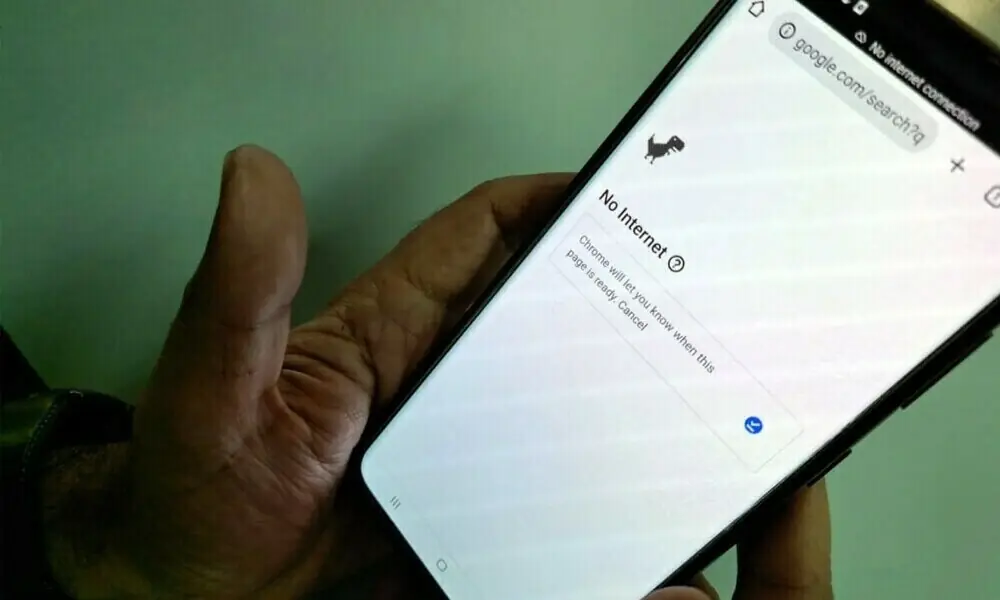

GENEVA: As countries step up their use of internet shutdowns to muzzle dissent, some are also taking advantage of the blackouts to increase censorship firewalls, internet privacy company Proton warned in an interview with AFP.
Switzerland-based Proton, known for its encrypted email and virtual private network (VPN) services, has for years observed how authoritarian governments apply “censorship as a playbook”, lead product manager Antonio Cesarano told AFP in a recent interview.
But increasingly they are observing governments in countries like Iran and Myanmar emerging from internet shutdowns with a supercharged ability to censor internet access.VPNs delivered by Proton and others provide a secure, encrypted connection over the internet between a user and a server, giving users greater anonymity and often allowing them to avoid local restrictions on internet use.
But now the company worries governments are using long blackouts to beef up their ability to counter VPNs.
In several cases, Cesarano said that internet shutdowns saw countries’ censorship capabilities “going from nothing, or something laughable, to something very skilled”.
Proton’s VPN general manager David Peterson said in an email that this sudden jump in capabilities could indicate that “censorship as a service” technology “is being sold by other countries that have more know-how”.
“For example, over the past couple of years, we’ve seen the Chinese ‘great firewall’ technology used by Myanmar, Pakistan, and some African nations,” he said.
The trend is emerging as the willingness to impose total internet shutdowns is also growing, warned Proton, which runs a non-profit VPN Observatory that tracks demand for its free VPN services to detect government crackdowns and attacks on free speech.
Cesarano, who serves as spokesman for Proton’s internet censorship and online freedom work, pointed out that the extreme and once almost unthinkable measure has “happened three times in six months”.
He highlighted the latest dramatic shutdown in Iran, when the country’s more than 90 million people were forced offline for nearly three weeks, obscuring a crackdown on country-wide protests which rights groups say killed thousands of people.
There was also the weeklong shutdown implemented in Uganda in the days prior to the elections last month, and Afghanistan’s internet and telecoms blackout last year.
Iran also completely shuttered the internet for a week last June amid the conflict with Israel.
Blacking out the internet completely was “very concerning, because it is very extreme”, Cesarano said, pointing out that a country’s entire economy basically grinds to a halt when the internet shuts down.
“It’s very dangerous and costly for the population,” he said.
Cesarano said Proton was in contact with NGOs in the field working with people on how to counter censorship by educating them on what VPNs are, how to use them, and which ones to pick.
“It is a cat and mouse game,” he said.
In some countries like Myanmar, where VPN use is illegal, the authorities deploy fake VPNs “as honeypots” to detect dissidents, he said.
In Myanmar and other countries, police may also stop people on the streets and search their phones for VPNs.
Proton spokesman Vincent Darricarrere said the company had therefore launched a special feature “to disguise the VPN app and to disguise it as a different app, like a weather app or the calculator”, to help people escape detection.
There is certainly appetite for using VPNs to try to sidestep censorship.
The VPN Observatory can predict that a clampdown is coming from spikes in sign-ups, said Cesarano.
“When we see something on our infrastructure, we can predict that something is happening,” he said, pointing to “huge spikes in demand” seen in countries like Iran, Uganda, Russia and Myanmar even before the crunch comes.
Right before Iran’s latest internet shutdown took effect on January 8, the VPN Observatory noted a 1,000-percent rise in use of Proton’s VPN services over the baseline, indicating an awareness of the coming clampdown.
And it saw an 890-percent hike in VPN sign-ups in Uganda in the days before last month’s elections as the government signalled a suspension of public internet was looming.
VPN usage also surged in Venezuela at the start of this year, jumping 770 percent in the days after the US ousted long-term president Nicolas Maduro, according to the observatory.

























Comments
Comments are closed for this article.