


BR RESEARCH: Pakistan’s solar future: Prosumer regulations at critical juncture
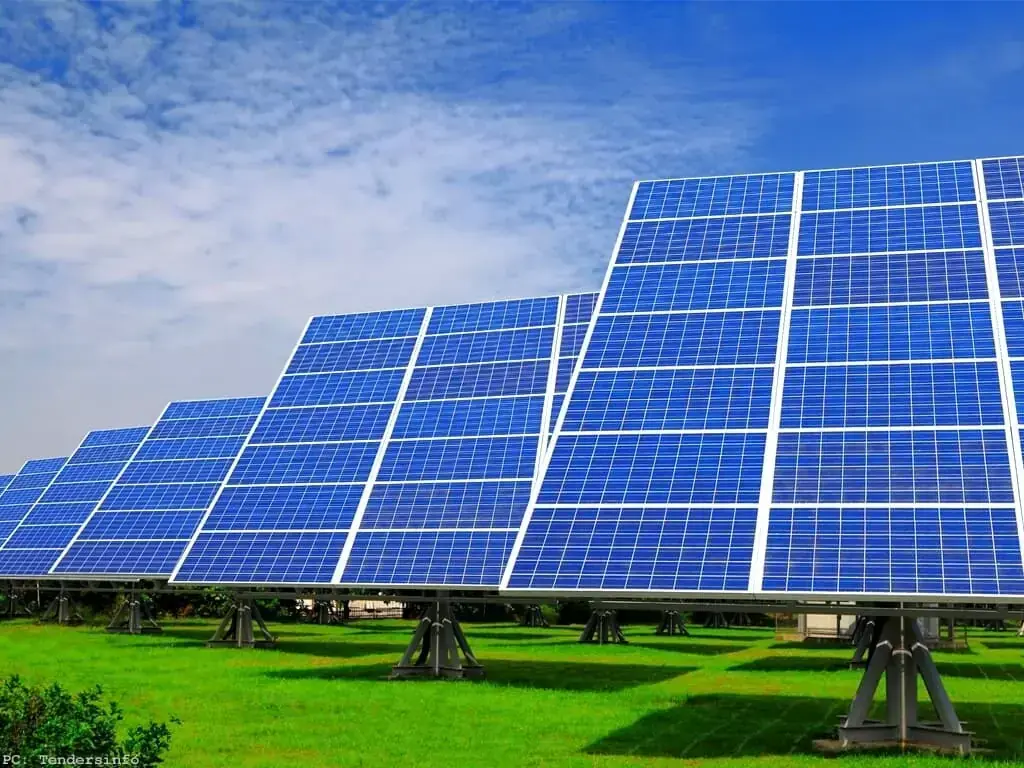
The power regulator, NEPRA, is set to hold a public hearing today (Friday) regarding the Draft Prosumer Regulations 2025 that were published on December 16, 2025.
The spotlight is on the significant policy shift that could reshape Pakistan’s renewable energy landscape. The proposed changes in policy in March 2025 were met with hostility and soon halted by the government.
The conversation, however, continued in the backdrop with intense arguments from both sides – those who favour the current regime versus those who want the policy to reflect Pakistan’s current power sector challenges.
The Prosumer Regulations 2025 establish a framework for integrating distributed generation facilities like solar, wind, and biogas into Pakistan’s grid. Key highlights include an application process for interconnection, net billing for energy compensation, and requirements for technical and safety compliance.
Prosumers must enter into agreements with licenses and obtain concurrence from NEPRA.
The contract duration is also expected to decrease from the current 7 to 5 years. The regulations also outline the responsibilities, addressing issues like system modifications, billing rates, and dispute resolution, while aiming to ensure fair energy distribution and grid stability.
READ MORE: Solar panel imports: 80 companies transferred around Rs106bn abroad: FBR
The Power Division has been trying to strike a balance between grid consumers and prosumers, considering that the former is bearing the burden as others rapidly move off grid, adding to the widening capacity gap.
Calculations revealed that until a year ago a burden of Rs159 billion had already been passed on to grid customers translating to Rs1.5/unit. By 2034, this burden is expected to rise by Rs545 billion should the policy change not occur.
Currently the annual burden is recorded to be Rs101 billion. Because capacity charges are fixed, lower grid usage by solar users shifts the cost onto fewer consumers, making electricity costlier for others. Thus, solar users are adding to these capacity charges.
According to the SOI report, net metering consumers have surged by almost 142% in the past year, increasing from 156,372 to 378,339, while Pakistan’s total net metering installed capacity has hit a staggering 6,500 MW with a projected annual growth rate of 1,000 MW. As of 2021 and 2022, the installed capacity was recorded to be 321 MW and 735 MW, respectively.
The rise in solar adoption has been especially prominent in urban areas; according to Pakistan’s 7th Population and Housing Census, rural on-grid customers fell from 82% in 2017 to 77% in 2023, while urban on-grid customers experienced a decline of only 2%, to 95% from 97%.
Lahore alone accounts for more than 28% of all net metering connections, accounting for a total of 105,959 as of 30 June 2025.
According to the ‘Global Electricity Review 2025’, a report released by British energy think tank Ember, Pakistan imported 17 gigawatts (GW) worth of solar panels in 2024, more than double its imports in 2023, making it one of the world’s fastest-growing solar energy markets.
Pakistan imported $377 million worth of solar panels throughout 2023. In the 17 months since, imports soared to a massive $3.1 billion, including $1.1 billion in the first five months of 2025. Pakistan has now become the third-largest importer of solar panels globally while having 25 GW of solar panels.
It is known that 32,000 MW of solar power was imported in the last five years, and 6,271 MW was used in net metering. This information was shared by FBR in one of the Senate Standing Committee Meetings on Finance and Revenue. It was further revealed that 13,000 MW of solar panels were not installed anywhere at that time, adding that 6,506 MW was used in non-net metering, and 5,521 MW of solar panels were used off-grid. Off-grid solar installations are estimated at about 13,000 MW, based on satellite imagery.
Separately in 2025, a Senate panel revealed that over Rs110 billion in fraud and money laundering occurred through solar imports by 80 companies, some of which were found to be fake. The FBR uncovered over-invoicing and suspicious transactions, with Rs69 billion flagged for over-invoicing. Consequently, the FBR filed FIRs against 13 companies involved in fraudulent activities. Additionally, Rs18 billion was illegally transferred abroad.
With the ongoing surge in solar energy adoption, these revelations add a layer of complexity to the debate. All eyes will now be on NEPRA to see how it navigates the concerns raised by both the solar industry and grid consumers.
Prosumers are particularly anxious about the potential retrospective application of these regulations, which they argue could lead to financial losses for those who have already invested in solar systems based on the previous policy framework. Remember this: this is not just about solar adoption. It is about Pakistan’s energy future that needs to be sustainable and inclusive.

















Comments
Comments are closed for this article.