


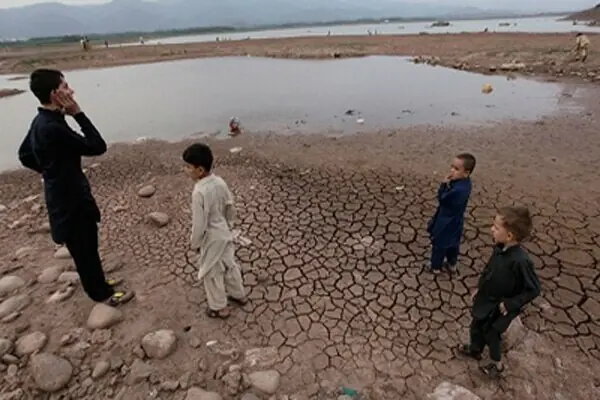
EDITORIAL: The UN warning about the dawn of an “era of water bankruptcy” is both sobering and long overdue. By framing the global water crisis in the language of finance—income, savings, depletion, and bankruptcy—the report captures a reality that has been building quietly for decades but is now impossible to ignore. Humanity has been living far beyond its hydrological means, extracting water as if natural systems were inexhaustible, when in fact they are fragile, finite, and deeply interconnected with climate, ecosystems, and social stability.
The concept of water bankruptcy is especially powerful because it makes clear that the crisis is not merely about temporary shortages or cyclical droughts. It points instead to a deeper, structural failure. Societies have been spending not only the renewable “income” of rivers and rainfall, but also the accumulated “savings” stored over centuries in aquifers, glaciers, wetlands, river ecosystems, and healthy soils. Once these reserves are exhausted or irreversibly damaged, recovery is slow, uncertain, and in some cases impossible on human timescales. The report’s assertion that many water systems are already in a “post-crisis state of failure” underscores that this is no longer a future risk but a present condition.
South Asia offers a stark illustration of these dynamics. Chronic groundwater depletion, land subsidence, and water contamination are direct consequences of unsustainable agricultural practices and rapid urbanisation. Tube wells have allowed farmers and cities to tap deep aquifers, creating an illusion of abundance while silently emptying underground reserves. As water tables fall, energy costs rise, poorer farmers are squeezed out, and ecosystems begin to fail. The social consequences—migration, conflict, and widening inequality—are already visible.
The UN’s call for “honest, science-based adaptation to a new reality” is therefore crucial. It demands political courage to confront difficult choices about allocation, efficiency, and environmental protection. Water bankruptcy is not inevitable, but avoiding it requires treating water not as an infinite entitlement, but as a precious, shared asset whose limits must be respected. The cost of denial is already visible on every continent—and it is rising rapidly.
Copyright Business Recorder, 2026


























Comments
Comments are closed for this article.