



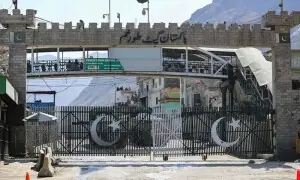
There may be legitimate security considerations behind Pakistan’s hardening stance toward Afghanistan. But shutting down trade altogether is a blunt response with serious economic costs.
Pakistan is steadily isolating itself from its immediate neighbourhood at the very moment it claims to be pivoting toward an export-led growth model. That contradiction lies at the heart of the problem.
Regional trade is how through which countries build resilience, scale value chains, and anchor growth. Pakistan, instead, is retreating on almost every frontier.
Trade with India remains frozen. Financial sanctions severely constrain commerce with Iran. And now, formal trade channels with Afghanistan have effectively been shut as well.
The result is not strategic strength, but growing economic isolation. For a country that already struggles to diversify exports and attract investment, voluntarily narrowing trade corridors is a self-inflicted wound.
READ MORE: Traders concerned at suspension of trade with Afghanistan
The economic cost of this decision is not abstract. According to State Bank of Pakistan data, Pakistan recorded a trade surplus of USD 752 million with Afghanistan in FY25.
ITC Trade Map data places exports to Afghanistan at USD 1.5 billion in 2024, with a surplus of USD 855 million. Since the border closure, this trade has come to a near standstill over the past few months.
Pakistan exports a wide range of agricultural goods to Afghanistan, including rice, wheat, potato, onion, citrus, and other fruits and vegetables. Pharmaceuticals, textiles, and several manufactured products follow.
Imports from Afghanistan were largely concentrated in coal, cotton, and other agricultural produce. This was a functional and mutually beneficial trading relationship.
Its disruption is now rippling through domestic markets. Traders and manufacturers, particularly small and medium enterprises, are bearing the brunt. Rice and citrus markets are facing gluts, pushing prices downward.
Some argue this helps reduce inflation. But falling farm prices translate into weaker rural incomes, with damaging medium- to long-term consequences. The farm economy has already been weakened by missteps in wheat support pricing. This only compounds the damage.
In pharmaceuticals, the impact is immediate and visible. Several medicine brands manufactured in Pakistan are tailored specifically for the Afghan market. Finished inventories are now sitting idle, with no viable export route.
Pakistan Aluminum Beverage Cans Limited has informed shareholders that the border closure has hit its can exports to Afghanistan and onward markets in Central Asia.
Afghanistan is not just an end market. It is a transit gateway to multiple landlocked Central Asian economies. By severing this corridor, Pakistan is losing access to those markets as well. Maintaining overland connectivity to Central Asia is strategically important. Once lost, such trade routes are not easily regained.
When affected businesses appeal for a rethink, the standard official response is to find alternative export markets. That response underestimates how trade actually works. Export relationships are built over years through sustained engagement, market development, and trust. They cannot be switched overnight. This is why inventories of rice, pharmaceuticals, and other goods are piling up. In perishables, wastage is rising.
In some sectors, costs are escalating sharply. Cement producers in the north, for instance, are shifting from Afghan coal to South African and other imported sources. Coal is now shipped to Karachi and then transported north, raising costs by an estimated 30 percent. At the same time, cement exports to Afghanistan have ceased entirely.
Textile value chains are also affected. Pakistan imports cotton from Afghanistan and exports low-cost polyester garments in return. Potato exports are under strain, and citrus exporters are seeking alternative routes that are not only more expensive but also legally complicated when routed through Iran. These frictions accumulate quickly across value chains.
Afghanistan is not immune to the fallout. It is already exploring costlier alternatives, including air-shipping pharmaceutical products from India. Over time, new arrangements and trade routes will emerge. Once that happens, Pakistan risks permanently losing its comparative advantage.
There is also a foreign exchange dimension. Although trade with Afghanistan is conducted in Pakistani rupees, the surplus results in Afghan importers selling dollars in the Peshawar market, which then flow into the interbank system.
On average, monthly inflows of USD 50 to USD 70 million have effectively disappeared. The impact has been masked by strong remittance inflows, but that should not breed complacency.
Pakistan needs to think more strategically. Trade normalisation does not require compromising on security. In today’s global order, agriculture and farm incomes increasingly shape trade policy. The United States was forced to revisit tariffs with China when counter-tariffs on soybeans disrupted its farm economy. Similar dynamics have played out between the US and Canada. Countries protect their farmers. Pakistan should be no different.
There are ample international examples where political or military tensions coexist with continued trade, including India and China, or China and Taiwan. Pakistan already has limited room for manoeuvre. Trade with India is blocked by New Delhi’s belligerence and hostility, and asymmetry.
Iran is constrained by sanctions. Afghanistan, however, remains a domain where Pakistan retains agency. Reopening and deepening trade with Afghanistan and onward to Central Asia is not a concession. It is an economic necessity.
Copyright Business Recorder, 2026

Ali Khizar is the Director of Research at Business Recorder. His Twitter handle is @AliKhizar




















Comments
Comments are closed for this article.