


China’s consumer inflation hits near 3-year high, factory-gate deflation eases
- The December consumer price index (CPI) rose 0.8% from the same month in 2024, National Bureau of Statistics (NBS) data showed on Friday

BEIJING: China’s annual consumer price inflation accelerated to a 34-month high in December, driven by rising food prices, but the full-year rate slumped to the lowest in 16 years while producer deflation persisted, indicating persistent softness in demand.
The December consumer price index (CPI) rose 0.8% from the same month in 2024, National Bureau of Statistics (NBS) data showed on Friday, matching expectations in a Reuters poll and perking up from the 0.7% increase in November.
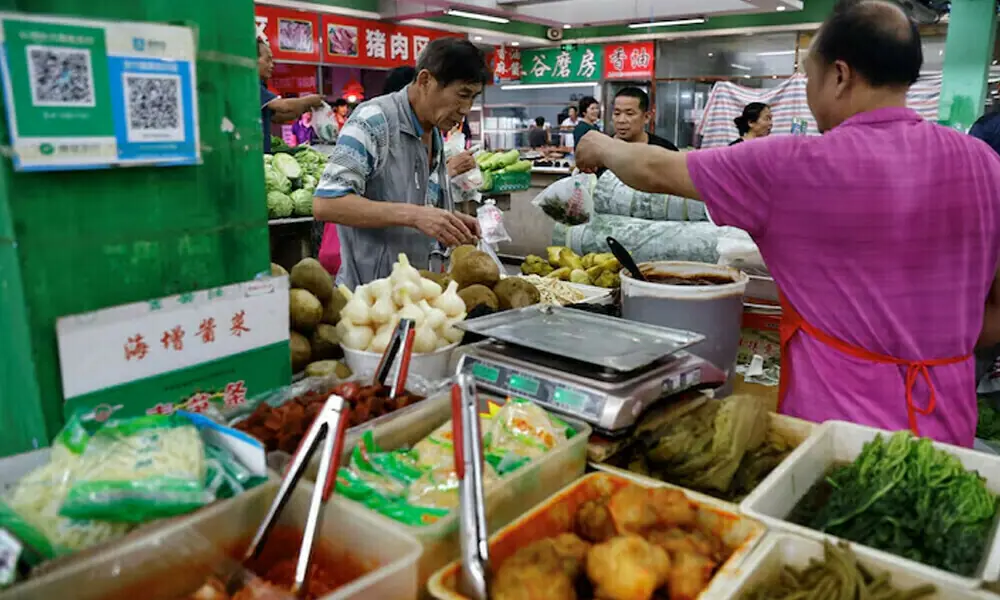
The rise was mainly driven by food prices, especially those of fresh vegetables and beef, which expanded 18.2% and 6.9% respectively, Dong Lijuan, a statistician at NBS, said in a statement.
Pork prices fell 14.6% year-on-year in December, while prices of gold jewellery surged 68.5%, NBS data showed. Core inflation, which excludes volatile prices of food and fuel, rose 1.2% year-on-year last month, unchanged from November.
For the entire 2025, consumer prices were unchanged, well below the “around 2%” goal policymakers were aiming for, a sign that stimulus measures, such as a consumer goods trade-in scheme, have yielded only modest results in lifting sentiment and containing deflationary pressure. Annual growth in China’s consumer prices has for years failed to meet policymakers’ targets as the economy struggled to recover from the pandemic.
A prolonged property market crisis and a weak job market have contributed to lacklustre household demand as well as overcapacity and price competition among producers.
On a monthly basis, CPI climbed 0.2% in December, compared with a 0.1% dip the previous month and a forecast for a 0.1% rise.
The producer price index (PPI) fell 1.9% year-on-year in December, remaining in a deflationary funk for more than three years even as it eased from a 2.2% drop in November.
The gauge was expected to have fallen 2% in the Reuters poll.
For the whole year, PPI fell 2.6%.
Chinese policymakers have repeatedly pledged to support a rebound in prices with monetary policy and have cracked down on excessive competition.
They have also vowed to boost people’s income to unleash consumption potential and better align the country’s supply and demand.
While the $19 trillion economy is likely to have met its growth target for 2025 despite slowing momentum in the second half, the market is watching for signs of additional government support measures in 2026 as top leaders have committed to pursuing a more proactive macroeconomic policy framework.
The central government has allocated 62.5 billion yuan ($8.95 billion) from special treasury bond proceeds to local governments to keep funding the consumer goods trade-in scheme in 2026.
The government has also pledged to flexibly use monetary policy tools, such as cuts to interest rates and banks’ reserve requirement ratio, to keep liquidity ample and spur growth.

























Comments
Comments are closed for this article.