


The slow abandonment of Karachi
Karachi's low liveability ranking reflects decades of administrative neglect, failing infrastructure, and chronic service issues. This decline, impacting Pakistan's economic engine, demands urgent, competent governance and sustained investment.
- Karachi's consistent low ranking in global liveability.
- Delays in critical infrastructure projects like K-IV.
- The economic impact of Karachi's urban decline.
- Institutional failures and fragmented city governance.
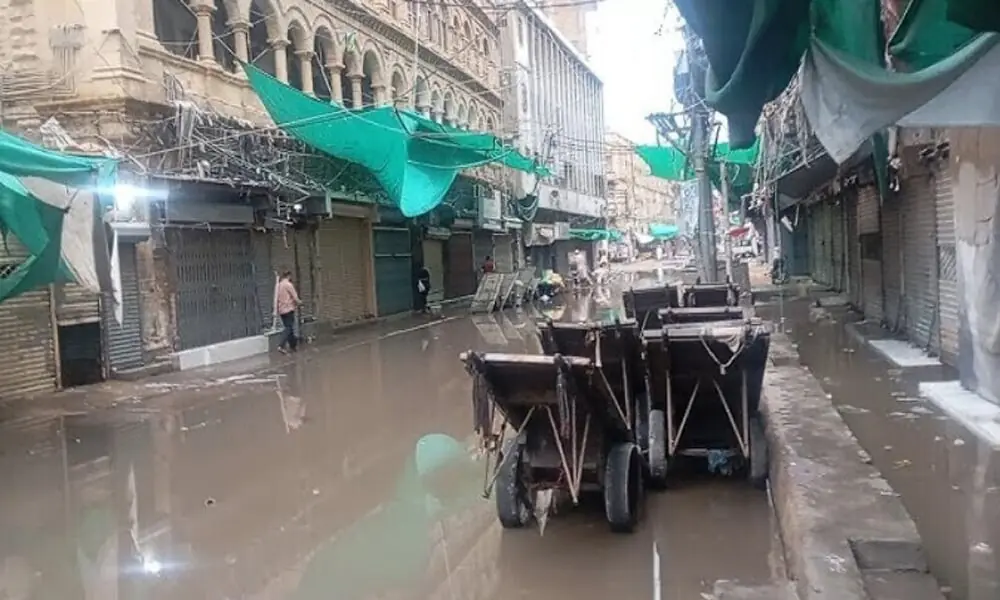
EDITORIAL: Karachi’s latest ranking among the world’s least liveable cities should surprise no one. A city that has endured decades of administrative neglect, collapsing infrastructure, chronic water shortages, failing municipal services and unchecked urban expansion was never likely to feature among the world’s success stories.
The real surprise is that anyone still expects a different outcome while the same failures continue to be repeated with remarkable consistency.
The Economist Intelligence Unit’s latest Global Liveability Index merely quantifies what Karachi’s residents experience every day. Congested roads, unreliable public services, deteriorating infrastructure, inadequate healthcare and persistent concerns over stability have all contributed to placing Pakistan’s commercial capital near the bottom of the global rankings. Such assessments may be uncomfortable, but they are difficult to dismiss when they reflect realities that have become deeply embedded in the city’s daily life.
Perhaps nothing illustrates this better than the latest delay to mega K-IV water supply project. Conceived to provide desperately needed relief to a city that has struggled with water shortages for years, the first phase is now expected only by the end of 2029 after further setbacks attributed to legal hurdles, coordination failures and implementation challenges. By then, Karachi’s population will have grown further, demand will have increased again and the city will almost certainly require even greater capacity than planners originally envisaged.
Unfortunately, this has become Pakistan’s standard model of infrastructure development: recognise a crisis, delay the solution, revise the deadline, reduce funding, establish another committee and repeat the process until the original project no longer adequately addresses the problem it was designed to solve.
For Karachi, the consequences are particularly severe because this is no ordinary city. It is Pakistan’s principal port, its largest commercial centre, its financial capital and the engine through which a substantial share of national economic activity flows. Every failure of urban governance in Karachi carries economic costs that extend far beyond Sindh. Congested roads increase transport costs. Water shortages disrupt industry. Poor municipal services discourage investment. Weak infrastructure reduces productivity. When Karachi underperforms, Pakistan underperforms. That makes the continued neglect of the city increasingly difficult to justify.
The discussion before the parliamentary committee also exposed another troubling dimension. Lawmakers from Sindh again complained of inadequate federal allocations for critical development projects, while officials acknowledged that fiscal constraints repeatedly interrupt ongoing schemes. Whether the issue is K-IV, the M-6 Motorway or other strategic infrastructure project, repeated funding shortfalls have become almost as predictable as the project delays themselves.
Fiscal pressures are real. Pakistan’s economic constraints cannot simply be wished away. Yet priorities inevitably reflect choices. A city that generates such a significant share of national commerce should not repeatedly find itself waiting years for projects essential to its basic functioning. Investment in Karachi is not a provincial favour. It is a national economic necessity.
The city’s decline has also been institutional. Layers of overlapping authorities, fragmented responsibilities, inconsistent planning and weak accountability have steadily hollowed out metropolitan governance. Problems accumulate faster than institutions resolve them. Long-term planning gives way to crisis management. Every incoming administration promises renewal before eventually adding another chapter to the same history of delay and underperformance.
Karachi’s residents deserve far better. So do the businesses that sustain the national economy despite operating within increasingly difficult conditions. Infrastructure, transport, water supply, sanitation and municipal management should not remain trapped in perpetual planning while implementation slips further into the future.
The latest liveability ranking therefore serves less as an international embarrassment than as a domestic indictment. It reflects years of neglect that successive governments have acknowledged but failed to reverse. Reports have been written. Committees have been formed. Projects have been announced. Deadlines have been revised. Karachi has heard all of it before.
The city does not need another diagnosis. It needs competent governance, sustained investment and the political will to treat Pakistan’s economic heart with the seriousness it has long deserved. Until that happens, rankings such as these will continue to describe not an unfortunate anomaly, but the entirely predictable consequences of decades of official indifference.
Copyright Business Recorder, 2026

















Comments