


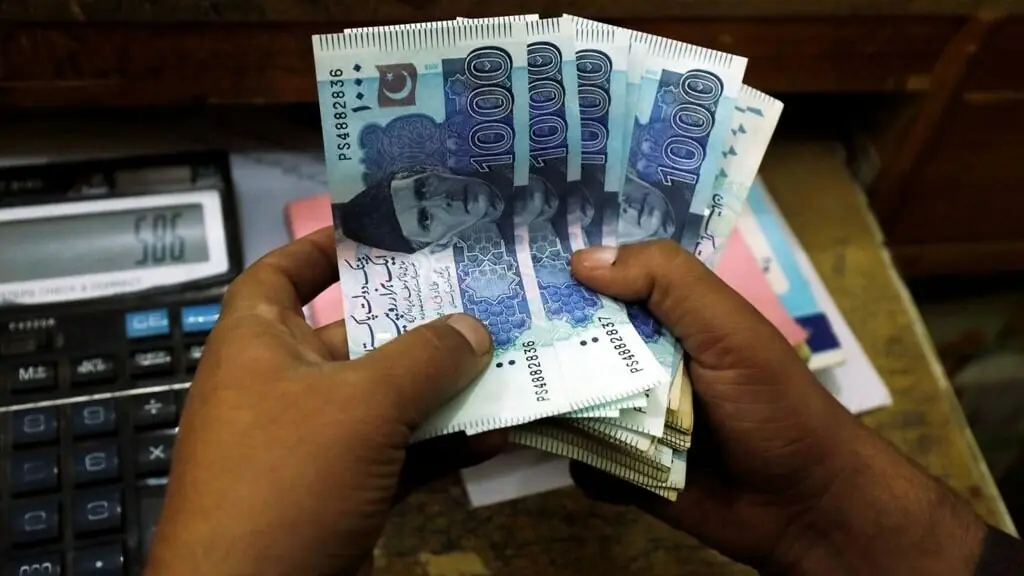
EDITORIAL: Salaried individuals paid 266 billion rupees in taxes during the first half of the current fiscal year — double that paid by the real estate sector. This has been a long-standing legitimate grouse by the salaried who argue that they do not represent the richest group in the country.
What is even more a matter of concern is the fact that while those drawing a salary at the taxpayers’ expense have routinely benefited from annual increase in salary on many occasions well about the rate of inflation yet the same has not been experienced by the salaried working for the private sector due to the low growth rates post-Covid coupled with severe contractionary monetary and fiscal policies as key conditions of the ongoing International Monetary Fund (IMF) programme.
Given that only 7 percent of the total employed people in the country draw their salaries at the state’s expense, the remaining 93 percent have experienced a steady decline in their quality of life — a fact that is reflected by the rise in poverty levels to over 42 percent today.
The real estate sector paid half the taxes collected through salaries and in this context it is relevant to note that urban property taxes are paid to the provincial governments while the agriculture income tax is, as per the constitution, the domain of the provinces. The Federal Board of Revenue collects withholding tax and capital gains tax on sale and purchase of property.
In addition, there is considerable evidence suggesting that the real estate sector has long been the sector of choice to park black money that, in turn, accounts for at least 50 percent of the formal economy, and that given recent reforms, as per the IMF conditions, the real estate purchase and sale of property has slowed down considerably.
In other words, part of the reason for low collections can be attributed to provincial tax measures and part to the slowdown in the real estate market.
Be that as it may, reports suggest that Pakistan’s investment landscape in 2025 witnessed a shift in preference towards gold and the stock market.
The increasing investment in gold is now a global phenomenon linked to the fact that the US-led Western sanctions against many countries as well as the Trump administration’s prohibitive tariffs on imports from China as well as from key European allies has dampened demand for the US dollar with many nations opting for gold — nations that include China and India.
In Pakistan’s context even though the rupee-dollar parity has remained stable yet this neither reflects the declining role of the US dollar in the world economy nor does the stability of the rupee in relation to other currencies, given that in spite of an uptick in remittance inflows the foreign exchange reserves remain heavily reliant on borrowing from multilaterals and the three friendly countries and not from higher income through a more desired income source — a trade surplus.
Robust stock market performances in Pakistan have been cited by many a finance minister, including the incumbent one, of a reflection of the strength of the economy while sceptics claim that this may indicate the fact that the stock market pays one of the lowest taxes within the region.
Irrespective of this, it must be acknowledged that the stock market players in Pakistan are small in number, again compared to the region, and it is a market where there are no players from vulnerable households or the lower income levels and few, if any, middle income earners.
In effect, the sector’s strength or weakness is certainly not an indication of an inclusive growth model — evidence of which is available, given rising poverty levels.
With continuing severely contractionary monetary and fiscal policies, the visible preference for gold and stocks is not likely to produce a positive environment for investment relating to higher productivity.
The government must instead focus on engaging with the IMF to loosen the contractionary policies in place up to a point where investment can be energised.
Copyright Business Recorder, 2026

























Comments
Comments are closed for this article.