


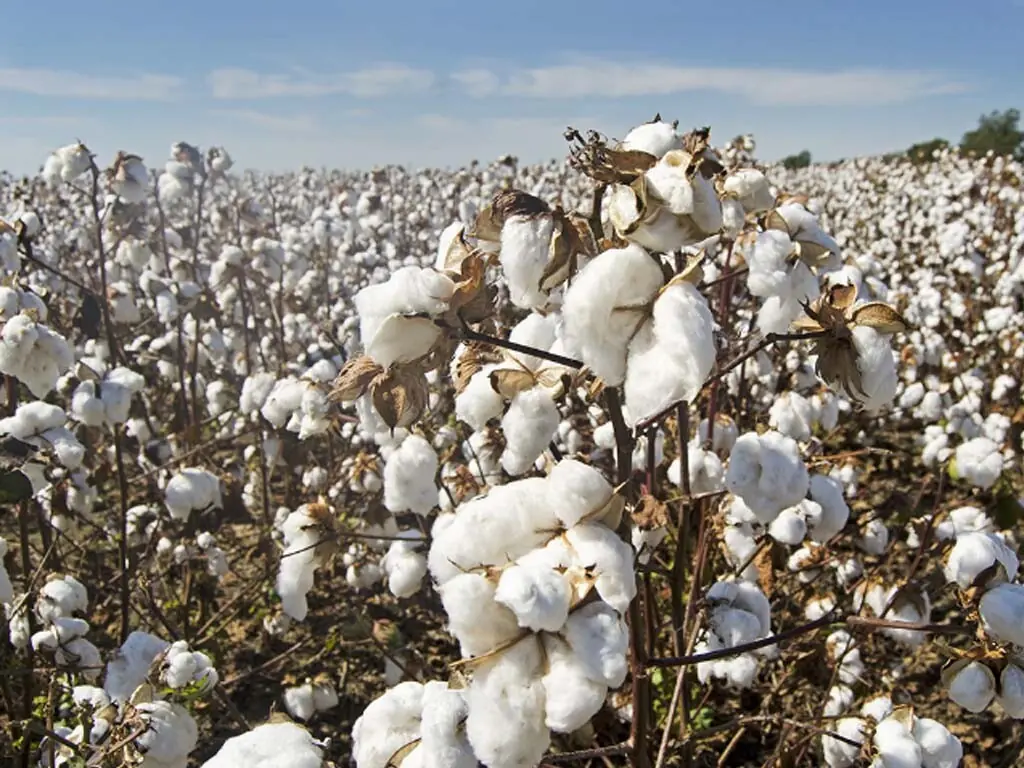
EDITORIAL: As the cotton season is still unfolding, the warning signs are already too large to ignore. By mid-December, production has fallen far short of the targets set for 2025–26, and the gap is wide enough to signal more than routine seasonal variation.
Punjab, despite higher acreage, is lagging badly behind Sindh, while national arrivals at ginning factories show barely any improvement over last year. This is not yet a post-mortem; it is, in fact, an early-stage failure, unfolding in real time, with serious implications if left unaddressed.
Nobody needs to be reminded that cotton is not just another crop. It remains central to Pakistan’s economic structure, feeding directly into the textile sector that anchors export earnings, industrial employment and foreign exchange inflows.
When cotton underperforms, the shock travels across farms, ginners, mills, banks and exporters. With agriculture already weakened by years of policy neglect and exports structurally underperforming, the present situation risks becoming another crisis layered onto an already fragile economy.
The first fault line lies in planning. The Federal Committee on Agriculture once again set production targets that appear disconnected from field realities.
Per-acre yield assumptions, especially the stark disparity projected between Punjab and Sindh, raised eyebrows early in the season. The data now emerging has reinforced those doubts. Unrealistic targets do not merely miss forecasts; they distort the entire decision-making chain, from input planning and credit allocation to procurement and export commitments. When official numbers lose credibility, uncertainty becomes systemic.
Operational weaknesses have compounded the damage. Punjab’s underperformance, despite higher acreage, points to familiar structural problems: inconsistent seed quality, weak pest management, uneven water availability and poor extension services.
These are not sudden failures. They reflect long-standing gaps in agricultural governance and investment. Sindh’s relatively stronger showing does not offset the national picture; it highlights how uneven and poorly coordinated cotton policy has become across provinces.
The situation has been worsened by a breakdown at the market level, turning a difficult season into a disruptive one. For decades, the Karachi Cotton Association’s daily spot rate has served as the backbone of price discovery.
It underpins domestic trade, bank financing, insurance valuation and Pakistan’s visibility in international cotton markets. Its suspension, for the first time in over half a century, is therefore not a technical footnote; it is a market failure with immediate consequences.
The sealing of the KCA building by the Evacuee Property Trust Board, with the involvement of the Federal Investigation Agency, has halted the issuance of spot rates and injected uncertainty into an already strained system.
Whatever the merits of the ownership dispute, the manner in which it has been pursued has imposed collateral damage across the sector.
Taken together, these failures reveal a system operating without coordination. Planning is detached from ground realities. Field-level weaknesses persist year after year.
Market institutions are destabilised by abrupt interventions. At no point does there appear to be an authority assessing how decisions in one segment ripple through the rest of the chain. Cotton policy, such as it exists, remains fragmented.
The danger lies in what comes next. Pakistan already relies heavily on imported cotton to keep its textile industry running. A weak domestic crop deepens that dependence, raises costs for mills and erodes export competitiveness. At a time when the country is struggling to stabilise its external account and revive exports, undermining its primary raw material base is economically reckless.
What is needed now is not rhetoric but discipline. Production targets must be evidence-based. Agricultural productivity requires sustained attention rather than episodic concern. And institutions that underpin market confidence must be insulated from disruptive administrative action. Unless cotton is treated as an integrated system rather than a collection of disconnected parts, today’s warning signs will harden into tomorrow’s crisis.
Copyright Business Recorder, 2025

























Comments
Comments are closed for this article.