


Bankers urge RBI action as dollar glut, NDF pressure roil Indian rupee forwards
- Indian rupee remains Asia’s worst-performing currency this year
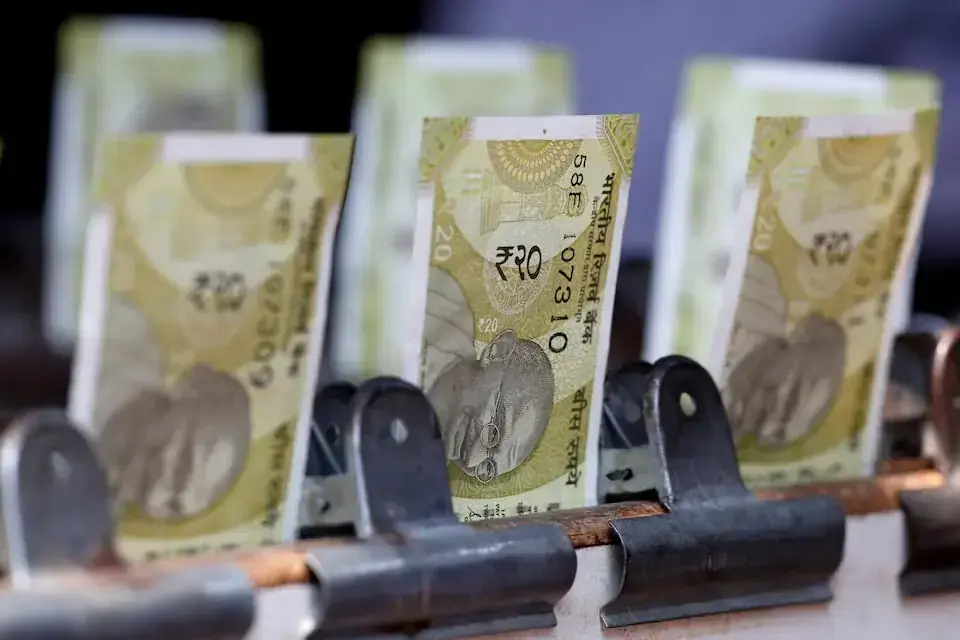

MUMBAI: Bankers are urging the Reserve Bank of India to intervene as a surge in dollar liquidity heading into year-end and pressure in the non-deliverable orward market have pushed rupee forward premiums to multi-year highs.
Outsized moves in the forward market intensified over the last week as the dollar glut collided with regulatory and balance-sheet constraints, leading to a spike in premiums.
Half a dozen bankers said central bank intervention will be necessary to ease the pressure.
The one-month dollar/rupee forward premium rose to 55 paisa on Tuesday, its highest level in more than six years and over three times the level at which it was at the end of November.
The Indian rupee remains Asia’s worst-performing currency this year, hit by weak investment flows, steep U.S. tariffs and the lack of a U.S. trade deal. Despite the RBI’s efforts to stabilise the market, analysts believe the rupee faces considerable downside risks.
A source familiar with the matter said the issue was informally raised with the RBI last week, while another source confirmed that the central bank is aware of the situation and is closely monitoring the markets.
Both declined to be identified as they are not authorised to speak publicly. The RBI did not immediately respond to a request for comment.
Indian rupee ends flat, wedged between importer dollar demand and firmer Asia FX
DOLLAR GLUT
Banks can typically manage excess dollar liquidity by placing deposits with other lenders. However, regulatory constraints at quarter-ends, particularly at the calendar year-end, limit this option.
This forces banks to turn to dollar-rupee sell/buy swaps, driving premiums higher, especially at shorter maturities.
Tanay Dalal, an economist at Axis Bank, noted that widening premiums in the NDF market are compounding the pressure.
Offshore pricing signals expectations of the rupee weakening back below 90 in a short time frame, Dalal said. The rupee hit a record low of 91.075 earlier this month but rebounded following aggressive RBI intervention.
Bankers also pointed out that the RBI’s recent spot market dollar sales have contributed to the liquidity surplus.
Demand from importers and speculative participants has been concentrated in the forward market, while the RBI’s dollar sales have been in the spot market, resulting in a demand and supply mismatch across durations.
CALL FOR INTERVENTION
Market participants said the central bank should adopt measures such as dollar liquidity draining via buy/sell swaps.
“Continued auction of buy/sell swaps by the RBI can have thetriple benefit of bringing premiums down, reducing pressure on MIFOR (a swap benchmark) and domestic swaps, and allowing (RBI’s) forward short positions to be better staggered over time,” Dalal said.
Bankers and economists have warned that RBI intervention may be necessary to normalise dollar liquidity, highlighting the competing priorities of curbing rupee volatility and monetary policy transmission facing the central bank.
“The broader point is that despite RBI intervention, the market is convinced the INR must weaken materially in the absence of a US trade deal,” said Dhiraj Nim, economist and FX strategist at ANZ.

























Comments
Comments are closed for this article.