


Pakistan’s rich get richer: top 10% control 59% of wealth, finds report
- Female labour participation in the country fell from 9.8% to 8.5%
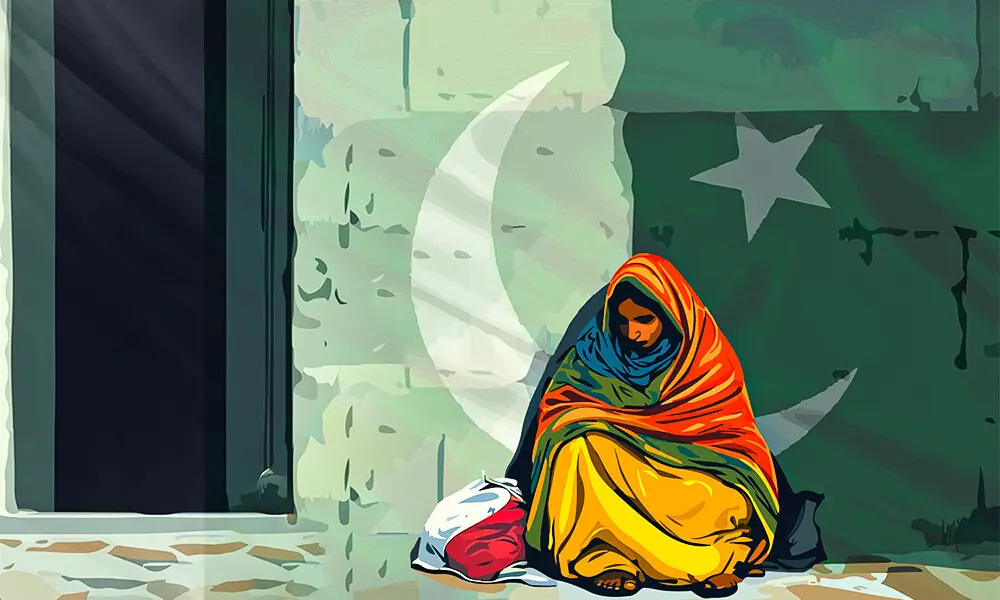

Inequality in Pakistan remains deeply entrenched, with the top 10% of earners capturing 42% of total income and the bottom 50% receiving just 19%, according to the World Inequality Report 2026.
“In Pakistan, inequality remains high and shows limited progress over the past decade,” read the report, published by the World Inequality Lab (WIL).
WIL is a global research centre focused on understanding and analysing economic and social inequality through data-driven research, hosted primarily at the Paris School of Economics.
“Wealth inequality is even more concentrated, with the richest 10% holding 59% of total wealth and the top 1% accounting for 24%,” it said.
Pakistan’s powerful groups enjoy economic privileges of over $17bn: UNDP Report
According to the report, Pakistan’s average income per capita is around 4,200 euros (Purchasing Power Parity), while average wealth stands at 15,700 euros (PPP).
“The income gap between the top 10% and the bottom 50% decreased slightly from 22.0 to 21.4 between 2014 and 2024, reflecting a marginal change,” it said.
Meanwhile, female labour participation in the country fell from 9.8% to 8.5%, indicating a decline in gender inclusion.
“Overall, income and wealth are highly concentrated in Pakistan, with persistent gender disparities and only minor shifts in inequality trends,” it added.
The world is extremely unequal
According to the report, inequality remains at very high levels globally.
“Today, the top 10% of the global population’s income-earners earn more than the remaining 90%, while the poorest half of the global population captures less than 10% of the total global income,” it said.
Meanwhile, wealth is even more concentrated: the top 10% own three-quarters of global wealth, while the bottom half holds only 2%.
It shared that the picture becomes even more grim as the wealthiest 0.001%, fewer than 60,000 multi-millionaires, control more wealth than half of humanity combined.
“Their share has grown steadily from almost 4% in 1995 to over 6% today, which underscores the persistence of inequality.
“This concentration is not only persistent, but it is also accelerating,” read the report.
The report highlighted that since the 1990s, the wealth of billionaires and centi-millionaires has grown at approximately 8% annually, nearly twice the rate of growth experienced by the bottom half of the population.
On the other hand, the poorest have made only modest gains, which are overshadowed by the extraordinary accumulation at the very top.
“The result is a world in which a tiny minority commands unprecedented financial power, while billions remain excluded from even basic economic stability,” it said.


























Comments
Comments are closed for this article.