


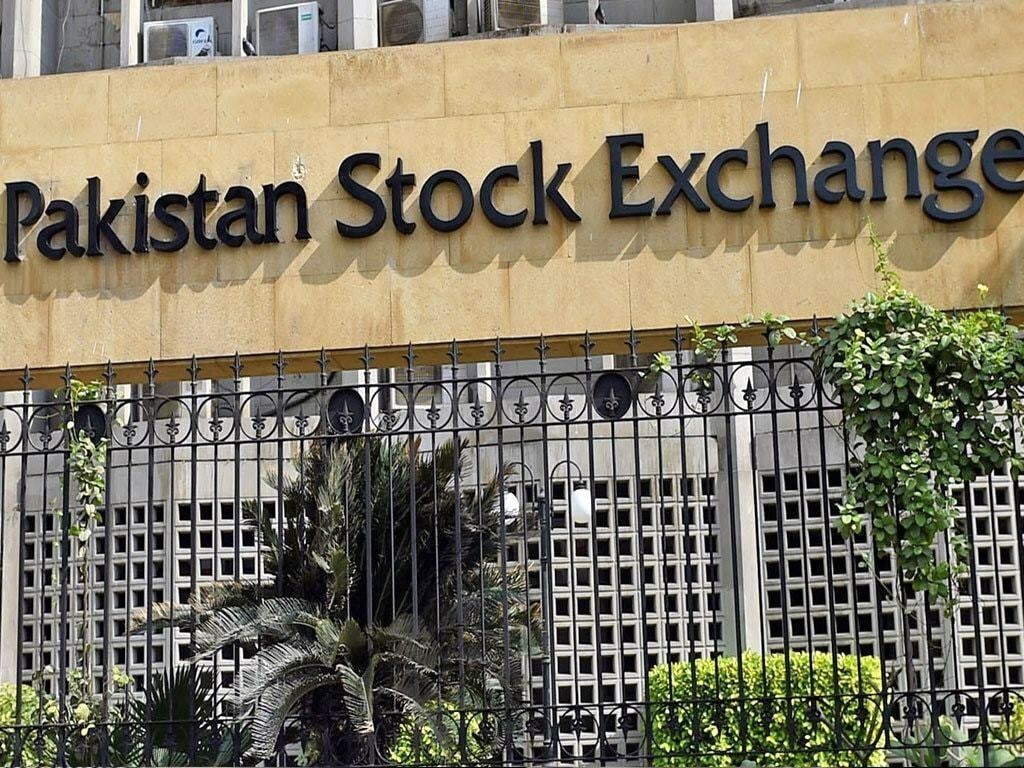

KARACHI: The week at the Pakistan Stock Exchange unfolded with a calm that felt deliberate, almost strategic—as though the market was conserving its energy ahead of pivotal developments expected later in December.
By the end of trading on Friday, the KSE-100 Index had closed at 167,085.58 points, posting a modest 0.2 percent week-on-week rise. It was a quiet finish, but one that masked the shifting undercurrents running through the market.
On December 5, 2025, the BRIndex100 closed nearly flat at 17,629.50, virtually unchanged from its 17,629.12 opening, but carried remarkable trading activity with 2.71 billion shares traded in week. The BRIndex30 fared slightly better, rising from 55,784.05 to 56,804.82, on a turnover of 1.71 billion shares, showing robust interest in heavily traded stocks across the market.
Early in the week, investors were greeted by encouraging macroeconomic news. November inflation eased to 6.1 percent, pulling the five-month FY26 inflation average to 5 percent, a significant improvement from last year’s 7.9 percent. The number sparked cautious optimism, reinforcing expectations of near-term monetary stability.
But the relief was tempered quickly. Pakistan’s trade deficit widened by 33 percent year-on-year to US$2.85 billion, driven by a 15 percent decline in exports and a 5 percent rise in imports. Investors digested the implications soberly: despite easing domestic inflation, external account pressures were once again mounting.
Fiscal concerns deepened that sentiment. The Federal Board of Revenue continued to lag behind its targets, accumulating Rs349 billion shortfall over five months—a worrying gap as Pakistan works to stabilize its financial position. The government attempted to reassure markets, announcing that an action plan for 15 priority recommendations from the International Monetary Fund would be finalized by the end of December 2025, a critical step toward ensuring program continuity.
One source of much-needed comfort came from Saudi Arabia, which extended its US$3 billion deposit facility to Pakistan until December 2026. The extension provided an immediate boost to sentiment and strengthened the external account at a time when the State Bank reported reserves stable at US$14.6 billion.
Yet another number continued to loom ominously in the background: Pakistan’s central government debt, which climbed to Rs77 trillion in October 2025. Domestic borrowing alone surged 23 percent year-on-year, rising to Rs45.49 trillion, underscoring the scale of Pakistan’s fiscal challenge.
Political clarity also arrived during the week when media reports indicated that the President approved the summary for the appointment of the Chief of Defence Staff—a move that helped ease uncertainty on an important institutional front.
Corporate news added a fresh dimension to the week when Service Industries announced that its subsidiary, Service Long March Tyres (SLM), would raise capital through an IPO and seek listing on the PSX. The announcement was seen as an encouraging indicator of corporate confidence.
Trading activity on the ready counter strengthened sharply, with average daily turnover rising 21 percent to 679.75 million shares, while traded value climbed 34.6 percent to Rs40.19 billion.
Sectoral performance showed pockets of notable strength. Refinery stocks surged 5.4 percent, cement climbed 3.4 percent, and technology and communication rose 3.2 percent, continuing its streak as the market’s most active segment. Other sectors—such as engineering, exploration and production, oil and gas marketing, chemical, power, and textiles—registered varying degrees of positive momentum.
Meanwhile, pharmaceuticals, banks, autos, and fertilizers drifted lower, reflecting lingering concerns about demand, spreads, and margins.
Individual stock performances mirrored the broader market texture. BNWM surged 19.7 percent, followed by PTC at 14 percent and SRVI at 13.4 percent. On the opposite side, THALL and AICL dropped 3.9 percent, while HUMNL, HGFA, FHAM, FFC, and AKBL also registered declines.
Providing an interpretation of the week’s developments, Ali Najib, Deputy Head of Trading at Arif Habib Limited, described it as a flattish weekly ending. He highlighted that the index reflected a market engaged in a clear consolidation phase.
Najib pointed to Saudi Arabia’s deposit extension and the confirmation of the Chief of Defence Staff as key stabilizing developments. He emphasized that FFC, PPL, OGDC, UBL, and SYS collectively boosted the index by 551 points, while MCB, PIOC, FABL, NBP, and BOP countered with a combined 138-point drag.
Looking ahead, Najib expects the market to “make an attempt at a new all-time high,” driven particularly by strength in the energy sector as investors anticipate a potential circular debt disbursement in the coming week—an event that could spark aggressive buying in exploration and production as well as power stocks.
Analysts argue that by the close of the week, the PSX had delivered a story of resilience: easing inflation, external support, and strong turnover on one side, and widening deficits, rising debt, and fiscal strain on the other. It was a week defined by careful recalibration, one that suggested the market was not retreating—but preparing for what may come next.
Copyright Business Recorder, 2025




















Comments
Comments are closed for this article.