


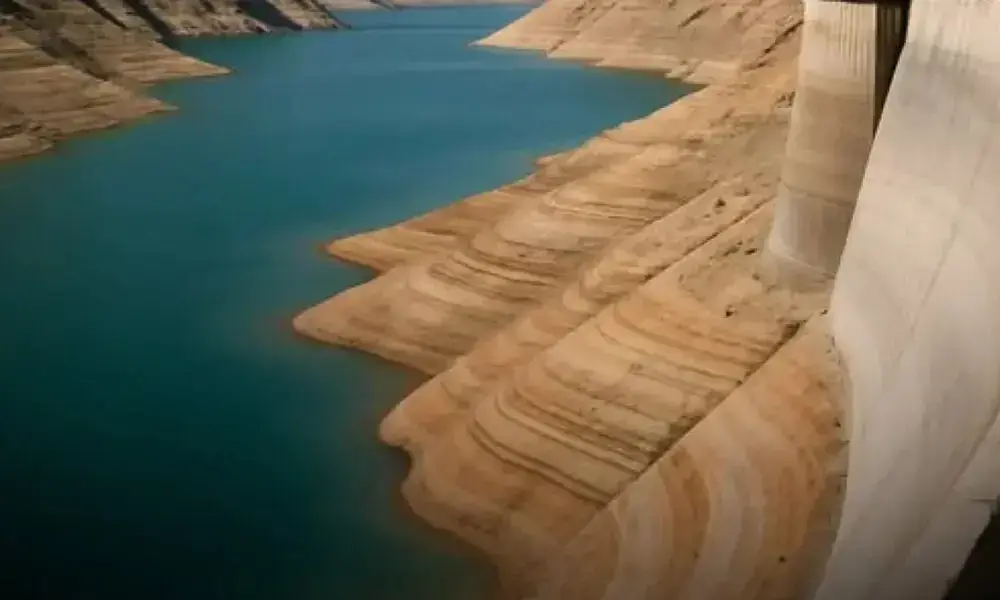

TEHRAN: Water levels at the dam reservoirs supplying Iran’s northeastern city of Mashhad plunged below three percent, media reported Sunday, as the country suffers from severe water shortages.
“The water storage in Mashhad’s dams has now fallen to less than three percent,” Hossein Esmaeilian, the chief executive of the water company in Iran’s second largest city by population, told ISNA news agency.
He added that “the current situation shows that managing water use is no longer merely a recommendation – it has become a necessity”.
Mashhad, home to around four million people and Iran’s holiest city, relies on four dams for its water supply.
Tehran to restrict water as Iran battles drought
Esmaeilian said consumption in the city had reached around “8,000 litres per second, of which about 1,000 to 1,500 litres per second is supplied from the dams”.
It comes as authorities in Tehran warned over the weekend of possible rolling cuts to water supplies in the capital amid what officials call the worst drought in decades.
In the capital, five major dams supplying drinking water are at “critical” levels, with one empty and another at less than eight percent of capacity, officials say.
“If people can reduce consumption by 20 percent, it seems possible to manage the situation without rationing or cutting off water,” Esmaeilian said, warning that those with the highest consumption could face supply cuts first.
Nationwide, 19 major dams – about 10 percent of the country’s reservoirs – have effectively run dry, Abbasali Keykhaei of the Iranian Water Resources Management Company said in late October, according to Mehr news agency.
President Masoud Pezeshkian has cautioned that without rainfall before winter, even Tehran could face evacuation, though he did not elaborate.
The water crisis in Iran follows month of drought across the country.
Authorities over the summer announced public holidays in Tehran to cut back on water and energy consumption as the capital faced almost daily power outages during a heatwave.
Local papers on Sunday slammed what they described as the politicisation of environmental decision-making for the water crisis.
The reformist Etemad newspaper cited the appointment of “unqualified managers… in key institutions” as being the main cause of the crisis.
Shargh, another reformist daily, said that “climate is sacrificed for the sake of politics”.

























Comments
Comments are closed for this article.