


Bulgaria adopts law to take control of Russia’s Lukoil refinery
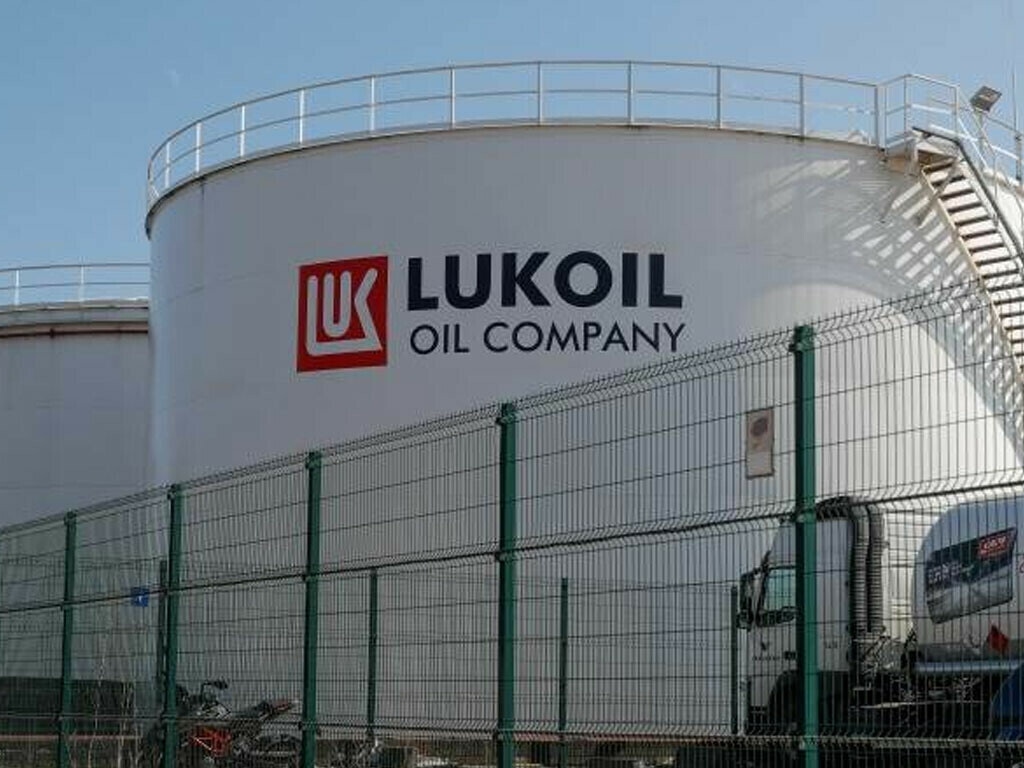

SOFIA, Bulgaria: Bulgaria’s parliament on Friday adopted legal changes to place a major Lukoil refinery in the east of the country under state control following US sanctions against the Russian oil giant.
The United States last month hit Russia’s two biggest oil producers — Rosneft and Lukoil — with sanctions over its war in Ukraine.
Lukoil has owned the Neftochim plant, the largest oil refinery in the Balkans, in the Black Sea city of Burgas, since 1999. Lukoil-Neftochim is also Bulgaria’s largest company.
The US sanctions, which will come into force on November 21, “will effectively lead to the shutdown of the refinery’s operations... due to the refusal of all counterparties to make payments to companies belonging to Lukoil,” said the draft legislation proposed by Bulgaria’s ruling coalition.
According to the legislation, a special administrator can be named to exercise the shareholders’ voting rights. The administrator could sell shares to a new owner, pending government approval.
The law was fast-tracked through parliament, with a majority of lawmakers approving the amendment.
During the debate, opposition lawmakers accused the law’s sponsors of rushing the legislation.
They also slammed the special administrator’s right to sell the refinery’s shares, saying this could lead to legal action against Bulgaria.
Ruslan Stefanov, an expert in energy governance and security at the Center for the Study of Democracy, said the government approach was a step into the right direction, but also “risky”.
“Leaving the possibility of nationalisation open — even if the desire to assert more authority is understandable — it is very risky and could weaken the effect of the sanctions, allowing Lukoil to sue the Bulgarian state and obtain much higher compensation,” Stefanov told AFP.
Last week, Bulgarian lawmakers adopted temporary restrictions on exports of petroleum products, including to other European Union members, to ensure sufficient supplies following US sanctions on Russian energy.
The ban covers exports of petroleum products, including diesel and aviation fuel.
Exceptions are allowed for the refuelling and reloading of local and foreign vessels and aircraft, as well as for supplies within the EU to NATO armed forces or to the armed forces of any EU member state when linked to the bloc’s common security and defence policy.
The Lukoil-Neftochim refinery has a major role in the Bulgarian economy. It posted turnover of about 4.7 billion euros ($5.4 billion) in 2024.
Its distribution unit enjoys a quasi-monopoly on the Bulgarian market with a network of oil depots, petrol stations, as well as firms supplying ships and aircraft.


























Comments
Comments are closed for this article.