


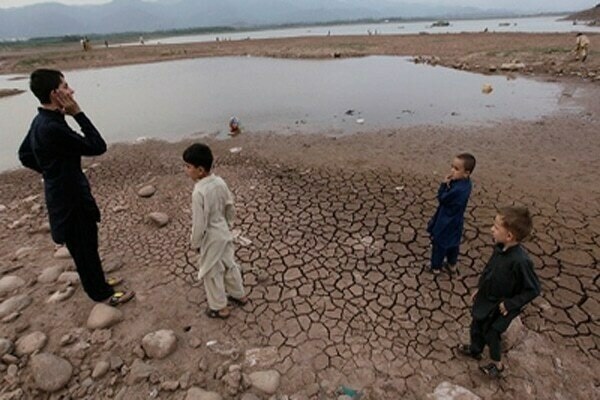

ROME: Advisor to the Prime Minister Dr Syed Tauqir Shah has stated that Pakistan remains on the global frontline of climate and water crises, yet struggles to access even a small portion of the vital funds it needs due to paralysing bureaucratic delays and slow disbursement.
While addressing the FAO’s Rome Water Dialogue, he presented Pakistan’s national statement before an esteemed gathering that included heads of government, ministers from hundreds of countries, and thousands of civil society activists and development professionals.
Dr Shah said, “Water crises is no longer an abstract policy discussion; it is an existential challenge, for many countries in the Global South”.
Further elaborating Advisor Shah said: “Pakistan is the fifth most climate-vulnerable country in the world. Our water security—and by extension, our national food security—is under threat from the twin forces of extreme climate events and chronic resource stress. Today, Pakistan has crossed the critical threshold, and is now officially a water-scarce nation”.
Highlighting the water crises of Pakistan, Dr Shah remarked: “This crisis manifests in two ways: first, in devastating abundance, as seen during the 2022 floods, which impacted over 33 million people, destroyed four million acres of agricultural land, and left 10 million people without safe drinking water. Recent, 2025 floods have been as catastrophic; second, in crippling scarcity, where our total water storage capacity is limited to only about 30 days of supply.”
He said, “Our need is clear and urgent: we require massive, timely investments in climate-resilient water infrastructure. This must be a mix of traditional, high-storage solutions alongside nature-based Solutions (NbS)—restoring floodplains, developing resilient irrigation techniques, and implementing watershed management.”
While forcefully calling out the Global Climate Finance Institutions, Dr Tauqir said: “According to our NDCs, Pakistan requires an estimated USD7-$14 billion annually for adaptation efforts alone by 2030. Yet, we are met with a global finance architecture that has turned the required investment into a paradox.”
While building case for reform of Global Climate Finance Institutions, he opined that the current global climate fund mechanism is characterised by critical failings that directly hamper our ability to invest and innovate in water resilience.























Comments
Comments are closed for this article.