


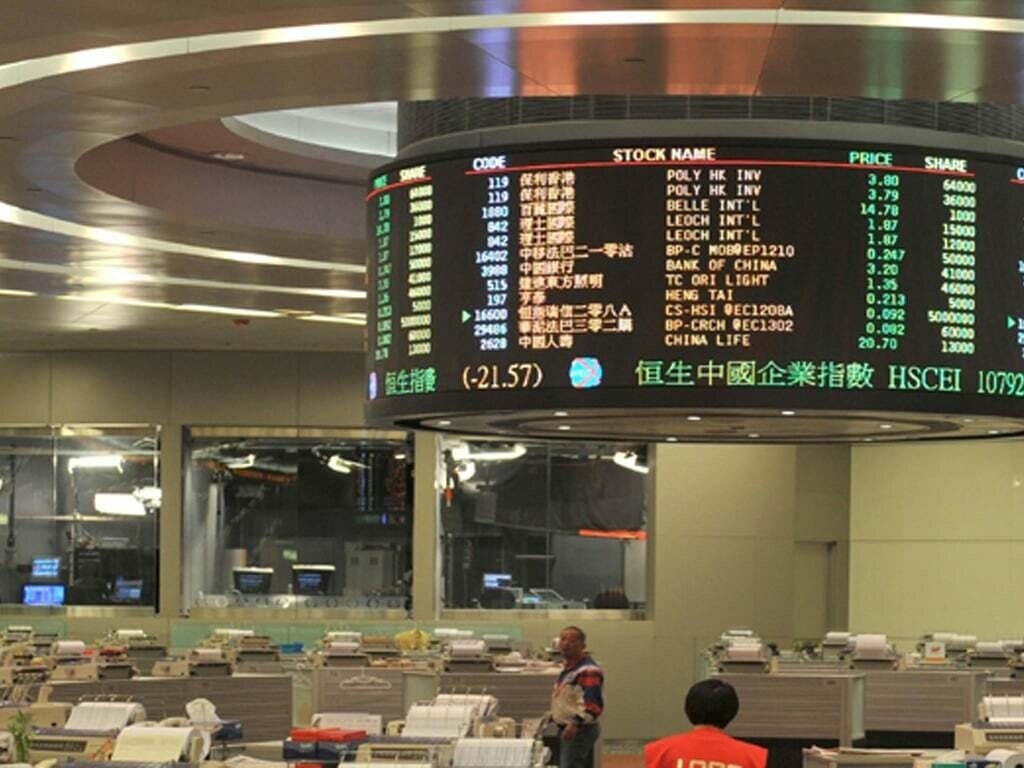

SHANGHAI: Stocks in China and Hong Kong fell on Friday, capping their steepest weekly drop since early April, as investor caution over trade uncertainties and profit-taking from artificial intelligence shares dampened sentiment ahead of a leadership conclave in Beijing next week.
China’s blue-chip CSI300 Index ended 2.3 percent lower, the Shanghai Composite Index lost 2 percent and Hong Kong’s benchmark Hang Seng Index was down 2.5 percent.
The CSI300 index shed more than 2 percent this week, while the Hang Seng Index lost 4 percent. Both gauges recorded their biggest weekly losses since early April when US President Donald Trump’s sweeping tariffs shook global financial markets.
“Investor sentiment has largely shifted as the market turns volatile, with most in wait-and-see mode amid political ups and downs,” UBS analysts said in a client note.
“There’s more downside risk and higher uncertainty than a week ago,” they said, adding that clients would likely continue favouring sectors such as technology, basic materials and emerging consumer products through the end of the year.
Trade tensions between the world’s two largest economies escalated this week, as China accused the US of stoking panic over its rare earth controls. The two sides also began imposing additional port fees on ocean shipping firms that move everything from holiday toys to crude oil.
Chinese sanctions imposed this week on US affiliates of shipbuilder Hanwha Ocean aim to undermine South Korea-US cooperation and “to coerce” Washington’s Asian ally, a US State Department spokesperson said on Friday.
Big tech firms in Hong Kong have fallen 8 percent this week, while the onshore tech-focused STAR50 Index dropped 6 percent, its largest weekly decline since December. The sharp pullback came after a strong rally in AI stocks earlier this year, driven by Beijing’s push for home-grown innovation, breakthroughs from companies like DeepSeek and heavy investment from Alibaba, Tencent and Baidu.
Micron plans to stop supplying server chips to data centres in China after it failed to recover from a 2023 government ban on its products in critical Chinese infrastructure, Reuters reported on Friday. Semiconductor shares traded onshore fell 4.1 percent.
BYD’s Hong Kong-listed shares dropped nearly 5 percent after the company made its largest recall of more than 115,000 cars due to design defects and battery-related safety risks.




















Comments
Comments are closed for this article.