


Closure of industrial, commercial establishments: Sindh govt, not labour court, has jurisdiction to decide cases: SC
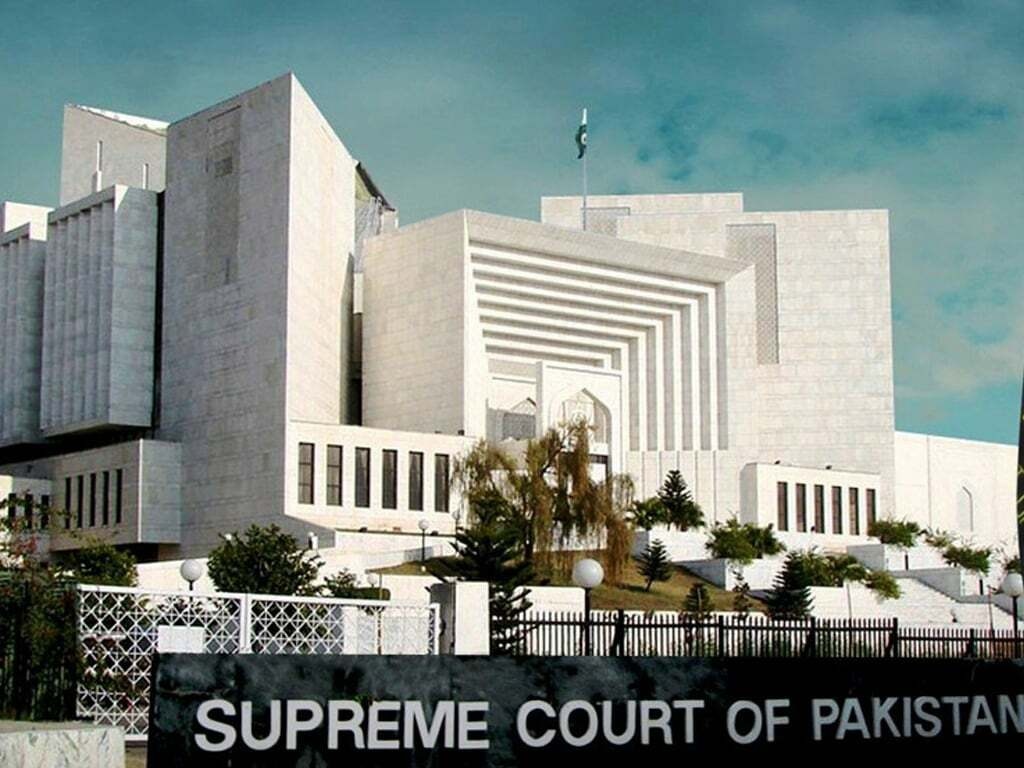

ISLAMABAD: The Supreme Court declared that under the Sindh Terms of Employment (Standing Orders) Act, 2015, the jurisdiction to decide cases of closure of industrial or commercial establishment is vested in the Government of Sindh, rather than the Labour Court.
A three-judge bench, headed by Justice Muhammad Ali Mazhar, heard appeals against the Sindh High Court (SHC) verdict.
The transitory facts of the case are that the petitioner (M/s Trio Industries (Pvt) Limited) was engaged in the business of printing of ceramic tiles on finished products manufactured by other ceramic tiles production companies. Due to the advancement of technology, the process of printing tiles has become an integral part of the manufacturing process, hence the petitioner’s enterprise was no more a viable venture.
The petitioner on 02.03.2017 applied to the Labour Department, instead of the Sindh Government, under Standing Order 15 of the Sindh Terms of Employment (Standing Orders) Act 2015 for permission to close down the factory.
During the closure process, the respondents (employees of the factory) filed their Grievance Petition before the Labour Court and alleged that due to trade union activities, the petitioner has decided to remove them from service. They asserted that no proper application was moved to the Government of Sindh for seeking their approval in the closure of the establishment, which was the wrong method.
SC determines right meaning of FMCG products
The Sindh Labour Court, Karachi, dismissed the grievance petitions. The respondents then filed appeals under Section 48 (3) of the Sindh Industrial Relations Act, 2013 (SIRA). The Sindh Labour Appellate Tribunal, Karachi directed the petitioner to deposit the stipulated amount of compensation within one month. The petitioner filed a constitution petition before the Sindh High Court, which was also dismissed.
The petitioner’s stance was that the Joint Director, Labour, represents the government and the application for closing down the establishment was rightly submitted to him, as he was the proper authority for submission of such application, and hence, intimation or notice to the Chief Secretary, Sindh, was not required.
The judgment noted that under Standing Order 15 of the 2015 Act, an application for closing down the establishment was to be moved to the Government of Sindh, rather the Labour Department. If, under Standing Order 15, the application for permission to close down was not decided within 15 days of its submission, the said application could be deemed to have been granted/allowed, it added.
It said there must be some well structured procedure and mechanism to deal with and decide the applications submitted to the Government of Sindh for closing down the establishment in terms of Standing Order 15 of the 2015 Act.
“No doubt, the powers are given to the government, but there is no procedure to decide such application except providing the outer limit of 15 days; that, too, is in favour of the employer, to presume that his application is allowed if it was not decided or responded to within 15 days. Therefore, a clean slate is accorded to the employer to immediately shut down the whole business/establishment without checking whether the action is bona fide or mala fide or, while doing so, if the full and final accrued dues of employees have been settled or not.
“On the contrary, while assuming jurisdiction to accord permission, it is the responsibility of the Government to ensure that the close down is bona fide and permission is granted after ensuring the payment of dues to the employees.”
The judgment said there is a need to enact a fool-proof procedure to deal with, examine, and decide such applications after hearing the employer and employees/their representative/Trade Union/CBA, and then render a speaking order so that an aggrieved person may file an appeal in the Labour Court in terms of Standing Order 15 of the 2015 Act.
The court recommended that some necessary amendments in the 2015 Act or some rules or Standard Operating Procedures (SOPs) are required to be enacted in the best interest of workers, to save them from unlawful removal from service in case of mala fide attempts/schemes, and also from deprivation of their lawful dues in case bona fide of employer is proved.
Copyright Business Recorder, 2025


























Comments
Comments are closed for this article.