


Pakistan has largest gender employment gap in South Asia, significant pay disparity: ILO
- Report reveals women in wage employment earn substantially lower wages
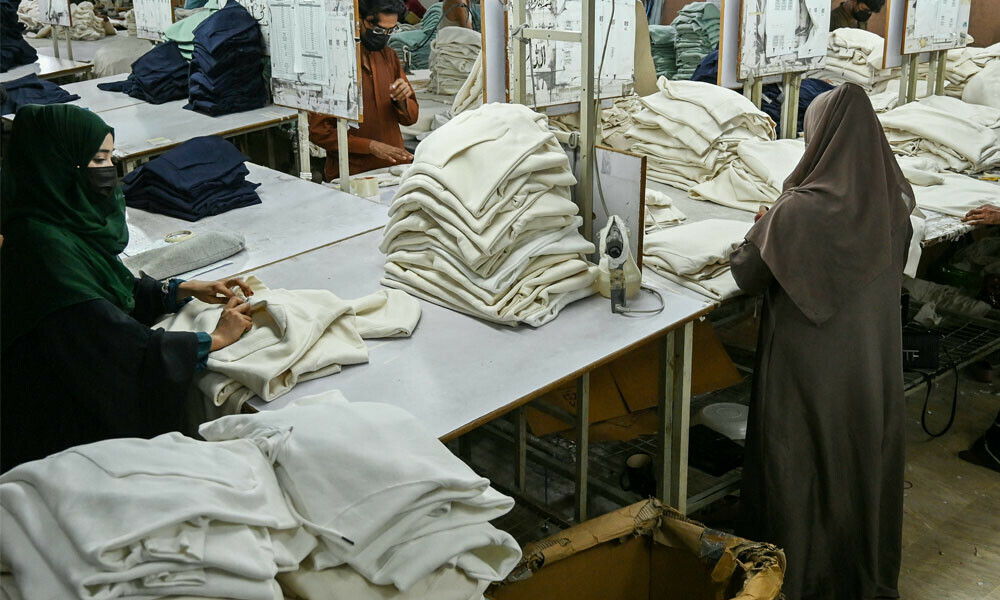
A new report by the International Labour Organisation (ILO) highlights significant gender inequalities in Pakistan’s labour market, revealing the largest gap between men’s and women’s employment rates in South Asia and a substantial gender pay gap.
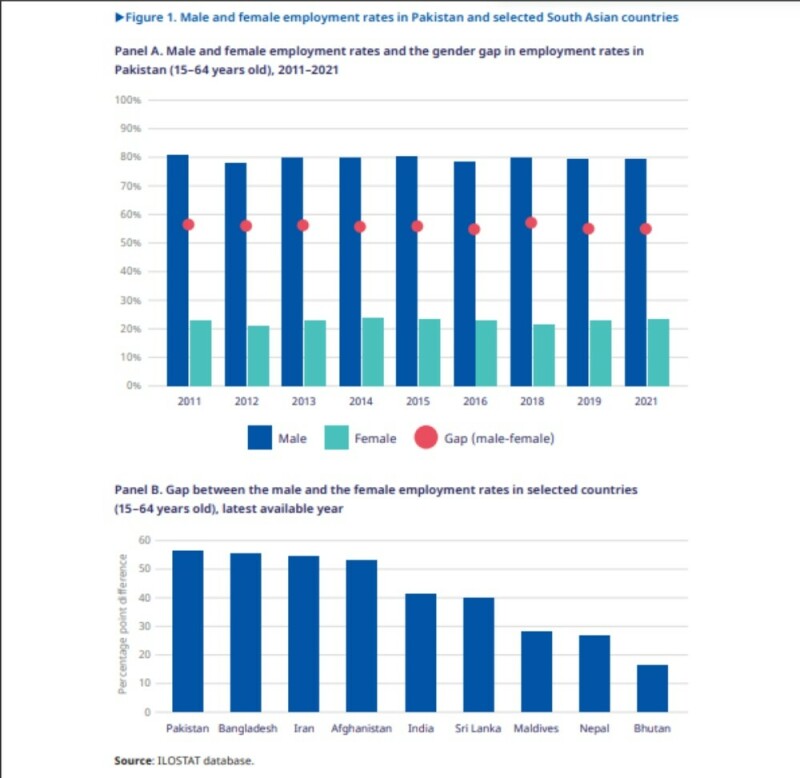
The ‘Pakistan Gender Pay Gap Report 2025’, based on data from national Labour Force Surveys, indicates that Pakistan’s male employment rate stands at 79.2 percent, while the female employment rate was 23.2 percent in 2021. This employment gap has not significantly decreased over the past decade.
The report further notes that the relatively few women who are employed are less likely than men to work as wage employees, the category used for estimating the gender pay gap. Instead, women are more likely to work as contributing family workers within the self-employed category. As a result, women constitute only 13.5 percent of employees in Pakistan.
The data also shows that women in wage employment are more likely to have higher levels of education than their male counterparts. Additionally, female employees are more frequently found in the public sector, formal employment, and jobs with permanent contracts, as well as in professional occupations and larger firms. Pakistani women in wage employment are also more likely to work part-time, potentially to balance work with disproportionate household care responsibilities.
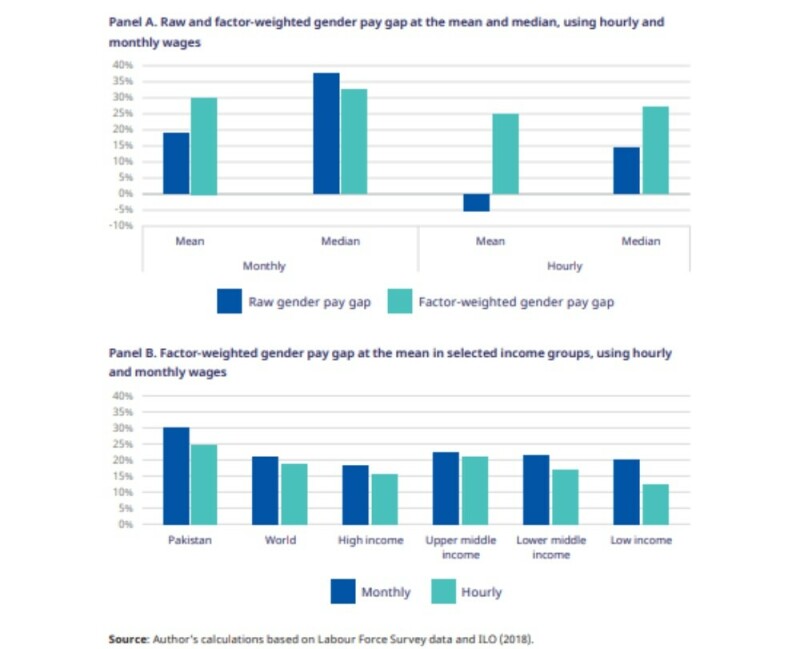
Despite these characteristics, the report reveals that women in wage employment earn substantially lower wages than men. After accounting for differences in the distribution of male and female wage employment, women earn, on average, between 25 and 30 percent less than men. When considering monthly wages, the gap is 30 percent due to women working fewer paid hours on average.
PSX’s commitment to gender equality
From an international perspective, Pakistan’s gender pay gap is considered high, around10 percentage points higher than the global average and 10 percentage points higher than the average for lower-middle-income countries, Pakistan’s income group. It is also higher than values recorded in other South Asian countries like Sri Lanka and Nepal with available information.
The report indicates that the gender pay gap in Pakistan is generally larger among older workers, individuals with low educational attainment, informal workers, and those in the private sector. Conversely, it is smaller among highly educated and younger individuals. The gap is also more noticeable in agriculture and manufacturing compared to the service sector.
Regarding the causes, the report suggests that the gender pay gap is either small or non-existent in the public sector and formal economy. This points to a potential link with a lack of compliance with labour legislation, which is more prevalent in the private sector and informal economy.
The increase in the gender pay gap with age may be attributed to women opting for more flexible, lower-wage work arrangements, such as part-time employment, after childbirth. For women with low education levels, the gender pay gap exceeds 40 percent, while it is less pronounced for those with higher education, suggesting that education may partially mitigate some obstacles to quality jobs.
CM launches Gender Parity Report 2024 of KP govt
A decomposition analysis in the report confirms that the gender pay gap, particularly among low-income workers, remains largely unexplained by observable factors. This implies that women earn significantly less than men even with comparable observable characteristics that should yield similar wages. Potential reasons include occupational segregation, where women are more likely to be employed in lower-paying jobs or sectors, a lack of transparency in company pay structures, and discriminatory pay practices.













Comments
Comments are closed for this article.