



Pakistan just posted its lowest annual inflation rate in seven years. At 4.49 percent, FY2024-25 now holds the crown for lowest CPI since FY2017-18, edging that year by nearly 20 basis points. On paper, that looks like a win. Until you glance backwards.
In FY2018, that number came after three years of calm, with inflation averaging under 4.25 percent. This time, we are arriving at 4.49 percent after three years where inflation averaged justshy of 22 percent. So yes, disinflation has happened. But if this is what stability looks like, one hopes it does not stay.
Readers of this column are unlikely to be shocked that the single biggest driver of this textbook disinflation is not improved monetary credibility or prudent fiscal discipline. It is the state-engineered collapse of domestic wheat prices, now in its second season. Let us not pretend CPI behaved because the market was left to its own devices.
Rewind to 2018 again. Inflation was not just low. Core inflation, measured by the NFNE index, remained within SBP’s medium-term target range of 5 to 7 percent for 42 straight months, from November 2014 through May 2018. That was the real deal. Sustained, broad-based price stability.
Now take a look at the outgoing year. Urban NFNE has only just dipped below 7 percent, and only in June. Rural NFNE is still not there. And it gets better. Despite what many assume is a collapse in rural incomes, rural core inflation is still running north of 57 basis points per month. That is the hurdle rate at which year-on-year inflation breaches the 7 percent mark. In plain terms, rural core inflation is already above target. And has been for months.
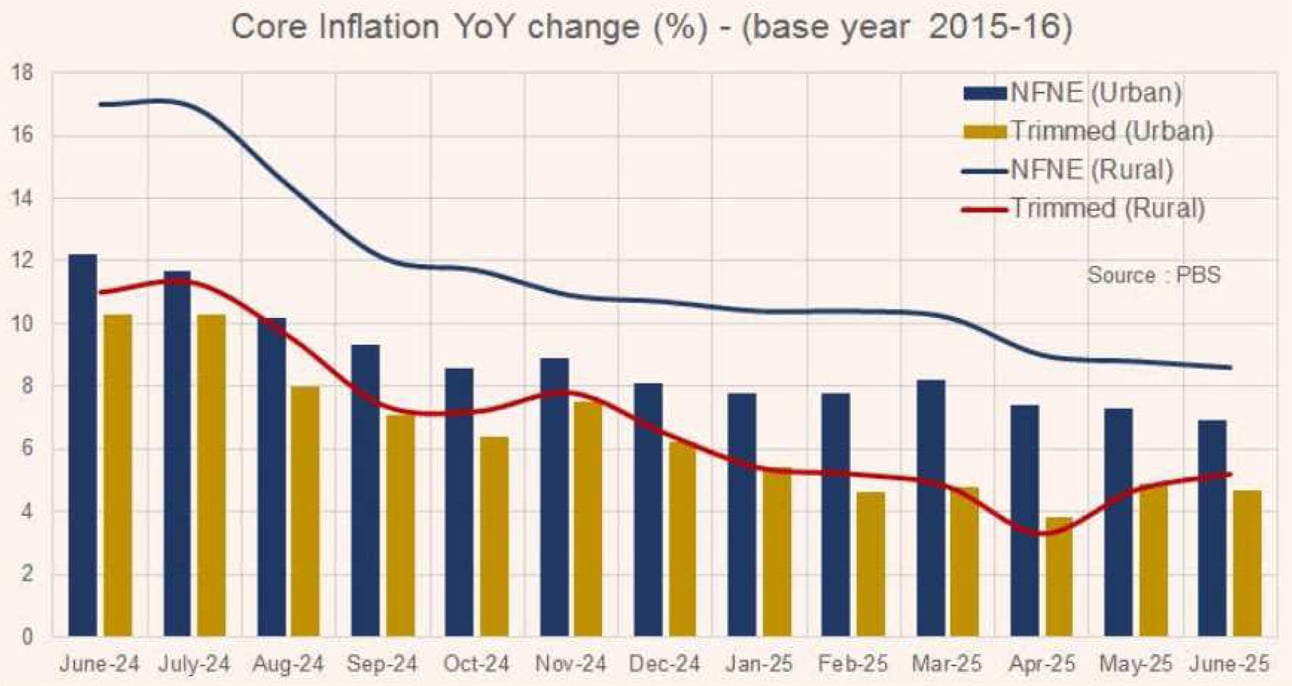
The persistent gap between rural and urban core inflation is not just unexplained. It could well be predictive. If rural inflation is pointing to what lies ahead, the urban and national headline rates may not be far behind.
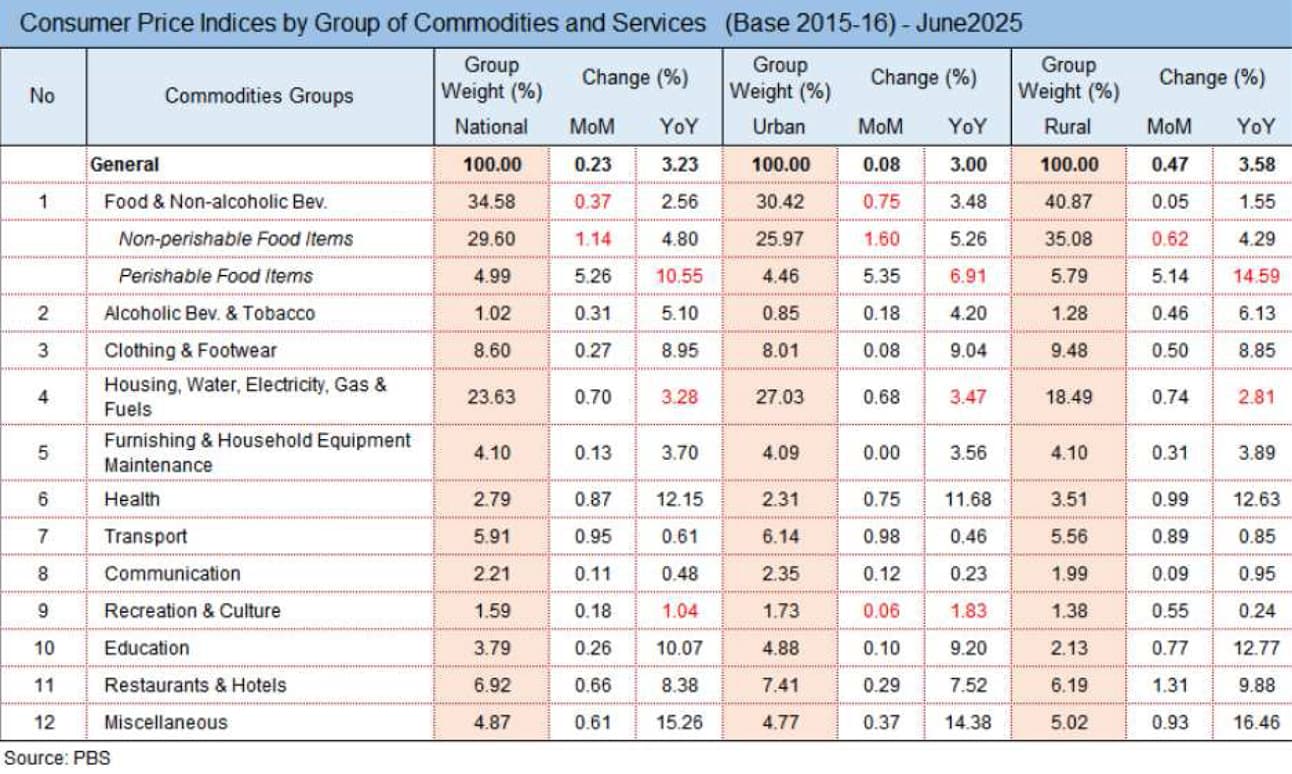
This is why the debate over who deserves credit—global commodity trends or domestic politics—is a sideshow. The more urgent question for policymakers is this: if inflation is down only because a few heavyweight food items have tanked—wheat, tomatoes, onions, potatoes—and core categories like health, education and clothing are still rising at double-digit rates, can we really claim to have brought inflation under control?
Let’s also not forget that reserve money is still expanding in double digits. Remittances are up, and the liquidity injection is visible across both urban and rural pockets. It would take just one external shock—an oil price surge or a climate event disrupting food supply—for CPI to lurch back into double digits.
If that happens, this one year of optical relief will feel less like a turnaround and more like an intermission. It will look especially flimsy next to the four-year run of sub-5 percent inflation that actually delivered a rise in real incomes for the average Pakistani.


























Comments
Comments are closed for this article.