


Federal budget: Business community has serious reservations: Mian Zahid
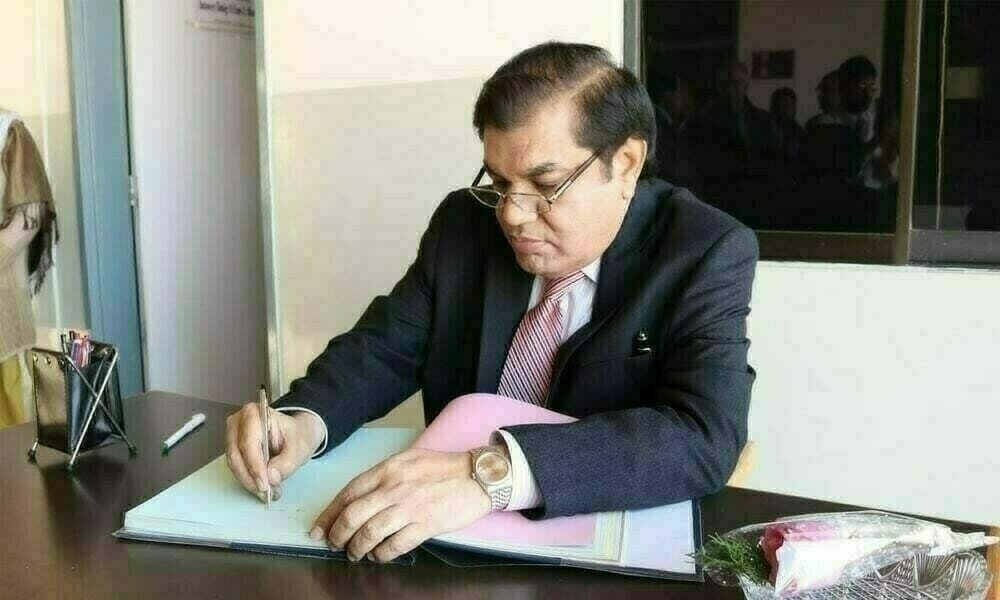

KARACHI: The Chairman of National Business Group Pakistan, the President of the Pakistan Businessmen and Intellectuals Forum, the President of All Karachi Industrial Alliance, the Chairman of the FPCCI Advisory Board, Mian Zahid Hussain, said that the business community has serious reservations regarding the federal budget which must be addressed.
Many business leaders are unequivocal in their assessment of the budget, terming it as imbalanced, anti-business, and a significant obstacle to growth. This urgent matter requires immediate attention.
Mian Zahid Hussain stated that the budget, as perceived by various trade associations, economic experts, and industrialists, lacks the necessary measures to effectively reduce production costs, boost exports, and promote investment. This deficiency is a cause for serious concern.
He stated that instead of broadening the direct tax base, the government has imposed an additional tax burden of 2,500 billion rupees on those already in the tax net. Increases in electricity, gas, and petroleum levies are expected to raise industrial costs.
He warned that taxes on solar panels and online businesses could dampen economic activities. Furthermore, the continuation of the super tax and other fixed levies has intensified market uncertainty. He urged the government to revise the budget after consultation with the private sector, ensuring a sustainable economic recovery.
Mian Zahid stressed that achieving the ambitious target of 14,300 billion rupees in tax collection and expanding the economy from its current level of $412 billion to $600 billion requires a balanced and compelling vision. Sacrificing such a vast economy for merely 500 billion rupees in tax enforcement would be a grave mistake. He emphasized that immediate action must be taken to halt the decline of large-scale industries. Pakistan’s industrial sector is not recovering but continuously deteriorating, which is alarming.
The sharp decline in March was primarily due to the poor state of the sugar industry. In the current season, sugar production stood at 5.78 million tons, almost one million tons less than the previous year, with an expected annual decline of 8 to 9 percent. Additionally, the sugar, cement, steel, chemicals, and electronics sectors are also experiencing significant downturns.
He expressed disappointment that the interest rate has been maintained, which has disheartened the business community. Mian Zahid stated that Pakistan’s industrial machinery is not just stagnant but regressing. Key sectors, such as automobiles, textiles, and pharmaceuticals, are experiencing stagnation.
Without urgent support for the industrial sector, not only will the current situation worse, but hopes for future economic revival will also be dashed. He concluded that affordable electricity and accessible financing are among the most critical needs of hour. Additionally, a comprehensive industrial policy, improved production facilities, and sustainable growth of export-oriented industries are essential for economic stability.
Copyright Business Recorder, 2025

























Comments
Comments are closed for this article.