


Greenland election tests independence ambitions as US interest looms
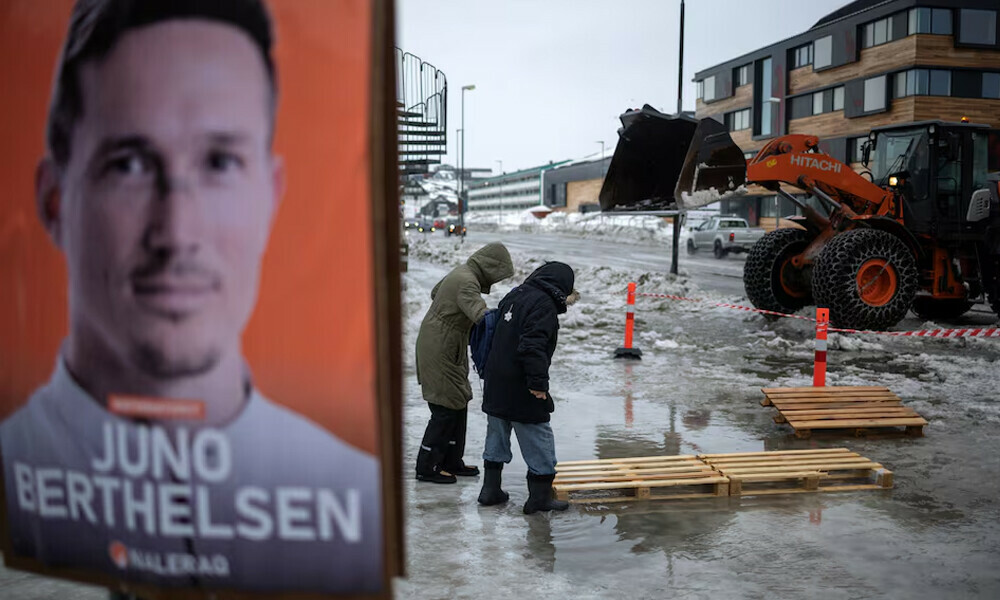

NUUK: Greenland will vote in a general election on Tuesday seen by some locals as a historic chance to free themselves from Danish rule at a time when U.S. President Donald Trump has offered to invest billions of dollars if they join the United States.
The election to the 31-seat Inatsisartut parliament could potentially enhance U.S. influence in Greenland, a sparsely- populated island in the eye of a geopolitical race for dominance in the Arctic, as global warming melts the icecaps making its resources more accessible and opening up new shipping routes.
China and Russia have intensified military activity in the region, with the United States striving to keep pace.
Greenland, a Danish territory since 1953, is three times the size of Texas but with a population of 57,000. The island gained some autonomy in 1979 when its first parliament was formed, but Copenhagen controls foreign affairs, defence and monetary policy and provides just under $1 billion a year to the economy.
The local government gained more autonomy in 2009, including the right to declare full independence through a referendum, though has not done so on concern living standards would drop without Denmark’s economic support.
The island holds substantial natural resources, including critical minerals such as rare earths used in high-tech industries, ranging from electric vehicles to missile systems.
However, Greenland has been slow to extract them due to environmental concerns, severe weather, and China’s near-total control of the sector, which has made it difficult for companies elsewhere to make a profit or secure buyers.
The outcome of the election is uncertain, as no polls or exit polls are expected. A January poll suggested a majority of Greenland’s inhabitants support independence, but are divided over the timing and potential impact on living standards.
Since coming to office in January, Trump has repeatedly expressed interest in acquiring Greenland, rekindling a theme from his prior administration, saying the island is vital to U.S. security interests.
Investment pledges
He initially declined to rule out military force, alarming many Greenlanders, although he later softened his stance, stating he would respect the will of the local people and was “ready to invest billions of dollars” if they joined the U.S.
Greenland’s Prime Minister Mute Egede has stressed the island is not for sale and advocated for a broad coalition government to resist external pressure. In an interview aired on Monday by Danish broadcaster DR, he dismissed Trump’s offer as disrespectful, expressing willingness to cooperate with other countries instead.
‘Greenland belongs to the Greenlanders’
Still, Trump’s interest has shaken up the status quo in Greenland and, coupled with the growing pride of the indigenous people in their Inuit culture, put independence front and centre in the election.
“The question of independence was put on steroids by Trump,” said Masaana Egede, editor of local newspaper Sermitsiaq. “It has put a lid on everyday issues.”
All six main parties, including the ruling Inuit Ataqatigiit and government coalition partner Siumut, support independence but differ on how and when it could be achieved.
The pro-independence Naleraq party, the leading opposition force, has gained momentum ahead of the election, bolstered by U.S. interest and fresh accusations of Denmark’s historic exploitation of Greenland’s mineral wealth.
“This is our independence election,” said Qunanuk Olsen, a Naleraq candidate. The party believes U.S. interest strengthens Greenland’s position in secession talks with Denmark and aims to bring a deal with Copenhagen to a vote before the next election in four years.
According to Egede, the editor, the party could increase its current five seats, but is unlikely to secure a majority in parliament.
Reuters spoke to more than a dozen Greenlanders in the capital Nuuk, all of whom said they favoured independence, although many expressed concern that a swift transition could damage the economy and eliminate Nordic welfare services like universal healthcare and free schooling.
Greenland relies on Denmark for about half its state budget.
























Comments
Comments are closed for this article.