


Nissan and Honda ditch $60 billion merger talks and face new uncertainty
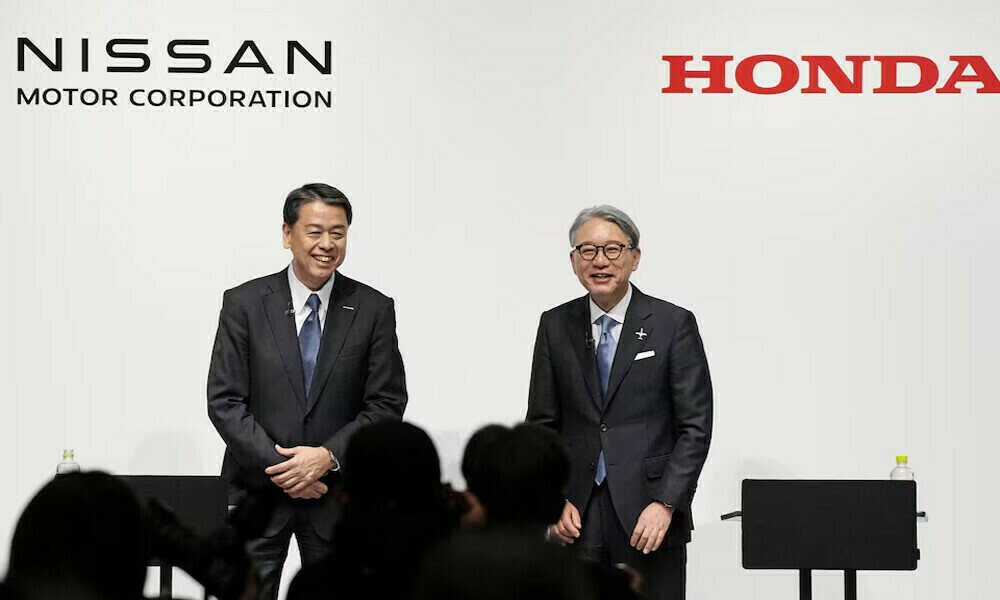

YOKOHAMA: Nissan and Honda ended merger talks to forge a $60 billion carmaker on Thursday, pitching Nissan deeper into uncertainty and underlining the challenge for legacy auto companies as Chinese rivals upend the industry.
The talks between Honda, Japan’s second-largest automaker, and Nissan, its third-largest, were announced in December but were soon complicated by growing differences, including over the balance of power in the tie-up. It was Honda’s proposal that Nissan become a subsidiary that ultimately sank the deal, sources have said.
The two said they would continue with an earlier agreement to cooperate on technology and other areas, collaboration analysts say is crucial, given the threat posed by BYD , and other Chinese EV makers, which have gobbled up market share with sleeker, more software-rich cars.
The Japanese automakers also face the added threat of tariffs in the United States on cars they import into the U.S. from Mexico, an important manufacturing hub.
Nissan is in many ways the most troubled of major legacy automakers, having never fully recovered from the years of crisis and management turmoil sparked by the 2018 arrest and ouster of former chairman Carlos Ghosn.
“Honda is pretty confident and has a lot in their favour, whereas Nissan is in a bad place. They don’t have a dance partner right now,” said Christopher Richter, Japan autos analyst at brokerage CLSA.
How Nissan and Honda’s $60 billion merger talks collapsed
“They probably need to think about doing something different.”
The merger would have created the world’s fourth-biggest auto group by vehicle sales after Toyota, Volkswagen and Hyundai.
Honda CEO Toshihiro Mibe told a press conference that while joining the two companies would have meant “quick pain”, he ultimately became more worried about the fallout if the talks dragged on without progress.
He called the failure of the discussions “disappointing” but also said Honda wanted to think about the possibility of tying up with companies other than Nissan and Mitsubishi Motors.
Mitsubishi, a junior partner in the alliance Nissan has with Renault, had been part of the merger discussions although sources had said it was unlikely to participate. It also bowed out of the talks on Thursday.
Restructuring
Nissan, which also on Thursday cut its full-year forecast for the third time and reported another big drop in quarterly earnings, said it would accelerate the turnaround programme it first unveiled last year.
It now aims to close a plant in Thailand by June, it said and two more plants, which it did not name, after that. It has previously said it would cut 9,000 jobs and reduce global capacity by 20%.
Sources said in December that Nissan will need to further reduce its capacity in China, where it operates eight factories through its joint venture with Dongfeng Motor. It has already suspended production at its Changzhou plant as part of efforts to optimise operations.
Nissan is now open to working with new partners, with Taiwan’s Foxconn seen as one candidate, sources said last week.
Foxconn Chairman Young Liu said on Wednesday that his company would consider taking a stake in Nissan but that its main aim was cooperation.
Nissan shares soared more than 60% and Honda’s jumped around 26% in late December after the merger talks were first reported on Dec. 17. Those gains have since been pared to 21% for Nissan and 11% for Honda.
Nissan’s market capitalisation is now nearly five times smaller than that of Honda, which is about 7.5 trillion yen ($48.6 billion). A decade ago, the pair were both worth around 4.6 trillion yen.

























Comments
Comments are closed for this article.