


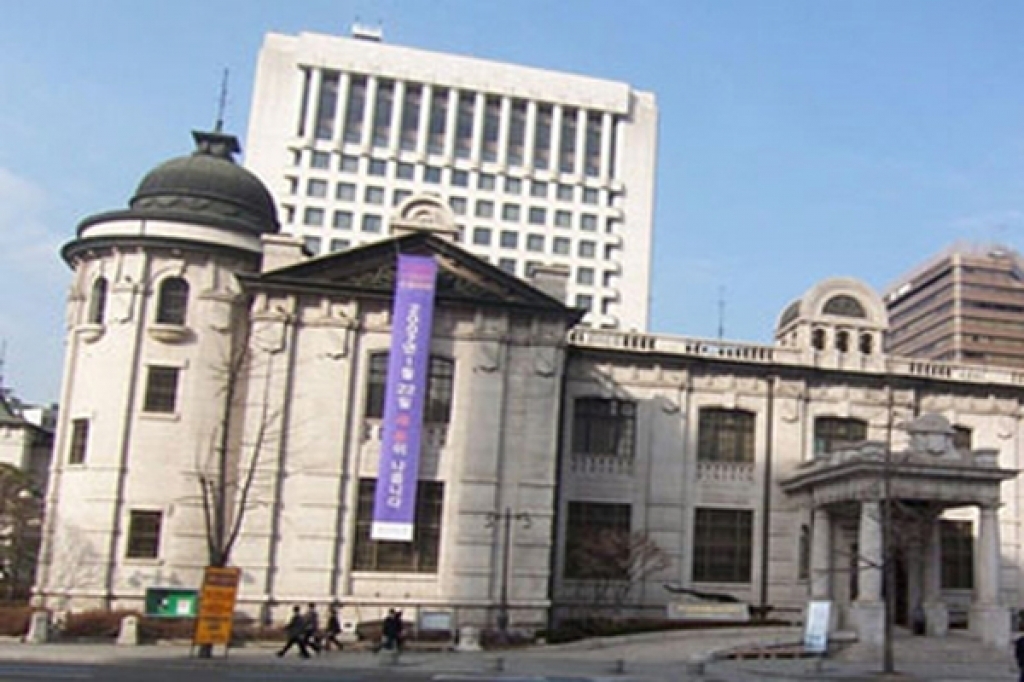

SEOUL: South Korea's central bank raised interest rates for the second time since the pandemic began and revised up its inflation outlook on Thursday as concerns about rising household debt and consumer prices grew.
The Bank of Korea is expected to continue its policy tightening cycle with rates tipped to reach 1.50% by the end of 2022, raising concerns about whether households will be able to service their debt repayments.
The BOK's monetary policy board lifted borrowing costs by 25 basis points to 1.00% - a move expected by 29 of 30 analysts in a Reuters poll.
BOK Governor Lee Ju-yeol said a rate hike in the first quarter of next year is possible, which would be ahead of South Korea's March presidential election.
Lee Jae-myung, the ruling party's presidential candidate, has warned of a potential collapse in the housing market as interest rates rise, with Seoul home prices roughly doubling over the past five years.
"Although the decision depends on the economic situation, a rate hike in the first quarter shouldn't be ruled out," Lee said in a news conference.
The BOK has been at the forefront of global central banks withdrawing the massive monetary stimulus introduced when the pandemic slammed activity in 2020.
Its proactive stance has been driven by concerns about financial imbalances with household debt hitting 1.85 quadrillion won ($1.55 trillion) in the third quarter.
"With rates increasing, debt repayment burdens for households would definitely rise, which would weigh on household financing and consumption," said Cho Yong-gu, a fixed-income analyst at Shinyong Securities. "I think the hurdle for further rate hikes will be higher once the policy rate reaches 1.25%."
While dealing with asset bubbles has been outgoing President Moon Jae-in's top policy priority, the home price surge across Asia's fourth-largest economy has continued despite more than two dozen measures to curb it.
The three-year treasury bond futures rose as much as 0.3 points after Lee's comments as traders pared some of their hawkish bets made before Thursday.
The benchmark KOSPI and the won fell.
Price pressures
The BOK also on Thursday raised its inflation outlook for next year to 2.0% from 1.5% previously, suggesting the need for further rate hikes amid concerns about faster and more protracted price pressures.
Consumer inflation accelerated to a near decade high in October and the economy grew 4.0% in the third quarter, thanks to robust exports of chips and petrochemical products and flattered by comparisons to last year's pandemic slump.
The bank still sees the economy growing 4% this year and 3% in 2022, as projected in August.
Mounting price pressures and firm growth have prompted most analysts polled by Reuters to bring forward their forecasts. Analysts now see the interest rate reaching 1.25% in the first quarter and 1.50% by end-2022.
One complication to that is a recent spike in daily COVID-19 cases, which reached over 4,000 for the first time on Wednesday, clouding the outlook for the months ahead.
The BOK in August became the first major Asian central bank to start raising borrowing costs since the COVID-19 pandemic started.
New Zealand on Wednesday raised interest rates for the second time in two months and the US Federal Reserve is expected to switch to tightening to contain price pressure.

























Comments
Comments are closed for this article.