


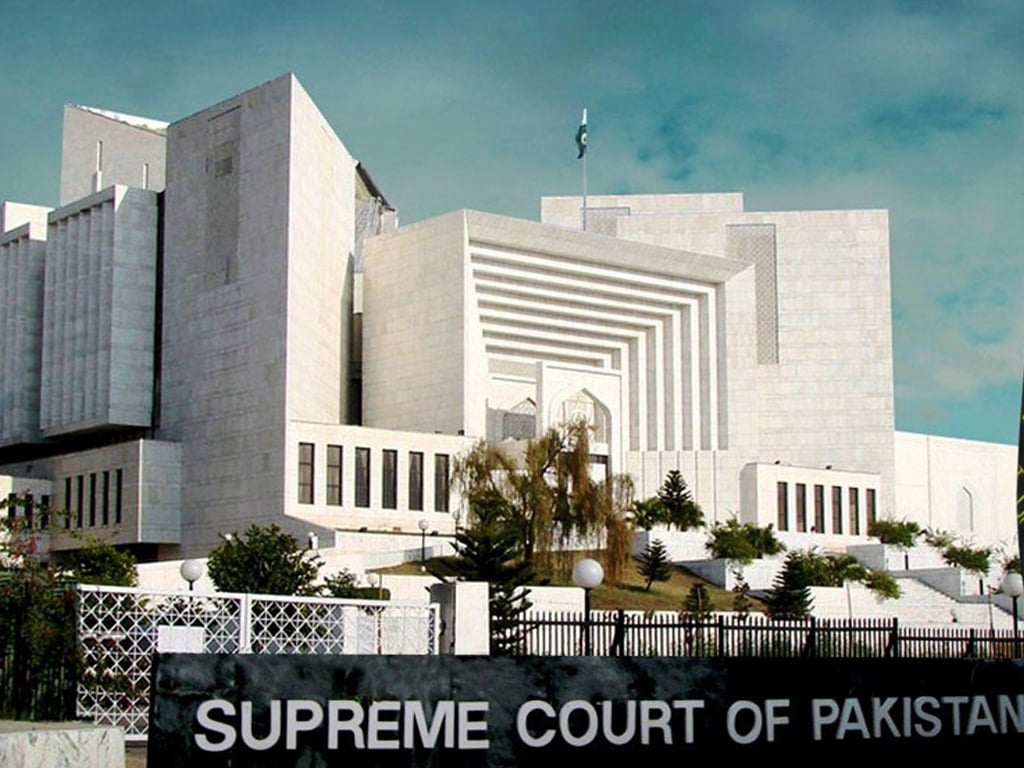

ISLAMABAD: The Supreme Court on Friday issued notices to the Power Division of Ministry of Energy and the National Electric Power Regulatory Authority (Nepra) regarding recovery of Industrial Support Package (ISPA) by K-Electric from its industrial consumers.
A three-member bench, headed by Justice Umar Bandial, heard the K-Electric's appeal against the Sindh High Court's (SHC's) judgment, wherein the corrigendum (dated 22-01-2020) related to tariff policy was quashed.
The SHC on 28-09-2020 declared the corrigendum "illegal, void, issued in excess of authority hence quashed."
The K-Electric was asked to charge the tariff from its industrial consumers as per the left hand column (K-Electric Tariff of SRO 575(I)/2019 dated 22-05-2019 as determined vide determination dated 05-07-2018 in respect of variable 'off-peak hours' charges, and right-hand column (Uniform Tariff) in respect of variable 'peak hours' charges as long as subsidy for 'peak hours' provided through SRO 12(I/2019 dated 01-01-2019.
K-Electric through its counsel Abid S. Zuberi challenged the SHC verdict in the Supreme Court, which on Friday granted leave to appeal and issued notices to respondents.
During the course of proceedings, the counsel for the industrial consumers said only Nepra, not the government, can amend the tariff and the government cannot withdraw subsidy given to industrial consumers earlier.
He claimed that K-Electric is not sending them bills in accordance with the SHC's judgment.
According to the counsel for the petitioner, the K-Electric, stance is that the impugned judgment in itself is contradictory as on the one hand SRO No 810(I) /2019 has been upheld whereas, the corrigendum dated 22.01.2020, which is a ministerial act that merely implements SRO No 810(I)/2019, has been set aside.
He further submitted that the SHC directions are totally against the policy of the Ministry of Energy (Respondent No 1) to keep and maintain a uniform tariff across the country.
"The impugned judgement is therefore against well settled principles of law and interferes in the policy domain of the government and has created an entirely new tariff that has never been approved/determined by the NEPRA (Respondent No 2), according to the counsel from K-Electric."
The PML-N federal government in order to lower the cost of large scale industrial production with a view to achieves/stimulating sustained economic growth issued SRO 395(I)/2016 under Section 31(4) of the NEPRA Act 1997, whereby industrial consumers of electric power were granted a Rs3 per kWh subsidy, known as Industrial Support Package (ISPA), in their applicable electricity tariff including both peak and off-peak hours throughout Pakistan, the petitioners counsel said an added that it became effective from 01-01-2016 and Economic Co-ordination Committee of the PTI government decided to continue the subsidy; therefore Ministry of Energy on 01.01.2019 issued SRO 12(I) of 2019.
According to the counsel for petitioner, ISPA relief granted to industrial consumers vide the January 2016 SRO was continued at the same rate of Rs3/kWh, applicable on all consumer categories, including during both peak and off-peak hours. However, the government on 12-07-2019 decided to alter its policy regarding the ISPA subsidy and issued SRO 810(I)/2019 dated 12.07.2019, whereby the grant of ISPA at the rate of Rs3/kWh was limited to peak hours only. The subsidy in respect of off-peak hours and other categories of industrial consumers was withdrawn throughout Pakistan vide SRO 810(I)/2019. Though Ministry of Energy issued SRO 810(I)/2019 whereby Paragraph 2 of the January 2019 SRO was substituted, it however did not immediately amend the Schedule of Tariff of K-Electric issued vide SRO No 575(I)/2019. According to the counsel petitioner continued to charge its industrial consumers as per the SRO No 575(I)/2019 till December 2019 with the view of charging the amount accrued during that period by the consumers in view of SRO 810(I)/2019. After issuance of several letters by the petitioner, the Respondent No.1 took cognisance of the matter and issued corrigendum dated 22.01.2020 during the same fiscal year, incorporating the changes made vide SRO 810(I)/2019 in SRO 575(I)/2019 by modifying the right-side column of off peak rates and other categories of industrial consumers. The corrigendum merely reflected the amendments made by SRO 810(I)/2019 throughout Pakistan and was reflected in the bills issued by all DISCOS to their respective consumers and also upheld in the impugned judgement.
The counsel submitted that the said corrigendum has been issued after following the same procedure as was followed in notifying/issuing the uniform/applicable tariff notified on the right -side column of the SRO 575(I)/2019.
According to the counsel, "following the issuance of corrigendum incorporating the changes made vide SRO 810(I)/2019 in the right-side column of the SRO 575(I)/2019, the petitioner issued bills commencing January 2020, to its industrial consumers in accordance with the new notified applicable tariff. The petitioner issued bills for the month of March 2020 reflecting the outstanding amounts accumulated during the period July to December 2019 under the head 'ISPA Adjustment'. The Karachi Chamber of Commerce and Industry (KCCI) requested the petitioner to extend recovery of ISPA arrears till the 30th of April 2020 to enable them to approach the GoP for resolution of this issue as it pertained to subsidy."
The counsel said that the petitioner not only agreed to defer payment as per the KCCI's request for a month but has also agreed to allow consumers to pay the arrears in the form of three installments even though the petitioner was not obligated to do so.
The counsel submitted that despite K-Electric co-operating with the KCCI and affording the industrial consumers relief in the form of deferred payments and payments via installments, some members of the KCCI have on the one hand availed the benefits and on the other hand, various industrial consumers had filed petitions in the Sindh High Court.
Copyright Business Recorder, 2020














Comments
Comments are closed for this article.