


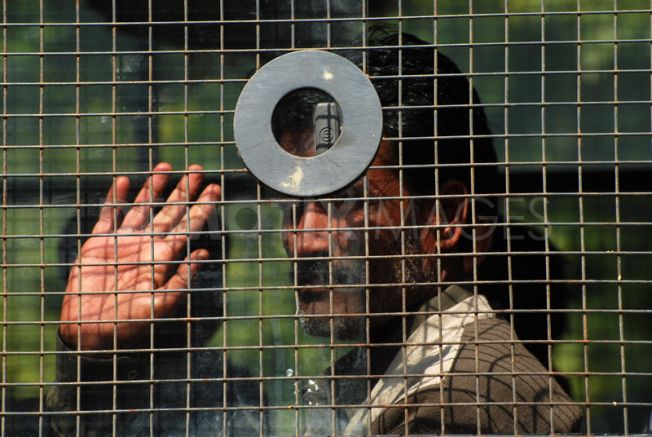
 Friday, 11th November, heralded yet another indication of improving relations between Pakistan and India when the Supreme Court of India expressed shock over the newly discovered information that 254 Pakistani prisoners were languishing in jails of Jammu and Kashmir, most without any charge or trial. Different reports quoted a different figure, but it is apparent that out of these 254 prisoners, a few of them have been imprisoned since the 1960s and there are at least four women among them too. Most of the prisoners are thought to have been arrested just because they strayed into India by inadvertently crossing the border between the two countries. This year has borne witness to drastically improving bilateral relations between India and Pakistan. The governments of both countries have gone out of their way to show their commitment towards developing mutually beneficial ties. As Prime Minister Yousuf Raza Gilani and his Indian counterpart Dr Manmohan Singh pledged to open "new chapters" on the sidelines of the Saarc summit in Maldives this month, they promised that the next round of talks between the two countries would be more productive. In light of Pakistan granting India the MFN status and the latter lending its support to Pakistan getting preferential access to the EU market, as well as voting for Pakistan on the non-permanent member seat at the UNSC, the peace process finally seems to be on solid track to progress. In light of this, India's Supreme Court's remarks, made while responding to a public interest case filed by human rights activist lawyer Bhisam Singh, come at a most opportune time. These remarks have helped raise the issue of Pakistani prisoners held in India, either without any charge or trial or still imprisoned after having served their time, even multiple life terms. The apex court's directive to New Delhi to submit a detailed report on this will help determine the exact number of Pakistani prisoners and their details. This development should bring some respite to families of the prisoners who have been knocking on doors for justice since eons. It will give hope to all other families, who have lost their loved ones in the labyrinth of Indian jails, praying that they too will find out what happened to their family members. At the moment, Pakistan and India share prisoners' lists with each other twice a year. This year alone, both countries have released scores of prisoners on at least four different occasions. The high point of the prisoner release exercise was the pardon granted to Indian spy Gopal Das by President Zardari after he had spent 23 years in jail. This pardon had come as a response to an appeal by the Indian Supreme Court. With the court's action on the Pakistani prisoners in Jammu and Kashmir, there is reason to be cautiously optimistic about their fate. What needs to be given due weight, however, is the fact that this figure only represents the number of Pakistani prisoners in one state. There is reasonable evidence that many more Pakistanis are imprisoned in other states, and it is hoped that concerted efforts will be made to confirm their identity and have them released as soon as possible. It is also heartening to witness citizens and activists on both sides of the borders taking charge of seeking help for prisoners from the other country in the face of overwhelming roadblocks by the bureaucratic machinery, hell bent upon impeding the course of justice. Just a week prior to this news, the Lahore High Court had directed the Foreign Ministry to expedite repatriation of foreigner prisoners all over Pakistan. The court gave this directive while addressing the petition seeking release of two Indian prisoners, Satinder Pal Singh and Karale Bhanudas held in Kot Lakhpat Jail. It is hoped that in the new phase of renewed co-operation between both nations, foreign prisoners on each side will also benefit by having their issue taken up at higher levels and allow them to return home. And among those prisoners, our very own Dr Khaleel Chishty, the aging virologist, is the one most deserving of a pardon after spending almost two decades in Indian jails. Copyright Business Recorder, 2011





















Comments
Comments are closed for this article.