



 NEW YORK: The US branches of foreign banks have become net borrowers of dollars from their overseas affiliates, as money market conditions have turned turbulent on fears about the global economy and the European debt crisis.
It is first time in a decade that US operations of foreign banks are net dollar borrowers, according to Ray Stone, managing director of Stone & McCarthy Research Associates in Princeton, New Jersey.
"It is a rare occurrence," Stone said.
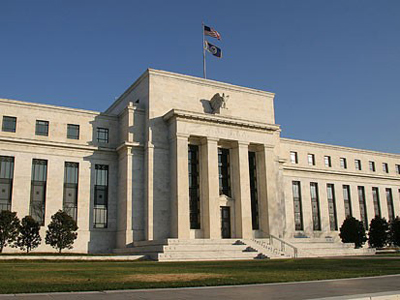
US branches of foreign banks borrowed $127 billion from their overseas affiliates on a seasonally adjusted basis in the week ended Aug. 3, up from $112.3 billion in the prior week, according to Federal Reserve data released late on Friday.
This is dramatic change from the beginning of the year, when they lent $320 billion to their overseas counterparts.
Analysts said it is unclear what caused this shift in borrowing by the US subsidiaries from their foreign affiliates.
On the one hand, US investors are buying fewer commercial paper, certificate of deposit and other dollar-denominated securities issued by US affiliates of foreign banks. This has resulted in fewer dollars available to them since late spring.
In response, euro zone banks have leaned heavily in recent weeks on the currency market to raise dollars so they can meet their obligations. They have been swapping euro-based cash flows for dollars and driven the euro/dollar cross currency rate to its highest level since late 2008 at the height of global financial crisis.
On the other hand, other measures of dollar funding stress suggest that euro zone banks and their US branches have ample access to dollars in the open market, albeit at higher interest rates than their US-based banks.
"It's just conjecture," said Mark Vitner, senior economist at Wells Fargo & Co in Charlotte, North Carolina, as to whether this is another sign of dollar funding stress. "But it certainly points to that direction."
INDIRECT BIDS RECOVER
Demand from foreign central banks and other indirect bidders for US Treasury bills rebounded on Monday after plunging last week in the wake of Standard & Poor's stripping the United States of its top-notch credit rating.
High anxiety over the public debt problem in Europe and wild swings in global stock markets due to economic worries also have rekindled safe-haven bids for ultra short-dated US government securities.
On Monday, indirect bidders bought 30.5 percent of the $29 billion in three-month bills offered by the US Treasury Department. That was was up sharply from the prior week's 7.6 percent, according to Treasury data.
At the same time, indirect bidders purchased 35.8 percent of the $27 billion in new six-month bill supply That was nearly double the amount they bought last week.
Copyright Reuters, 2011























Comments
Comments are closed for this article.