


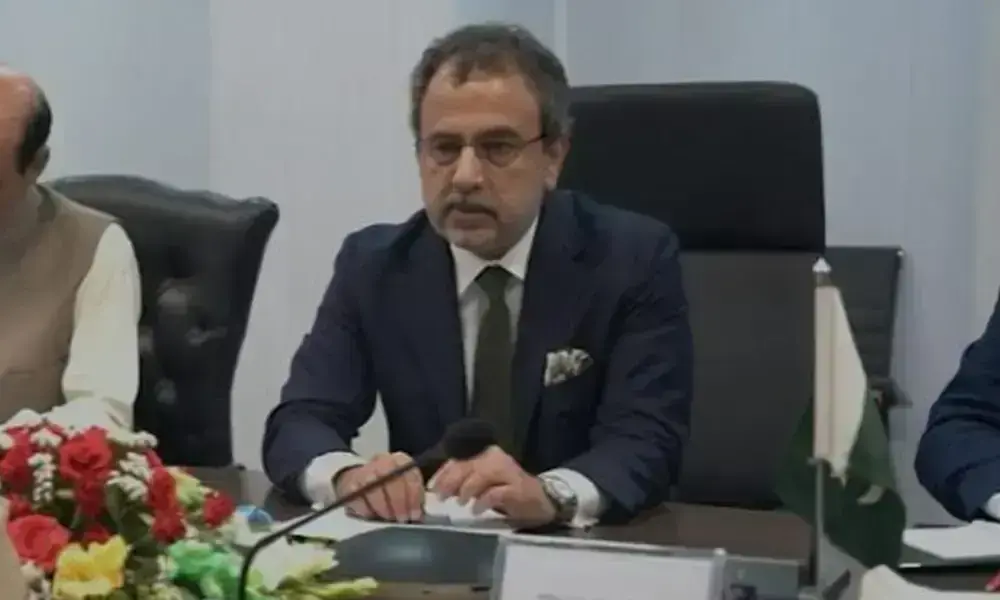

ISLAMABAD: Power Minister Sardar Awais Leghari-led committee on Thursday once again deliberated on the “problematic” Auto Sector Development Policy 2026–31 and the current issues facing the domestic industry, which is calling for fiscal incentives, particularly for Chinese cars.
The committee discussed various challenges confronting the local industry, including the impact of Completely Built Unit (CBU) imports on existing players and delays in notification regarding the reduction in sales tax.
The industry has sought government intervention to protect Pakistan’s automotive manufacturing sector from the serious risk of deindustrialisation resulting from the proposed reduction in CBU import tariffs under the National Tariff Policy 2026–31 (NTP 2026–31), sources said, quoting a letter written by the industry to the Prime Minister.
According to the Power Minister, the auto industry is currently suffering due to the non-finalisation of the Auto and Auto Parts Policy by the federal government. The government has increased the sales tax on Plug-in Hybrid Electric Vehicles (PHEVs) and hybrid vehicles, while significantly reducing CBU import duty rates, placing the local auto manufacturing sector at a major disadvantage.
At present, no tariff has been announced for the import of CKD parts and kits, which continue to be imported under SRO 655(I)/2006.
Following the reduction in customs duty on CBUs in the 2026–27 budget, the current customs duty on CKD kits is now higher than that on CBUs, creating a major anomaly.
Due to these issues, production lines have reportedly halted vehicle manufacturing, putting billions of rupees of industry investment at risk.
The industry has demanded an appropriate reduction in duty rates on CKD parts, as well as a reduction in sales tax on PHEVs. It has also urged the government to finalise the Auto and Auto Parts Policy at the earliest, noting that dozens of sessions have already been held with the Ministry of Industries and Production (MoI&P).
According to sources, public sector stakeholders failed to reach a consensus on the proposed new auto policy, as they remain unwilling to revise their previous positions.
The auto industry has also expressed concern over reported tax relief for luxury vehicles (costing more than Rs10 million), particularly at a time when the country is under an IMF programme requiring significant economic sacrifices from the general public.
This has raised questions about policy priorities, specifically whether limited fiscal space should be used to reduce the tax burden on luxury vehicles while millions of Pakistanis continue to bear the cost of economic adjustment.
The industry further questioned the timing of such measures, stating that every rupee of revenue is critical and any concession carries a fiscal cost. Reducing taxes on luxury vehicles, it said, sends a strong signal about policy priorities.
“Pakistan has been implementing tough economic reforms under its IMF programme; therefore, the government’s reported move to reduce the sales tax on hybrid and plug-in hybrid vehicles from 25 percent to 18 percent raises a fundamental policy question,” said Yousuf M. Farooq, Director Research at Chase Securities.
Finance Bill 2026 increased the sales tax on hybrid and plug-in hybrid vehicles to 25 percent as part of efforts to strengthen revenues and meet fiscal commitments. The government is now reportedly considering reversing that decision, despite the IMF’s emphasis on broadening the tax base, reducing preferential tax treatment, and strengthening fiscal discipline.
Yousuf noted that the vehicles expected to benefit from the proposed relief are mostly priced at Rs 10 million and above, placing them beyond the reach of the majority of Pakistanis. This creates a perception that while ordinary citizens continue to face higher taxes, inflation, and reduced government support, tax relief is being extended to buyers of luxury vehicles.
“The government may argue that the measure is intended to encourage cleaner transportation and accelerate the adoption of environmentally friendly technologies. That objective has merit. However, the timing has inevitably raised questions,” he added.
The auto industry has warned that if the sector is not excluded from the proposed tariff reductions, it could face severe consequences, including: (i) permanent closure of vehicle manufacturing plants and approximately 1,324 auto parts manufacturers; and (ii) loss of more than USD 5 billion in industrial investment.
Copyright Business Recorder, 2026

















Comments